• Skip to main content

Uncharted Veterinary Conference

Revolutionary veterinary marketing & business conference for those forging their own paths and telling their own stories.

  • Account
    • Log In/Out
  •  

Podcast

Aug 03 2022

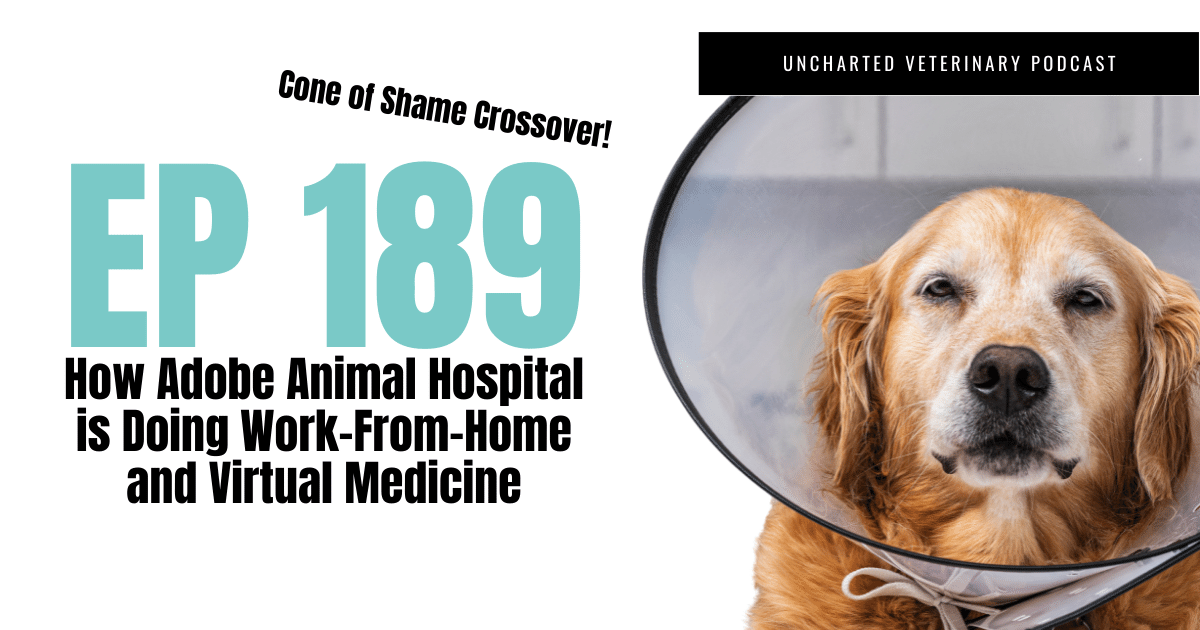
How Adobe Animal Hospital is Doing Work-From-Home and Virtual Medicine – Cone of Shame Crossover

Uncharted Veterinary Podcast Episode 189 - How Adobe Animal Hospital is doing work-from-home and virtual medicine

This Week on the Uncharted Podcast…

This week on the podcast, we have a cross-over episode! That's right, this is a Cone of Shame episode. Imagine a CSR working from home, checking a client out and booking appointments from his home, or a technician live-chatting with three different pet owners through the clinic webpage from her apartment, or a doctor doing telemedicine appointments from another state? This isn’t fantasy. There are practices actually making these things happen today. Christina Freeman and Summer Burke-Irmiter join Dr. Andy Roark to talk about how their clinic is breaking the mold to give employees (and clients) flexibility like never before. Let’s get into this.

Uncharted Veterinary Podcast · Uncharted Podcast Ep 189 – How Adobe Animal Hospital is Doing Work-From-Home and Virtual Medicine

You can also listen to the episode on Apple Podcasts, Spotify, Google Podcasts, or wherever you get your podcasts.
guardian vets logo

Thank you to our sponsors! To learn more about this week's sponsor, GuardianVets, check out their website HERE.

Got a question for the mailbag? Submit it here: unchartedvet.com/mailbag

Upcoming Events

October 6-8, 2022: Get Sh*t Done Shorthanded Conference Event

Want to hear more from Summer and Christina about their virtual CSR model? You can at the upcoming Get Sh*t Done Virtual Conference! They will be doing a workshop and there will be 3 days of content all about how you can get sh*t done when you're shorthanded (who isn't?)!

While Uncharted Membership is always encouraged, you DO NOT have to be a member to join us for GSD! Non-members, here’s your chance to see what all the buzz is about and get a taste of the Uncharted experience.

August 10, 2022: Believing WE Can – Leading A Solution-Oriented Team with Senani Ratnayake

In this 2-hour workshop, we will:

  • Discuss what leaders can do to set themselves, and consequently their teams, up for success in problem-solving
  • Focus on tactics with a twist – activities that are enjoyable, engaging and unexpected. 
  • Learn how to implement these activities to help the team explore being solution-oriented and action-oriented in fun ways.

All Uncharted Veterinary Community Workshops are LIVE! You will be able to ask the instructor questions that help you address your practice’s unique problems. This will not be 2 hours of silent screen time. Gear up for interactive, fun learning! 


Episode Transcript

Banfield Pet Hospital Logo

This podcast transcript is made possible thanks to a generous gift from Banfield Pet Hospital, which is striving to increase accessibility and inclusivity across the veterinary profession. Click here to learn more about Equity, Inclusion & Diversity at Banfield.

Stephanie Goss: It's a crossover episode that's right this week we are sharing an episode from our sister podcast the Cone of Shame podcast. Andy did a discussion interview with two amazing women from Adobe Animal Hospital and I just thought it would be something that our audience would love to hear, because they talked about virtual team members, virtual csrs, using technology in amazing and absolutely nerdy ways that I completely love. So we are going to listen to Andy talk with Summer Burke Armature and Christina Freeman from Adobe Animal Hospital and nerd out about how Adobe Animal Hospital is doing work from home and virtual vet med.

Meg: And now the Uncharted Podcast!

Dr. Andy Roark:
Welcome to the podcast, Christina Freeman and Summer Burke-Irmiter. How are you guys?

Christina Freeman:
Good. How are you?

Dr. Andy Roark:
Doing really good. I am super excited for this conversation. For those who don't know you… Let me just say why I'm excited for the conversation, and then I'll introduce you guys through that. You guys work at Adobe Animal Hospital, which is out in the San Francisco Bay Area. You guys are part of Uncharted, which is a community that I love and get to run. And you have been for a number of years and you are one of my fanboy hospitals that I crush over because you do these cool, cool things. You were the first hospital that I was aware of that was an open hospital, meaning that people could go basically wherever their pets go.

Dr. Andy Roark:
My head hurt for a week after I first talked to you and really came to understand what you were doing and what that meant. You guys just, you do these things that get me excited and just remind me about what's possible, and that medicine can be very different from what it has been in the past. And so I am a huge fan of you guys and the work that you do. Summer, you are the hospital administrator and the owner. Christina, you are the remote manager, which is how we come to be here today. Summer shared with me a couple of weeks ago, a new program that you guys were rolling out with what you called video client representatives.

Dr. Andy Roark:
So I'm not talking about CSRs that are answering phones from home. I'm talking about you guys have screens in your lobby that people can see traditionally, a CSR, a customer service rep. That they can see the customer and they can check out with this video screen. And you have people not just answering phone, but actually dealing with clients in the building while they, the employees are at home. And that's amazing to me. And so I was like, “I want to talk…” First of all, I want to go through the system with you. I just want to unpack it and understand what you guys are doing.

Dr. Andy Roark:
I'm so impressed with just… And let me just say this too. I know this is a new program, you're only doing it for a while. I love that you are doing this and putting it out, and I just think that so many people, as we're looking at the great resignation and people changing jobs and also battling burnout and people being able to work from home. That has been shown to decrease levels of burnout, when people get to spend some time and say, “Hey, I'm changing my environment. I'm going to work in a more relaxed place. Even just a limited amount of time.” I am really looking hard at burnout. I'm looking hard at efficiency. I'm looking hard at making the jobs better and more flexible.

Dr. Andy Roark:
And I feel like you guys are actually out there in the wilderness doing the thing. I didn't say you were lost in the wilderness. I said you are out in the wilderness, more of a Lewis and Clark, like headed westward sort of feel. That's, how I feel about it.

Summer Burke-Irmiter:
Definitely.

Dr. Andy Roark:
Definitely. Those are the things I'm geeking out about, and so let's go through. I just want to go ahead and start to walk through the journey that you've made so far with you. Go ahead, why don't you guys tell me just a little bit about Adobe. I mentioned a very high level. Give me a clear picture of what you're working with as far as the hospital, what makes it special? Just so people can have a mental picture of Adobe and what we're talking about.

Summer Burke-Irmiter:
I'll jump in there. Adobe is a really amazing place. We have two hospitals here in the Bay Area, one, which is a 15-exam rooms, three surgical suites, full cat and dog ICU, full lab and pharmacy. And so we're big and I love it, 15 exam rooms. Overall between our two hospitals, we have 22 doctors and about 145 team members. Yeah, we're a big guy. We have a second location about 20 minutes away that's six exam rooms, ultrasound suite. They can still do major surgeries. They're open six days a week there.

Summer Burke-Irmiter:
You mentioned the thing that I think makes Adobe special and amazing, which is the open hospital. So clients can go with their pet to ultrasound. They can help us set up an x-ray and then step out. We do vaccines and blood draws in front of owners. And because of that, our have a different level of trust with us. And our doctors all practice the medicine, they feel as best. So as a business, we actually don't have a lot of hard lines with our medicine and what we recommend. We want the doctors to talk with the patients and the clients decide what the [crosstalk 00:07:15]

Dr. Andy Roark:
Talk with the patients too. You never know what you're going to get.

Summer Burke-Irmiter:
Where are they going, what their risks are. For vaccines, we don't say you give every puppy these set of vaccines. You talk with the owner and see what's going to be best for that puppy and for that owner. Those are the two big things that I think make Adobe in general. Christina, what would you add to that?

Christina Freeman:
Truly the open hospital, I think is one of the big things that makes Adobe different and drew me to Adobe. When I first read that applying, I was like, “Oh, that's awesome.” I had grown up in a little small town hospital where I got to go wherever I wanted to go, but yeah, I saw other people not be able to do that. So it important to me. It honestly gives a huge hospital that small town feel because you're part of your pet's care. I think that was definitely one of the things that drew me to Adobe.

Christina Freeman:
I'm not from the Bay Area, I'm from North Carolina, which is where I currently live. Why? I'm the remote manager, but I think what's kept me with Adobe is just the constant creativity and growth, and the fact that we're always changing things up to make things a little bit better for namely the pets. That's always the first and foremost. That's how we've gotten here, is keeping pets first.

Dr. Andy Roark:
Talk to me a little bit about the idea of remote work. When did Adobe start to really look at this as a concept? You guys were way pre pandemic when you started to kick this around. People are like, “Oh my God, look how far they've gotten in the last two years.” And I'm like, “No, you guys were way out ahead starting to work on this.” But help me really understand that, when did this idea of remote employees, when did that come together and why did that come together?

Summer Burke-Irmiter:
It's been some while so I always have to remind myself. I think it's eight to nine years ago we started.

Christina Freeman:
Yeah.

Summer Burke-Irmiter:
What happened is, here in the Bay Area, the cost of living is very high. A starter home within an hour of Adobe, you're going to be at least 600,000 plus. And so a lot of our staff already live farther away, and then if you're going to buy a home and raise a family, oftentimes our staff would move out of the area. And that's what happened, is we had a staff member who was going to leave the area and we didn't want to lose them. We all know how hard it is to get really great staff. And when we were faced with one of our staff members moving, we were like, “No, we need to make this happen.” I was like, “I need to make this happen.”

Summer Burke-Irmiter:
We keep good team members. They're part of our Adobe family, and so how do we do this? And why are we limited by our building? Why can't we do more? And so there's so much work to do. There's always work to do at Adobe, and so we just started figuring it out, really just one step at a time, lots of trials and errors, but it was to keep our team members. And so that original person did start out, I think like many hospitals now have a remote person, which is helping answer phones, helping call back clients for us. So it did start small and it just kept growing.

Dr. Andy Roark:
You guys also started to do remote communications with pet owners. Tell me a little bit about that. That's different from having people work from home. That's having pet owners stay home. How does that come into this?

Summer Burke-Irmiter:
One of the areas that I was really excited to explore was getting into chat. I don't know about you guys, but pre pandemic, I loved chat. I actually had apparel companies that I would chat with all the time back and forth. I was on Zappos once and buying shoes. And I was chatting with this CSR on there with a question about the shoes and we ended up talking her cute pit bull that she just rescued. And so I saw that you could have a connection and get really great, fast help. And so really started looking at different platforms, what could we use? That's where we initially settled on live chat, and this is where Christina actually comes in and I'll let you take it from here because you can give all kinds of information.

Christina Freeman:
Yep. That was Summer's crazy idea. I came to her and needed to move back for my family to North Carolina and she said, “Well, if you'll stick with me, I've got a crazy idea. What do you think?” And I loved it, and so we really started small. It was truly just, we had a couple people trying some things out, but when we first started chat, it was just me for the first couple weeks. And then we grew to a couple people and added one of our doctors who was remote at the time or starting in the remote world. We were shocked at how fast our clients adopted it. Through the live chat platform, we just popped a widget up on our website.

Christina Freeman:
And so whenever someone would come on the website, the way we started originally was very organic. We would ask the client if we could help them with anything. And they would say yes or no, or some were thrilled. We really found… I think at first we were all like a little bit worried it would feel impersonal, so we really tried to give it a good conversational spin and not using forms and things like that. Just really us talking because I really wanted to create the atmosphere that this was real people, real Adobe people who knew what they were talking about and we were not a robot, and it worked. And our clients adopted it and really quickly and started coming repeat back questions day after day after day, short, little questions.

Christina Freeman:
Little questions about the hospital, little questions about their pet. We love it because we can send videos and pictures back and forth. That really helps us triage, especially like a surgical patient. We can look at that incision site without the client having to drive in and we can get really good images too. So we were thrilled at how interactive we could be with the clients. Another thing that I think surprised Dr. Lau and I, when we were first doing this, we would cover a lot of the evening hours. And we had a lot of our senior pets or our hospice pets that would come day after day after day.

Christina Freeman:
We got really invested in these people and their pets and their journey through what they were going through and just really created a nice, comfortable rapport and atmosphere with the clients that you don't always have time for in the clinic. And so we really found it not only helped clients, but it sometimes enhanced their experience with us. That was really rewarding and kept us pushing. And as time went on, word got out. And so we became pretty overwhelmed pretty quickly with the load. And so we've grown our team from one to 24 in the last two years or three years, I guess and we've been really pleased at how the clients and the staff members love it.

Christina Freeman:
We have some staff who still work in hospital that help us with chat, some on a part-time basis, so they're part-time remote, part-time in hospital. And now we have a lot of people who are fully remote. And it's helped with people whose life has changed or a medical condition has changed. And so we've really been able to keep our good people and keep their skills in this field through this.

Dr. Andy Roark:
I have to point out the elephant in the room here, at least what it is for me can. One, help me understand what chat looks like. I guess what I'm saying is, what are the most common things that people ask? And then two, the reason I'm asking this is, when you guys are talking about chat and you're very excited about it and you seem to really love it. I'm imagining complete pandemonium in chat of like your own social network and people talking about their grandkids and and like a Friendster network on my webpage. Conviince me of the return on an investment of chat.

Dr. Andy Roark:
You have 24 people doing chat. As a business owner, I'm like, that sounds like a nightmare. Convince me of the value of this. I'm trying to get my head around what this really means for the pet owner and what it means for you guys from an efficiency standpoint. It like more, not less and I want to get my head around that.

Summer Burke-Irmiter:
And actually before-

Dr. Andy Roark:
You're both laughing real hard as I say that. I think I'm probably having all of the anxiety and the nerves and the worries that you had at the beginning. I'm having this now of… But first of all, my first thought would be, what if this fails? And my second fear would be what if this succeeds? And I can panic in both directions. Talk me down off this ledge.

Summer Burke-Irmiter:
Well, actually I'm going to add to that ledge just a little bit.

Dr. Andy Roark:
Holy crap.

Summer Burke-Irmiter:
It's not to brag and just really show how big this can get. Christina and her remote team, since we started the live chat in 2018 have helped 60,000 clients. They've taken 60,000 chats. And now that's not the back and forth that you can have. That's not counting each one of those. That's a single session with a client. I'm going to add that mind-blowing right there.

Dr. Andy Roark:
I feel like you're helping people in Brazil. That's what I feel. I feel like there's people who've just found you and they're like, “These people will talk to me. If you're lonely and have a pet, they'll talk to you.” That's what I feel like. Is that true?

Christina Freeman:
There was a handful. I think the farthest I've ever spoken to someone was Singapore when IAMS Pet Food stopped creating their vet diets. It became like this frenzy of finding people with these products. That's as far as it's gone. but for the, I would say 97% is our actual clients. We are careful, we don't, we do. Every time we start a conversation, we get the pet details. We look up their record.

Dr. Andy Roark:
Smart.

Christina Freeman:
If they're not our clients, we do recommend that they speak to their local hospital, just so that history is with them. We're not trying to push people off, but we do feel like, don't talk for me for 30 minutes about diarrhea and then go to your hospital and expect them to know what we talked about. That is one thing that we are pretty careful about. And the great thing about the chat is every single thing we say, every single thing we share, we upload into the medical record, so when that pet does come in a couple days later or later that day, it's all there, that history's there. So they don't have to go back through that again, our medical staff can read through that.

Christina Freeman:
Just a short thing on the ledge, and I know Summer can, can help remove people from the ledge quickly, but what we've done with our team is allow the in-hospital team to focus on the pets that are in the building, rather than you're sitting there helping a pet and you've got four people waiting on the phone that have a question for a doctor. We're able to take that load from them so they can focus. And we can seamlessly help the client. The client has no clue in cases that we're not actually in the building.

Christina Freeman:
We stay in constant contact with our doctors who are on the floor, they're feeding us advice. And so we're able to take that load off of the team in the building who need to focus 100% on the pets.

Dr. Andy Roark:
Okay. No, that makes a ton of sense.

Summer Burke-Irmiter:
And you bring up a good point there, Christina is one of the reasons we started looking at this in 2018 is at that time, if we all can remember past then. I know it's been eons, seems like a decade, not just three years, we were already experiencing that short staffing with technicians in particular. With the high cost of living in the Bay Area was compounded, and Adobe had always offered medical advice to our clients. We're probably way more open than most hospitals about that client calls. We will talk to them through, make sure there's no contraindications. And then if it's that vomiting lab, we'll go ahead and give them a bland diet, what to look for and when to call back.

Summer Burke-Irmiter:
And we were looking at losing that. That was something that I felt was really important to Adobe. And by figuring this remote piece out, we were able to keep something that I thought was part of Adobe and part of Adobe soul and just move it out of house. And that worked out really well. And yeah, to talk you off the ledge there, Andy, there are some tips and tricks behind the scenes with these chat systems that really make it helpful. One of which is, and this is good for everybody to know, they can see what you're typing before you hit enter. Remember that.

Dr. Andy Roark:
Really?

Summer Burke-Irmiter:
So when you're about to be like [inaudible 00:21:10], and then you erase it, they saw it.

Christina Freeman:
They see all that.

Summer Burke-Irmiter:
You see all that. So when you can already see somebody typing out about the diarrhea, and then what you're doing is there's scripts that Adobe did, ourselves, but you can have a diarrhea script. So as soon as that client is done, you press enter on the diarrhea script and it's got all the questions we always ask. How is their eating? How often? What's the color? All of that. So then that gives you a minute to either work on another chat. Our chatters who are super experienced can take multiple at a time. You can't take multiple phone calls at a time per person, but you can with chats.

Summer Burke-Irmiter:
Or it gives you that moment to either take a breath or to do another task, which is a lot of what the remote operators they're doing. They're then working on something else while that person fills in their answers with the diarrhea. And you're already seeing again what they're doing. So if you're like, “Ooh, they just said blood.” You're going to be ready for that and you're going to get them in the hospital. Or, this is where Christina mentioned Dr. Lau. We have two remote doctors for video visits, which came in 2019. And those doctors also help the remote team with advice, questions of, “Hey, what should I recommend for this?”

Summer Burke-Irmiter:
Or if it's more specific, “This client is asking a medication question that their dog's currently on. Can you help us with this?” And so that's where behind the scenes, they'll also with that. There's a lot of tools behind the scenes to help out with those 60,000 chats that they've taken.

Dr. Andy Roark:
Okay. I have some questions. Let me start to dig into this. The idea of having some scripts makes total sense, and especially like follow up questions of when they talk about diarrhea, here are the follow-up questions. That makes my innovative efficiency smooth workflow heart so heavy. And so that totally makes sense. Okay. Talk to me a little bit about chats uploading into the medical records. That sounds like it could be a Herculean task. It also sounds like it could be turnkey smooth as silk. Which one is closer.

Christina Freeman:
You're in the middle. One of the things Summer and I have been talking about recently is there are some pain points in some of this because we're starting at the very beginning. But the great thing about it is the companies are really listening to us that we're working with. We are feeding them our problems and they're helping us solve them. So that has been great. It's been challenging to be in it, but it also, we are discovering the problems as we go that need fixing. And so the companies are super helpful to help us. We are transitioning with companies major that reason. Right now it is manual, we do copy and paste this into the record, and we're talking about six key strokes to get it in the record.

Christina Freeman:
But the company that we're talking with now is going to make that automatic. As soon as we finalize that chat, it's automatically fed into the record. This has been fun to be on the innovative front of like, “Okay, here's our problem. Help me solve it.” And so that's going to speed us up. Summer mentioned, part of the glory of chat is we can do multiple things at the same time and we can help clients at the same time. When you're speaking medically, and you're looking for medical records, and you're having to bring up the pet of, if you're a seasoned chatter, three is tops because you need to be focused and make sure, like three pets at a time.

Christina Freeman:
But as Summer said, you're stuck on the phone with one call, where with a chat. And also you don't get those visuals that we can get via chat. We can say, “Hey, could you go snap a picture of that?” The owner runs away and snaps a picture and comes back while we're helping another client, or we're picking up a phone call or we're answering an email. So there's a lot of other administrative things that we can do behind the scenes while all this is going on, while we're also helping pet owners via chat.

Dr. Andy Roark:
Cool. Who are the companies that you're working with on your chat?

Christina Freeman:
Well, we've been using live chat and we're transitioning to TeleVet. And TeleVet is a more veterinary-centered product that is helping us build the things we need and these automated things.

Dr. Andy Roark:
Hey, everybody, I just want to jump in here with a couple quick updates. If you're listening to this podcast and you're like, “Oh my gosh, vet clinics are doing stuff like this. This is amazing.” You should join Uncharted. The Uncharted Veterinary Conference and Community, that's where I met Summer and Christina, is where we learned about Adobe. This is the type of stuff that we talk about in there. Everything from open hospitals, where pat owners go wherever they want to virtual medicine, to work from home, to the classics about getting the staff to come together as a team.

Dr. Andy Roark:
Building culture, solving problems, growing people as leaders and communicators and visionaries. That's what we do in Uncharted. If you're like, “God, I want to live in this world. I want to practice medicine in this other way. I want to be the captain of my own ship.” Check out Uncharted. Guys, our April conference is coming up, April 21st through 23rd. If you've not been to an Uncharted conference, I promise you have not been to anything like this. We do choose your own adventure sessions where attendees make sessions on the first night that we then put on during the event, it is all networking focused.

Dr. Andy Roark:
You will make friends. You will talk to people who are doing incredible things. You will get re-inspired, you will get reinvigorated. You will learn techniques and tips and tricks and strategies for running a smoother, more efficient, more rewarding vet practice. That is what this conference is all about. The 21st to the 23rd, is in Greenville, South Carolina. I'll put a link in the show notes. You can become an Uncharted member. We have a vibrant online community. We talk constantly. It is not a thing where people get in there and it's a ghost town or where there's canned content.

Dr. Andy Roark:
We are constantly talking as a community about solving problems, about growing practices, about doing new and different things. About making our lives better and easier, about handling hard problems together as a group. That's what we do. So anyway, if you're not familiar, if you haven't tried out Uncharted and this episode is inspiring you, this is your call to action. This is what you need to do.

Dr. Andy Roark:
Gang, I also have to stop here real quick and just say, thanks again, to Banfield Pet Hospital. Through their help, we're able to have transcripts for episodes. And this is all about increasing accessibility, inclusivity in vet medicine, and making sure that everyone has access to the materials that we're putting out. We could not do this without them. They have supported The Cone of Shame and having transcripts and The Uncharted Veterinary Podcast, which is our other podcast. It's a business management podcast. But thanks to those guys for stepping up and leading the charge to make vet medicine more open and inclusive. They really are doing amazing things. Anyway, guys, that's all the announcements I got. Let's get back into this episode.

Dr. Andy Roark:
Talk to me a little bit about how the veterinarians support this. You've got veterinarians that do telehealth visits, and I want to put a pin in that and come back to that in a little bit. But let's just say that you have veterinarian behind the scene that is lending support. How do you back channel that? You've got someone and they're working remotely, I'm assuming, and then they're doing the chat, and then they're… How does that person feel supported and not feel like they're out by themselves? How are you handling that behind the scenes communication?

Christina Freeman:
It's been interesting. Being remote, we have built some closer relationships than we ever had in the hospital, which we… I've been working with Dr. Lau for three solid years all day, every day and I had never actually gotten to hug her until about six months ago. And we actually converged accidentally at the same time on a trip to California. She works and lives in Virginia and I work and live in North Carolina. We're close, but it just hadn't happened. But it is remarkable the trust that we've all built working together. We are in constant contact via… We use Google Hangouts a lot.

Christina Freeman:
We do a lot of remote training together with each other and with our new team members that we've grown so quickly where they are just on video all day with us, and they're just watching what we're doing or vice versa. We're watching what they're doing. So we are literally, virtually side-by-side all day, every day, which has been really good for team building and bonding and training. We've been really surprised at how the efficiency of our training through video. And it's also grown into like we're starting to train some in-hospital people through video because it is so efficient and we can be a little bit more open about times and hours and availability.

Dr. Andy Roark:
Let's let's follow that thread a little bit. So I said we were going to put a pin in the telemedicine doctor visit stuff. Let's follow the video path. So we've talked a lot about chat and then let's talk about how do you guys use video… I started off talking about the video client representative but let's go into the telemedicine part first, just walk me through your approach in video communication.

Christina Freeman:
A lot of our chats do generate into a video visit. So we're having a conversation with an owner and we're talking about new puppy owner. They've got a lot of puppy questions, but they also have got diarrhea going on at the same time. So pet stable, we've answered all the scary questions and everything's okay. So very natural progression to move into a video visit with one of our doctors. That lets the owner be at home, they don't have to come in, that lets the pet be at home, be comfortable. And we've seamlessly gone from the chat to now a video visit where they meet with the doctor. The doctor's able to see the pet and evaluate what's going on. Medication is needed or give a little bit deeper advice on how to get that pet back on track or what that puppy might be experiencing.

Christina Freeman:
Same thing on the senior side where owners contact us and they have a senior pet, got some concerns. We're able to move that into a video visit pretty seamlessly most of the time, same day. So it's very convenient for the pet owner, they don't have to leave the house. Sometimes we can go straight from a chat into a video visit if we have availability. Now that we have two doctors, that's quite often what we do. So a lot of our more, I don't want to say simple but more straightforward issues, that's how are born from chat into a video visit the natural progression.

Dr. Andy Roark:
Good. Talk to me about doctor scheduling for this. So again, I really appreciate you guys just letting me pick through this. So that's the other thing. People always say, “How do you have doctors…” I think that's a big hurdle for Telehealth is how do you make the doctor's schedules work? So do pet owners have the ability to make telehealth visits? And then also we flex chat appointments in to fill that schedule out. Is there a standby vet just support chat? Did that happen at the beginning? Or did you add in some Telehealth visits after you had built the chat up and you were having these conversations and you felt like, “Oh, now we've got enough of a caseload that would support this vet.”

Dr. Andy Roark:
Yeah. Share with me your thoughts on that because there's a lot of people who were like, “Oh man, we've been talking about Telehealth visits… I think for me, when I look at Telehealth, it makes sense if you can generate the volume. Because otherwise you've got that hanging out, not seeing appointments. And then if they go and start seeing appointments in the physical exam rooms and you say, “Well, how do we get them back out to be on time for these other things?” I think a lot of people are balancing these logistics and you've got this really neat outside around the way you have done this. And so yeah. Talk to me a little bit about doctor scheduling for these types of Telehealth appointments.

Summer Burke-Irmiter:
Okay. So yeah, with Dr Lau, who I have to give credit for, for finding our video visit platform. She found TeleVet and we originally thought we would go with a human-based video visit company because they were established, they had worked through the kinks. But it turned out that the human systems were super complicated and really didn't fit the veterinary world. So with TeleVet, the reason why we originally got excited about them is they had chat on their platform and we're like, “Okay, if we have chat and they have chat, this might work out well.”

Summer Burke-Irmiter:
And they were super responsive. What we didn't realize at the time is the reason they were responsive is they were I think a two and a half person company at the time. And it was the big male who was chatting with us. Straight awkward, but. But we loved the response, we loved how engaged they were, the platform fit well, and then as we onboarded and started getting used to it, they would make all these tweaks and changes that really fit us. And again, that's what called to my heart is we were making this fit for Adobe and that was really fantastic. So I'll stop there though and let Christina talk a little more about the scheduling and how the juggling that they do over there is amazing.

Christina Freeman:
Well, in the beginning it was just Dr. Lau and I, so we had luxury and the flexibility of being at home and so we worked when the demand was high. And so we were able to monitor the website and know when people came on the website and so when they came on, we made ourselves available and we were there to chat with them and help with them and I'd ping Dr. Lau and be like, “Hey, can you do a video visit?” And she's like, “Sure.” And scrambling together from whatever else she was doing. So we were very organic in the beginning in the fact that we just saw when our clients were needing us, and so that's what we did.

Christina Freeman:
As we grew, we needed more structure, we needed a life. We were available 24/7 in the beginning just to get this work in it had figured out. But then we really did discover the peak times that clients wanted and needed us. And so we built a Dr. Lau's schedule around that. And then as we added Dr. Nakamura as well, he balanced the other parts. So we do have a doctor available to our chatters and for video visits seven days a week between the two. And I guess truly what we did is we looked at the peak request times and managed our time from that. So if you want to get started small, totally able to do that, look at your clientele, look at when they're asking for things, just very generalizing. It's going to be early evening hours and sat morning hours when clients first get home from work and they discover there's a problem.

Christina Freeman:
So you get home from work at 5:30 and you're like, “Oh, my puppy has diarrhea.” Or you get home from work and you discover your senior has had some changes during the day that you need some advice. And so running some hours in the evening, two or three hours to fit in those requests between getting home and people going to bed. And then those Saturday mornings where you wake up and you're like, “Oh, I should have called the vet on Friday.” Everyone knows what calling a vet on Fridays is like, so that's the way we started in the beginning. But now as we've grown, we have the luxury of having 24/7 or 7-day a week help during our peak hours.

Dr. Andy Roark:
Gotcha. Okay.

Summer Burke-Irmiter:
And also, especially early on but they still do a ton now. There was a lot of duties that the in-hospital doctors were doing that remote is able to help with and Dr. Lau and Dr. Nakamura are able to help with. So they actually do a few things. They do a lot of the general refill requests, so that now goes on a live spreadsheet online that they can access so they can go through there, especially for doctors who are on vacation, who aren't going to be in for couple of days. So instead of the technician or the pharmacy tech having to go to that doctor at their desk and be like, “Hi, sorry, but you look at this heart garden prescription.” They actually do that first thing in the morning.

Summer Burke-Irmiter:
And so pharmacy gets in, they've got meds to fill or clients to immediately call back and say, “I'm so sorry, the doctor's really suggesting that we need to do this blood work first. We'll get you a couple days worth.” So they do a lot of that. They've also taken on a lot of doctor flow things in regards to, “You know what? It's that last day of your work week and you just did blood work on a patient. They need to be called the next day. It's not one that should wait until next week when you're back, the remote doctors will help with that.” And they also can help with bridging even if you have two doctors on a case, that's outpatient, then they can actually help bridge with some of those callbacks as well.

Summer Burke-Irmiter:
And so they've helped with a lot of in-hospital things. During COVID, we were doing our shelter in place here in the Bay Area. They also became what we call the COVID doctor would help with all kinds of things just because we did go curbside, which was a huge change for Adobe from open hospital. And so all that extra work, they really helped out a ton with that. So we did initially, they weren't booked with video visits all the time, they were helping with that. We've actually, over the last couple years had to reduce how much that they're doing of that admin work because they are getting busier and busier there.

Summer Burke-Irmiter:
And actually he's okay with me being pretty open about this. When COVID hit, Dr. Nakamura's immune compromised. He had to leave. And if we didn't have this option, he wouldn't been in the hospital for a year and a half. So we didn't lose the doctor, added a doctor. He sees exotics as well, and a lot of the husbandry for exams is really nice to do because you can see the tank, you can see what they're using, what they're set up is by using that video camera.

Dr. Andy Roark:
Yeah. So that makes a ton of sense. So we've talked about chat, we've talked about video consultations. What are some other jobs that you guys are doing now remotely at Adobe?

Summer Burke-Irmiter:
Yeah. I've actually got the list in front of me. Christina, do you want me to read it-

Christina Freeman:
Go for it.

Summer Burke-Irmiter:
… off real quick? Okay. So with our entire remote team, they do voicemails. So this is doctor voicemails transcribing them into an online live document. Doctors, go on and say, “I'll call this one, I'll just call this one back and do a recheck.” They'll then go ahead and call that client. They're doing our advice lines. So we do allow clients to still call in if they be to for medical advice and or triage. And so they're doing those advice lines, they're doing live chat, they're also looking and using TeleVet, especially for prepping clients for their video visits, things like that. They do pharmacy. We actually have a large pharmacy group now of pharmacy technicians who do all the admin work for on the floor pharmacy techs. Surgery, this is actually, I want to say something here. Surgery scheduling. Sorry.

Dr. Andy Roark:
Okay. Yeah. That's appears [crosstalk 00:41:50] like virtual surgery.

Christina Freeman:
Little robotic arm.

Dr. Andy Roark:
Yeah, exactly. We have a robot and they log in with a PlayStation controller.

Summer Burke-Irmiter:
Well, actually that's our next, that's where we're going to.

Dr. Andy Roark:
That's where we're going next. Yeah.

Christina Freeman:
We're headed there.

Summer Burke-Irmiter:
Is robot doctors. But until then. So surgery scheduling has been an issue in Adobe since I started 14 years ago. We've always had our surgery team on the floor who scheduled. And then we had one full-time scheduler in-house. Pre pandemic, it was sometimes embarrassing to admit this. It was up to 14 days before you might get a call back to schedule a surgery. And we were just so busy, the team was busy, our single scheduler was busy. And with all of our different doctors, it's not easy to schedule. And it's not because of the team. The team is just busy. And so we have now through a year long process, fully moved this over to remote.

Summer Burke-Irmiter:
We have a surgery scheduling team. They schedule all of our surgeries. We are within actually a couple of days of them. 100% taking it over after training and a prolonged period there, they got to same day callbacks within less than a week. So they now do same day call back for all of our surgery scheduling, take care of the entire process. We do now still have our surgery scheduler in-house when she came back from COVID and maternity leave. So get this, during a time when we're all short staffed and crazy, we were actually able to add a service. So be because this full-time scheduler is not doing any of the emails or voice messages that we're getting for surgery, she's able to go directly into the room. If somebody wants a schedule right now, she's in the room and she's scheduling it. So we have an in-house in-room scheduler because we have this team taking care of everything else.

Dr. Andy Roark:
Yeah. That's amazing. Let's go ahead and unpack here at the end where we started. Talk to me about the video client representative and how that works and how you rolled it out and what the reaction has been to you having virtual CSRs, actually working with clients who were in the building.

Summer Burke-Irmiter:
Yeah, I think it's probably the craziest idea my team has let me do.

Dr. Andy Roark:
I saw photos and I was like, “This is bonkers.”

Summer Burke-Irmiter:
Yeah. When I brought it up, I think they all thought it was crazy. You could have beat it, Christina.

Christina Freeman:
Nope, totally on, totally on. It was born out of true necessity. We just didn't have enough people in the hospital to cover the front desk. And so, someone and I were talking one day and we're like, “Why don't we just turn one of those screens at the front desk around and put me on it?” And that's what we did. And we tried it out. And so it grew into… It started out with we wanted to do in-room checkouts. So each room has a computer, the doctors use to access the medical records. And so we just hijacked that computer and added a camera on. And so that was where we wanted to start, but it grew into the whole process being a virtual. So each exam room, we just added a camera to the screen. So super easy and take a lot of extra tech to do.

Christina Freeman:
And so now when you're finished with your visit, one of us pop on the screen and we are able to talk about your private address and getting all of your personal information correct in the system, your phone number, your email address, things that people don't like shouting out in the lobby. So we're able to go over that. We're able to talk about the finances, which is not great to talk about in the lobby. You're able to stay in the room with your pet, you don't have to juggle the leash. You're able to pay. We have TeleVet that we work with got really excited when we wanted to do this and so they've helped us build this process but we have credit card terminals in the rooms. And so you're able to pay.

Christina Freeman:
So the checkout process has been a real value add to the client. Clients are thrilled, they enjoy it. They're like, “Oh, this is so nice.” And we've seen adoption. I have not run into someone yet and we've been doing it since November, that's been displeased with that. So that has been nice. Now the front desk video screen is a little bit harder to sell because people are used to having a person up there, but it works. And we are able to do everything via this screen that we would do in person, the only thing Summer and I teased about, but she solved that problem too. I was like, “Well, we can do everything except clean up the pee in the lobby.” And Summer's like, “Oh, there's robotic-

Summer Burke-Irmiter:
Roomba.

Christina Freeman:
… Roomba.

Dr. Andy Roark:
Like a Roomba. Yeah. With a wet-

Christina Freeman:
A mop.

Summer Burke-Irmiter:
Right.

Dr. Andy Roark:
A wet mop Roomba.

Christina Freeman:
So if there's a problem, we keep figuring it out. But so when clients come into the hospital, there is a monitor there on the front desk with signage that says, “Check in here.” And it's cute. Clients smile and also they recognize us. So a lot of us used to work in the hospital, or all of us right now used to work in the hospital. So they're seeing familiar faces, they're hearing familiar voices and they're like, “Oh, I missed you. How are you?” And so we're able to keep connecting with our clients.

Christina Freeman:
And so it doesn't… I think Summer and I both had the worry that the monitor on the front desk would feel a bit impersonal. We've actually found this the opposite. We're chatting of, they're holding up their little pets, we're chatting with the dogs as well and so we've been pleased with the adoption. And also with COVID, it's been a safety measure as well, a surprising safety measure. We're able to speak to them without a mask, they're able to hear us because we're remote. And so that's helped with this process.

Dr. Andy Roark:
Yeah. I imagine it's like self checkout at the grocery store. If there's a cashier standing there, I'm going to that person. But as soon as there's two people in line, totally self checking out.

Christina Freeman:
But imagine that self checkout with a human talking to, because that's the problem, you get your broccoli and you don't have your code number and you're like, “Ah.” But you've got a human there to help you with your broccoli. So we are-

Dr. Andy Roark:
Well, I know it. That's it, they can recommend ice cream flavors. All right guys, where can people learn more about Adobe and your amazing hospital?

Summer Burke-Irmiter:
Yeah. So few different areas. You're welcome to come our website, adobe-animal.com. And you'll probably see our chatters on there. If they are busy, they'll ask you to leave a message that they will respond to. And so that's the other thing with chat is you don't have to take them live by That moment if things are busy. And then also I think we sent over some picture.

Dr. Andy Roark:
Yes.

Summer Burke-Irmiter:
You guys, and so you can check out some pictures. Because I know initially when we talk about VCR, it can seem like this big wild concept. Once you see how simple it is. I feel like it's the post-it note for veterinary hospitals right now. Everybody in a year or two is going to be like, “Oh yeah, VCR, whatever. We're all doing it.” Because it's so easy. But right now it can be hard to conceptualize and so check out those videos where you'll see Christina and her backdrop in her home. Yep. With our lovely vinyl background, that's the background of our reception areas, and fools a lot of clients. And then you'll also see though pictures of her on the monitor around the hospital, checking people in.

Dr. Andy Roark:
That's awesome. So I'll probably put a link to our blog post about the episode and then I'll put the photos in there for sure. Also guys, we are posting podcast episodes as YouTube videos. And so we're going to drop them in there as well if you guys like your podcast as YouTube videos, you got to see photos there. Last question, Christina. I have thought the whole time that you were in some remote location because there's an Adobe Animal Hospital, big logo on the wall behind you, and that's your house?

Christina Freeman:
Yes. This is my house [crosstalk 00:50:52] here in North-

Dr. Andy Roark:
What does your family think about the fact that you have a work logo? Your husband was like, “What the heck is this?”

Christina Freeman:
Honestly, they love it. It's been a very exciting crazy journey which is my life is, but one of the great things is I'm here. I have three children, they know exactly what I do. They see it, they hear it. Sometimes they're… Actually, my five-year-old got a pencil from the pencil box while we were talking. But so that's been a great thing for myself and my family. If your kid grow up and don't know what you do, but they know exactly what I do. And it's cute because in the background, they'll be like, “Shh, mommy's helping a pet with diarrhea.” And they've learned so much too. They're like, “Are you going to tell them about the bland diet?”

Dr. Andy Roark:
Yeah. I could totally see that. I would be getting advice from my kids in no time. And they would be like, “Dad don't forget.”

Christina Freeman:
Yeah. Oh yeah, they keep me on track too. So live chat has little auditory cues when you have an incoming chat. And so it says in a British accent, “Incoming chat.” Now guys. Nope, nope, Nope. [crosstalk 00:52:05]

Dr. Andy Roark:
Now they're making appear on camera. Okay. All right. The wheels are coming off here. Yeah. I know how that goes. That's-

Christina Freeman:
Hi, darlings, now you heard what I said, y'all have to go downstairs.

Dr. Andy Roark:
That's me. That's my life all day, every day. I love it. It's so true.

Christina Freeman:
They heard me. I'm sure they were downstairs like, “What's she saying?”

Dr. Andy Roark:
[crosstalk 00:52:24] She's talking about us let's go.

Christina Freeman:
Like, “It's her chance roll the ball.” But they made up Carol of the bell at Christmas, incoming chat, incoming chat. So they'll run behind me and sing that and freak me out. Because I'm like, “Where?” Because once you've been chatting forever, you know the words incoming chat, [crosstalk 00:52:47]

Dr. Andy Roark:
Where you're here and just-

Christina Freeman:
Exactly. Start to salivate, so.

Dr. Andy Roark:
All right.

Christina Freeman:
They love to sneak up behind me and go, “Incoming chat.”

Dr. Andy Roark:
Oh, so cruel. I love it. All right guys, thanks for being here. Guys, thanks for listening to the podcast. I'll talk to everybody next week.

Stephanie Goss: Thanks for listening to podcast I'll talk to everybody next week. Hey, if you loved this episode and you want to hang out more with Summer and Christina you can you can hang out with them at ‘Get Shit Done' that's right, ‘Get Shit Done' is happening in October. It is October 6th through the 8th come join Christina and Summer and I AND Andy AND everybody in the Uncharted community from the comfort of your couch or your bed or your front porch because ‘Get Shit Done' is virtual. That's right! You do you and come hang out with us and talk about how do we get stuff done, particularly how do we get stuff done shorthanded. I think talking about virtual csrs is exactly a step in that direction and I'm super pumped for that workshop and more you can head on over to the website at unchartedvet.com to find out registration information, can't wait to see you there.

Stephanie Goss: And, we have to just say thanks to a generous gift from our friends at Banfield Pet Hospital we are now able to provide transcripts for all of our podcast episodes. Our friends at Banfield stepped up in a big way and said, “hey we are striving to increase accessibility and inclusivity across the profession”. To check out the transcript and find out more about what Banfield is doing to increase accessibility and inclusivity across the vet profession head over to unchartedvet.com forward slash blog and you can find each one of the podcast episodes and a link to find out more about equity inclusion and diversity at Banfield take care everybody.
Written by TylerG · Categorized: Blog, Podcast

Jul 27 2022

The Tech’s Personal Life is Impacting Work

Uncharted Veterinary Podcast Episode 188 Cover Image

This Week on the Uncharted Podcast…

You have a teammate who is amazing at their job. They have great skills for the work. They get the job done well, safely, and on time. There is just one, small problem. They seem to have a trainwreck of a personal life and it bleeds into their work life with regularity. How do you find the balance between caring for a coworker and asking someone to do their job? A writer to the mailbag asks us this question and a few more. Dr. Andy Roark and practice manager Stephanie Goss both have strong feelings on this. Step onboard the bus to Camp Tough Love, friends, and let’s get into this…

Uncharted Veterinary Podcast · UVP – 188 – The Tech's Personal Life Is Impacting Work

You can also listen to the episode on Apple Podcasts, Spotify, Google Podcasts, or wherever you get your podcasts.

guardian vets logo

Thank you to our sponsors! To learn more about this week's sponsor, GuardianVets, check out their website HERE.


Got a question for the mailbag? Submit it here: unchartedvet.com/mailbag


Upcoming Events

Believing WE Can: Leading a Solution-Oriented Team with Senani Ratnayake, RVT

What do decision-making processes actually look like in your practice? Get your team to solve problems and find solutions with the tips and tricks from this workshop!

Date: August 10

Time: 8:30pm ET/5:30pm PT – 10:30pm ET/7:30pm PT

Price: $99/FREE for Uncharted Members

Register here

All Uncharted Veterinary Community Workshops are LIVE! You will be able to ask the instructor questions that help you address your practice’s unique problems. This will not be 2 hours of silent screen time. Gear up for interactive, fun learning! 


Episode Transcript

Banfield Pet Hospital Logo

This podcast transcript is made possible thanks to a generous gift from Banfield Pet Hospital, which is striving to increase accessibility and inclusivity across the veterinary profession. Click here to learn more about Equity, Inclusion & Diversity at Banfield.

Stephanie Goss:
Hey everybody. I am Stephanie Goss, and this is another episode of the Uncharted Podcast. Are you ready? Is your seat belt on? You better buckle up because Andy and I are taking you on a ride to Camp Tough Love. That's right. We got a letter in the mailbag from a practice owner who is asking a question. There's a backstory and we'll get into it. But the question is how do I make a person an employee who doesn't cause us to lose money while still keeping them employed? Andy and I looked at this and said, there's really one answer to this question. And it involves a trip to Camp Tough Love. Let's go. Shall we?

Meg:
And now the Uncharted Podcast.

Andy Roark:
And we are back. It's me, Dr. Andy Roark and Stephanie, let's make it personal, Goss.

Stephanie Goss:
It is personal this time.

Andy Roark:
Ah, it's personal.

Stephanie Goss:
How's it going? Andy?

Andy Roark:
It's good. It's good. I'm questioning whether or not I'm a good person right now.

Stephanie Goss:
Oh, why?

Andy Roark:
Yeah.

Stephanie Goss:
Okay. So, all right, so here it is. I went to the beach with the family. Okay.

Andy Roark:
All right.

Stephanie Goss:
And I decided I was going to spend time on the beach. And so I carried a tent down to the beach and my folding chair, and I set up my tent and I set up my folding chair and I sat down in the folding chair on the sand, above the tide line, looking directly out of the beach. I didn't go swimming. I just sat in the chair, meditating, staring straightforward into the ocean. Right.

Andy Roark:
Okay.

Stephanie Goss:
And it was like nine o'clock in the morning. And there was no one else on the beach

Stephanie Goss:
At the beach. Okay.

Andy Roark:
Yes. And then this old person came walking down, and she was carrying a book and a folded chair.

Stephanie Goss:
Okay.

Andy Roark:
And she sat down right in front of me.

Stephanie Goss:
Stop it.

Andy Roark:
The whole beach is open, and I am there sitting, and she sat down right in front of me. And then her husband came and he looked at me and then he sat his chair down next to her.

Stephanie Goss:
Oh my gosh. No way.

Andy Roark:
And it was like, imagine going to the beach and sitting down to look directly into the ocean. And two people come and sit down in front of you. It's like if you went to the movie theater and you sat down and one other person who's seven feet tall came in, and they took the chair directly in front of yours. And you're like…

Stephanie Goss:
Oh my gosh.

Andy Roark:
And so I sat there, staring at these people in front of the ocean and I thought, “What do I do? Like do I?” I was upset. I was like, this cannot stand. I had a tent and everything. And so I went to them and I said, “Hey, you guys might not have noticed, but I'm sitting right there with this tent, and I'm looking at the ocean and you guys kind of set up directly in front of me. And I know you just have some folding chairs. And so if it would be okay, if you guys wouldn't mind moving a bit.” And they looked at me like I had asked them to leave the beach. And the woman says, ‘Well, wherever we go, we're going to be in front of somebody.” And I said, “There's no one else here.”

Andy Roark:
Look around, it's an empty beach.

Stephanie Goss:
Right.

Andy Roark:
And they didn't really respond. And I said, “Oh, look, okay. I just thought I'd ask.” And they got up and they moved literally 10 feet and sat back down. And then I sat there and I'm like…

Stephanie Goss:
Awkward.

Andy Roark:
I know. And I'm like, am I a jerk? Because they looked at me like what idiot asks people to move on the beach. And felt like maybe I'm terrible. But if I hadn't a tent that I'd set up, then I would just move myself, but anyway. I have wrestled with this for days, and I need to know… My wife comes down and she sits down and I said, “You see those people sitting 10 feet off to the side from directly in front of us.” And I told her the story and she was like, “You should have ignored them.” And I wanted her to say, “Good for you advocating for yourself.”

Stephanie Goss:
Right.

Andy Roark:
“Good for you standing up.”

Stephanie Goss:
Right.

Andy Roark:
“And just saying what you felt.”

Stephanie Goss:
Please move.

Andy Roark:
Please move. Exactly. She said, “You should have just ignored it.”

Stephanie Goss:
Oh my gosh.

Andy Roark:
She's like, “You could have turned your chair slightly to the side and it would've been fine.” And anyway.

Stephanie Goss:
This reminds me of the, am I the a-hole-

Andy Roark:
Yes.

Stephanie Goss:
On Reddit.

Andy Roark:
Yes.

Stephanie Goss:
I really want you to post there.

Andy Roark:
I asked these old people to move, because they sat directly in between me and the water. And again, if I'd been swimming that would've been one thing, but I was literally sitting and looking at the beach and they walked up.

Stephanie Goss:
Some people have no social awareness.

Andy Roark:
Yeah. And usually that person is me, which is why I'm so concerned that I am wrong.

Stephanie Goss:
I don't think you're wrong. I would have done the same thing. And if they hadn't moved, then I would've gotten my stuff. And I would've said, “Okay, you have a really nice day.” And then I would've pointedly moved myself down and reset up my stuff very noisily.

Andy Roark:
To to side?

Stephanie Goss:
To the side.

Andy Roark:
I should have taken my tent and moved around them.

Stephanie Goss:
Yes. And made a big production.

Andy Roark:
And set up between them and the ocean. Just a progressive arms race towards the water. And I should have popped a tent in front of the two of them sitting there on the beach, looking at the water.

Stephanie Goss:
That's so funny.

Andy Roark:
I didn't okay. And then I saw them every day for the rest of the time I was at the beach and I was like, “Ah.”

Stephanie Goss:
So yeah, you and I are on the same page. We're a lot alike.

Andy Roark:
Thank you. Because my wife is like, “You should just ignore them. Why didn't you ignore them?” And I'm like, “Because I'm a warrior. That's why.” I'm not a warrior. Because you know conflict and me. I love it. I'll fight with people.

Stephanie Goss:
Oh gosh. So funny. Okay. I'm excited about this one. Today's episode comes from the mail bag.

Andy Roark:
Yes.

Stephanie Goss:
We had a message from a doctor who is a practice owner and has a veterinary assistant who went to school to become a licensed technician, but never passed their boards. They have some education, they have a strong skillset. They've been with the practice for a long time. And the doctor was like, look, this is a really thorough, smart person. I value them as a member of the team. They have technical skills. They're wonderful at their job. However, they are a train wreck personally. And it bleeds into work almost every day. Everything from tardiness to just being preoccupied and being slow, struggling to get through mental fog. And the doctor said, “Look, we've met numerous times and talked about this because it's progressively gotten worse.” There's improvements that happen after we talk. And then there's the backwards slide after a few weeks.

Stephanie Goss:
And so they said, “I've already done things to make it more equitable for the rest of the team, because it impacts them.” And so-

Andy Roark:
Yeah.

Stephanie Goss:
-they've done things like cutting hours, changing them to the later shift, because they can't get there on time in the morning, making them ineligible for bonuses, stuff like that. So they have done some things to try and make it seem more fair to the rest of the team. And this person is still significantly impacting their peers. So they are always running behind. They are slow, especially on days when they're super foggy. Their peers are having to pick up and pick up their cases and step in so that we make sure that the client experience isn't impacted.

Andy Roark:
Yep.

Stephanie Goss:
And so this doctor was like, look, I feel for them. I feel for their personal life and their home life situation, clearly this is something that is impacting them. And I do feel like this person, both technically and personal-wise, has a lot to offer us and our team. And I'm really, really struggling with what to do, because I feel like this person is also a liability, and they're losing us money because they're slow.

Andy Roark:
Yeah.

Stephanie Goss:
And I'm paying two people to do the work that it should take one person to do. And they're like, I'm in an area where, like everybody else, we need more people. We don't have people beating down our door. And so I feel like I'm kind of stuck in this situation. And so they were just like, look, what do I do with this train wreck?

Andy Roark:
Okay.

Stephanie Goss:
And I was like, Ooh, can't wait to talk about this one with Andy.

Andy Roark:
Yeah. This is a problem that veterinarians would have. I love broken creatures, and my heart tells my entire chest, yeah, I get it.

Stephanie Goss:
I'm so glad. I'm so glad you said that. Because also when I read this, I was thinking, “Oh God, this might be the episode that we do that more people go, are they talking about my practice?”

Andy Roark:
It's like, ah, it's broken. I can save it.

Stephanie Goss:
All right. This is going to be a fun one.

Andy Roark:
I love my people. I love veterinarians. I do.

Stephanie Goss:
Bless their hearts.

Andy Roark:
Bless our hearts. Again, I say this from a place of compassion.

Stephanie Goss:
Yes.

Andy Roark:
Sometimes compassion, it gets you in trouble in case you haven't noticed. Yeah. Okay. I'm not trying to make fun of this, but this is such a veterinarian problem to have. It's ridiculous. I love it. All right. That's fine. We can fix this. We can fix this. All right.

Stephanie Goss:
Okay so.

Andy Roark:
Here we go.

Stephanie Goss:
Where do we start?

Andy Roark:
From the tough love camp. That's where we start. Camp Tough Love.

Stephanie Goss:
Camp Tough Love. Let's get on the bus.

Andy Roark:
Everybody on the bus. Field trip at a Camp Tough Love. I think this is a summertime bit that we should keep going for good. Camp Tough Love.

Stephanie Goss:
Camp Tough Love.

Andy Roark:
With Andy and Stephanie.

Stephanie Goss:
With Andy and Stephanie. Let's do it.

Andy Roark:
Camp Tough Love. Here we go.

Stephanie Goss:
I love it so much.

Andy Roark:
All right. Camp Tough Love. We start with head space and then we sing our camp song. Let's do head space while I think of the camp song. All right, head space. Okay. All right. Deep breath. All right.

Andy Roark:
You cannot make this personal. You are their boss. You are their boss, and their personal life is not your… Don't take this wrong way. It's not your problem. Right. And I don't mean that, you guys know me, I'm not a jerk. I care about people. I really care about people. And the people who work for me, I care about greatly.

Stephanie Goss:
Yes.

Andy Roark:
But I'm not their therapist, and I'm not their parent. And they don't want me to be those things. They are grown ass people. You know what I mean?

Stephanie Goss:
Most of them.

Andy Roark:
Most of them.

Andy Roark:
Yes. This is a personal boundary thing for me. I'm not your parent, and I can't fix your personal life. I can't. It's beyond my reach. It's beyond my power.

Stephanie Goss:
Yes.

Andy Roark:
Okay. I can give you a good place to work. I can do everything in my power to make a positive work culture. I can do everything I can to try to make this an enjoyable place to be. I can stop the clients from being abusive to you. I can do everything I can to compensate you well, to make sure that you are treated fairly, to make sure you're considered for opportunities and advancements and bonuses. I can try to make this a fun, rewarding place to be. I can try to make sure that you get recognition for the work that you do in our clinic and that you feel appreciated.

Andy Roark:
I can do all of those things, right? I cannot fix your personal life period. Full stop. And so getting into that head space of these are the things that I can do. And I know what I can do. And I know no other things that I can't do. This cannot be personal. I cannot save this person as an individual. Their personal life has to be their business. All I can do is take care of the person when they're in the building. And when I talk to this person, it has to be about their life in the building. And it has to be about the work, right?

Stephanie Goss:
Yes. Yes.

Andy Roark:
Everybody has a personal life.

Stephanie Goss:
Yes.

Andy Roark:
We all have personal lives. There are quiet people in your practice that are carrying burdens you would not believe.

Stephanie Goss:
Yes.

Andy Roark:
And they just don't talk about it.

Stephanie Goss:
Yes.

Andy Roark:
And they don't let it affect their lives. Now, another thing to be important about here is I am not being critical of this person who's struggling in their personal life.

Stephanie Goss:
Right. Yes.

Andy Roark:
I went through a period of depression a number of years ago. And let me tell you, it sucks. One star, would not recommend. It's been years, but I've never forgotten, it really freaking sucked.

Stephanie Goss:
Yes. Yes.

Andy Roark:
And so there are times that people have heavy burdens and they carry them and they're awful. And so this is not a moral judgment. This is not me saying this person's worthless. They're terrible. It's just me saying, this is a burden they have to carry. And I can only support them inside the confines of this job.

Stephanie Goss:
Yes.

Andy Roark:
And the work that they do here and support that we're allowed and able to offer to our employees. And so don't think that I'm being negative on the person. I'm really not. I'm being very empathetic to that person. I can be very empathetic and still say, this relationship doesn't work. Many of us have probably dated people who we empathized with them and we cared about them, but it was not meant to be. And I didn't want to be in this relationship. Stephanie's laughing real hard. Do you want to tell us about. Nope. Head shaking. Nope. Okay. That's a bit that will not be on-

Stephanie Goss:
That's an uncharted after dark.

Andy Roark:
Gotcha.

Stephanie Goss:
No. We are on the same camp bus together here. And the other thing I think about not making it personal, is that not taking it personally and not making it personal is that I can't control anything that happens in their personal life. I can't control them as a person. I can't control their home life. I can't control any of the circumstances. I can have all the empathy in the world. I have zero control over that.

Andy Roark:
Correct.

Stephanie Goss:
So from a head space perspective, thus the only place that you should go as a leader is to think about what do I have control over. And the answer to that is, it is about work. If you make it about the work, and you do not make it personal, and you look at what is in your control, you can control. Like you said, the work environment. You can control the rules, the boundaries, the consequences, all of those things are within your control as the leader of a practice. But I cannot control anything outside of work. And so you have got to figure out how to separate those two things. And like you said, spot on, you can do it empathetically.

Andy Roark:
Yep.

Stephanie Goss:
You can do it with compassion. You can do it with kindness. And it doesn't mean that you can skip this step. This is where we're taking the bus straight to Camp Tough Love. You cannot skip this step.

Andy Roark:
Right. Totally. And I want to add to what you said too about control. Because I think this is important, but on the way to Camp Tough Love, we need to talk about the fact that not only do you not have any control over this person's personal life, but you do take liability on just knowing things.

Stephanie Goss:
Yes. Yes.

Andy Roark:
I mean, who knows what's going to happen? You could end up being tied up in divorce hearings.

Stephanie Goss:
Yes.

Andy Roark:
For what this piece person told to you.

Stephanie Goss:
Yes.

Andy Roark:
Who knows where this goes.

Stephanie Goss:
Yes.

Andy Roark:
And it's like, oh, this person talked about it with work. I don't want any part of any of this. That's beyond my responsibilities. It's not fair to ask me to participate in these things. I don't have any control of what the people do in their home lives.

Andy Roark:
And I don't want the responsibility of knowing what's going on.

Stephanie Goss:
Yep.

Andy Roark:
And it's the reason a lot of us have stopped being on social media or friending our employees on social media. I don't want to know.

Stephanie Goss:
Yes.

Andy Roark:
It's just better if I don't know. And I am okay with that in that I do want to know what you do at work.

Stephanie Goss:
Right.

Andy Roark:
And I care about what you do at work, and what your performance is like at work. And so, it's really a very clean relationship for me to say, “I care about you. I want to take care of you inside the confines of work. I'm going to do all the things I can to support you as I said before. I don't know what you do after hours and that doesn't affect our relationship and that's not what our relationship is built on”

Stephanie Goss:
Yes.

Andy Roark:
I don't say that because I'm a jerk. I don't say that because I don't care, because I would tell you, I very much do care about the person. But it's just, it's the safest thing for me. It is wildly frustrating to me to not have any control and to continue to be negatively impacted by these things. And at some point, again, all of this is on a spectrum, too. If I had someone who I worked with and I've worked with them for years and they're wonderful and they have never had any sort of problems or personal things and they come to me with a personal issue, I'm going to sit down and listen to them and support them.

Stephanie Goss:
Right.

Andy Roark:
Because we have a long history together. And this is the only time this has ever happened that I want to be. I care about this person. I want to be a good friend. It's different when you go, this is again and again and again and again. And it's not a one time thing. This is the way this person is behaving and operating. I cannot be involved in it.

Stephanie Goss:
Yes.

Andy Roark:
That's a big part of head space for me is all about that stuff.

Stephanie Goss:
Yeah. I was going to say, I think the other big piece for me is you and I talk about assuming good intent, and that is really important here. I think you said something that was really, really important, which is, I don't remember how you said it just now, but you said basically like everybody handles their life differently.

Andy Roark:
Sure.

Stephanie Goss:
And so we have to assume that they are doing the best that they can with what they have within their reach. And so our job is to acknowledge that, to make that assumption and carry out that assumption through our interactions with them, because our job is to help them navigate at work. And so if we are assuming that they are doing the best that they possibly can, and we are doing our job, then it becomes significantly easier to actually handle this. And this is where a lot of us, myself included, struggle as leaders because I will tell you, I can't tell how often the mentality is not one of assuming good intent. And it's just, God, if they could only get their shit together. If they cared about their job. Why wouldn't they fix this? That is not assuming good intent or thinking positively.

Andy Roark:
It's not, but it's a hundred percent understandable.

Stephanie Goss:
Yes, totally.

Andy Roark:
Just because

Stephanie Goss:
Absolutely.

Andy Roark:
Think about what this writer has said. They're like, we changed the schedule because they couldn't get her on time.

Stephanie Goss:
Yes.

Andy Roark:
We have done these things. They still make mistakes, have to be looked after and they've been removed from calculating bonuses, and it's like the amount of lift that has been made just to make this person, I don't know, in some way able to stay involved in this.

Stephanie Goss:
Yes.

Andy Roark:
And then person continues to have issues. How do you not get angry? I'm sorry. I would be. And again, that's why I said Camp Tough Love is like, you, dear writer have the patience of Job.

Stephanie Goss:
Yeah.

Andy Roark:
I never would've made it this far.

Stephanie Goss:
Yes.

Andy Roark:
I've always been like [inaudible 00:20:27].

Stephanie Goss:
Five years. That is impressive.

Andy Roark:
Exactly right. And so to Stephanie's point, you shouldn't assume good intent. I also understand how hard that would be because at some point it gets hard. People ask all the time. It's funny. We'll talk about assuming good intent. And people always come in and say, “Andy, how do you assume good intent over and over and over again in the same person.” And I go, “That my friend is a fair question and that is much more challenging.” And so I, a hundred percent, I do want to give grace to people who would struggle to assume good intent. That is what we need to do. But also feel seen if you go, “Oh my God, that's really hard.”

Andy Roark:
I want to clarify what the job is as well. And you and I have talked about this before and here's the Uncharted philosophy on management and leadership. Your job is not to make this person happy. Your job is not to keep this person on the team. Your job is not to do whatever the clients want.

Stephanie Goss:
Right.

Andy Roark:
Your job, my friend, is to balance the needs of the clients, and the staff, and the doctors, and the management, and the owner corporate team or whatever.

Stephanie Goss:
Yep.

Andy Roark:
And you are a juggler, you are a balancer. And you need to maintain that balance. And so head space is, do you think that everything is in balance based on what we've been told? Are we balancing the needs of the individual assistant/ technician? Are we balancing the needs of the rest of the paraprofessionals? Are we balancing the needs of the doctors who are working with this person? Are we balancing the needs of the pet owners who are waiting extended periods of time and who are suffering from mistakes being made?

Stephanie Goss:
Right.

Andy Roark:
And I would say, I'm not convinced those things are in balance.

Stephanie Goss:
Yes.

Andy Roark:
Again, I think a lot of managers think they need to fix all the problems. And I would say that is impossible.

Stephanie Goss:
Yeah.

Andy Roark:
There are mutually exclusive problems where if you fix them for one person, you make them worse for another person. And that's just life. That's compromise. That's not being all things to all people.

Stephanie Goss:
Yes.

Andy Roark:
And you can't be all things to all people.

Stephanie Goss:
No.

Andy Roark:
And so balance is the key. Are you achieving balance? And the last thing I always say when we get to the gates to Camp Tough Love, they have an inscription across the top of the gates. And as the doors swing in, and our fun bus rolls into Camp Tough Love, the inscription across the top says, “abandon all hope.”

Andy Roark:
It does not. It says, “what is kind,” is what it says. The inscription over the gates to Camp Tough Love says, “what is kind.” What I mean by that is, what is kind to the staff, to the doctors, to management and to the individual. And I'm not sure that we've been kind to the staff, the doctors, the clients. I think we've been very kind to the person who's struggling with personal problems. I'm not convinced that we have been kind to the people who need to put up with this. And at some point we need to go back to balance and saying, “Where is the greatest total net kindness?” And it may very well be going on without this person. In fact, I think that's probably where we're going.

Stephanie Goss:
Yeah. The tough love bus has arrived. I would agree with that. Do you think that we should make a stop here on the bus and then [inaudible 00:23:59].

Andy Roark:
Let's gas up.

Andy Roark:
Let's gas up.

Stephanie Goss:
Because this is going to be action packed ride here to the end.

Andy Roark:
I can feel it coming. There's going to be a cookout. We're going to make crafts.

Stephanie Goss:
Andy's going to sing the camp song for us.

Andy Roark:
We are. We're all going.

Stephanie Goss:
We're rolling on to Camp Tough Love.

Andy Roark:
That's exactly it. I'm going to frantically write the tough love camp song.

Stephanie Goss:
Let's take a break so you can do that.

Andy Roark:
Hey, Stephanie Goss, you got a second to talk about Guardian Vets.

Stephanie Goss:
Yeah. What do you want to talk about?

Andy Roark:
I hear from people all the time that are overwhelmed, because the phones never stop ringing. And I'm sure you hear from these people as well. Our caseload is blowing up and the doctors are busy and the phones just don't stop.

Stephanie Goss:
They never stop. That is a true story.

Andy Roark:
I'm amazed by how few veterinarians know about Guardian Vets. This is a service where you have registered technicians who can jump in virtually and help you on the phones. You can flip the switch and Guardian Vets can jump in and take some of the load off the front desk, and they can handle your clients and get them booked for your appointments and give them support. And it really is a God send.

Stephanie Goss:
Pre-pandemic, it was amazing to me how many people hadn't heard about it for after hours call help. But at this point, I can't believe how many people don't realize that they are offering help during the daytime as well. Which I would think right now is a huge benefit to practices, because everybody is shorthanded. Everybody is drowning in phone calls. And so we talk about it. We've talked about Guardian Vets, a lot on the podcast and every time we do, we always get somebody who says, “What is that?”

Andy Roark:
Guys, if you're not familiar with Guardian Vets, if you think that you could use some help on the phones or up at the front desk, check them out, it's GuardianVets.com. And if you mention our podcast, me and Stephanie Goss, you get a month free. So go check it out. GuardianVets.com.

Andy Roark:
All right, we are back. We are back. We've taken a break, and I have frantically written the Camp Tough Love camp song.

Stephanie Goss:
Can't wait.

Andy Roark:
Which we can sing now at the end of the episode. I think we'll sing it at the end of the episode.

Stephanie Goss:
The end of the episode. Okay. Okay. I like it.

Andy Roark:
Yeah. All right.

Stephanie Goss:
So we've gassed up and we're ready to go. We've got to stop being the wonderful, kind-hearted veterinary community that we are, and stop looking at people like, “Oh, a pretty broken thing I can fix.”

Andy Roark:
I know. And I say that in all jest, but the truth is that we are a kind-hearted community.

Stephanie Goss:
Yes.

Andy Roark:
And we're going to be a kind-hearted community. So I took my daughter. I think I told you, I said, I think on the last episode I talked about-

Stephanie Goss:
Yes.

Andy Roark:
-taking my daughter to the clinic and everything died when she was there.

Stephanie Goss:
Poor kid.

Andy Roark:
I spoke to my father who's a retired surgeon, because he asked me about it, and I said, “I took Jacqueline, and everything died. And I worry that she's going to be a bit too kind-hearted for this job.” And my dad said, “I've seen a lot of physicians trained over the years.” And he said, “It's always been my impression that you can teach people to be professional, but you can't teach them to be kind.” And so-

Stephanie Goss:
True story.

Andy Roark:
-hire a kind person and teach them to be professional because you can't train a professional person to be kind necessarily.

Stephanie Goss:
Yep.

Andy Roark:
And I thought a lot about that, and I think there's truth to it. I think that veterinarians are a big-hearted people and our culture is big-hearted.

Stephanie Goss:
Yes.

Andy Roark:
I think that we can still be big-hearted and we can learn some professional boundaries to take care of ourselves. For me, it helps to believe not that I'm not being kind. It helps me to recognize that I am being more kind to the whole group by taking care of the rest of the staff and the clients-

Stephanie Goss:
Yes.

Andy Roark:
-and our team as a whole. And so I don't believe in withholding kindness. I believe in looking at what course takes the greatest kindness. And sometimes the most kind thing you can do for the group, feels unkind to an individual. But ultimately those are the choices we have to make as leaders.

Stephanie Goss:
Because the job's about balance.

Andy Roark:
Right.

Stephanie Goss:
I agree with you. So for me, our action plan starts with kindness actually, which is, look, we care about these people. So the first thing that we have to do when we have someone who is having challenges on a personal level that are impacting their work, is that we have to, we have to provide kindness and distance. So the first step of this is we have to connect them with resources. So I feel like sometimes you and I feel like broken records, but there has to be an employee assistance program in place. There has to be some sort of resources, whether you employ a local therapist to provide services to your team, whether you use an actual employee assistance program, there has to be the ability for your team to have access to resources.

Stephanie Goss:
Because your job, as the practice leader, if you don't work at a big corporation that has an actual HR department, your job as HR is to remove as many of the stressors and barriers as possible for your team when they're at work. And this is not about flaking out, is not about not holding them accountable. This is about building trust and following through with them and asking them things like, “Is there anything that you need? Is there anything that I can do as your boss to help you feel your best and do your best at work? What can I do for you on a personal level that is going to help support you here at work?”

Stephanie Goss:
Because the second piece of that is do not be a therapist. It is not your job. Remove yourself from that situation. You want to be aware. You want to be kind, you want to be brief. And most of us forget that third part. Most of us lean too much into the kindness and too much into the awareness. And we know far more, detail-wise about our team's personal lives than we should. And this is where I want to ask them that question. I want to ask, “I there anything that I can do?” I want to ask, “What's going on? How are you doing? I'm concerned about you. I've noticed some changes, and I'm worried. What's happening?” And then you want to keep that period where they share with you brief. And so that's where a lot of us struggle, because a lot of the times we spend more time with our team at work than often we do at home with our families.

Stephanie Goss:
And so when somebody on my team that I've worked with for an extended period of time, that I care about starts pouring out their heart. It is really hard for me to pump the brakes and hit the brakes at the stop sign and say, “Whoa, whoa, whoa, whoa, whoa, okay. I want to hear all this. I want to support you. But I can't.” That is a really hard move for most of us to make. And so too often, we lean away from the brevity here, and we lean into letting them spill out on us. And the best thing that we can do is say, “This sounds like a lot, and I want to support you. And the best way for me to support you is to get you some professional resources. So let's talk about what I can do. Can I provide you with therapy services? Can I refer you to an EAP? Can I refer you to an attorney?” If they're having challenges on their personal life and they need legal. What are those resources? Because it's not your job to be their therapist. And that's where the kind-hearted, loving, amazingly wonderful community that we are. That's where bites us in the every time.

Andy Roark:
Yeah. Yeah. I agree with that. Well here's the truth about boundaries. Often, maybe even most of the time, setting boundaries is not about saying no. It's about clearly describing what you're willing to say yes to.

Stephanie Goss:
Yes.

Andy Roark:
And those are different things.

Stephanie Goss:
Yes.

Andy Roark:
When a client needs handholding, which some clients really do. I want that client to feel like they have access to me within the boundaries that we have set out. Meaning you can leave messages and I'll respond to you. I've introduced you to my technician who is a wonderful point of contact and who will be in touch with me and can answer your questions. And she's here on the days that I'm not here. And I will call you first thing when I get back in. Things like that. I don't say no, I'm sorry. I'm not available after 6:00 PM. And you can't call me on the weekends. I tell you when I can talk to you.

Stephanie Goss:
Yeah.

Andy Roark:
The same thing is true here. I don't want to say, “Look, stop. I don't want to be involved in your personal life.”

Stephanie Goss:
Right.

Andy Roark:
Or I'm not able to help you in your personal life. I want you to get help in your personal life. And I want to be supportive of you, and here is how I can do that.

Stephanie Goss:
Yeah.

Andy Roark:
And I put them into our better help program, into our EAP, into whatever. Here are the resources that we have. And then I can give them those resources, but I'm not trying to be those resources. That's just boundary setting. And I think a lot of us need to do that and set those boundaries when it comes to our employees personal lives.

Andy Roark:
And again, for the Uncharted team, we have Better Help as part of our employment package. And it's just something that we do. And it's because I want people to use it when they need it. It's something that's there that I believe in. And it's because I care. And also, because I'm not a therapist and I want to be supportive, but at the same time, I don't want to be involved in these types of personal issues as our team continues to grow, it's just not feasible and possible.

Stephanie Goss:
Right.

Andy Roark:
And so a lot of this is in order to have boundaries, you have to have alternate routes to support people.

Stephanie Goss:
Yes.

Andy Roark:
And I really think that's the trick that people miss. You need to be able to say, “Here's what I can do for you.” And then you need to give it to them. And then you need to be ready to move on, because you said, “This is the outlet for support for your stuff. And now let's talk about getting back on track with the caseload that we have.” And not that abruptly, but you get my point. As far as, at some point, I'm going to provide you with the resources to do with as you will, and I want you to use them and I'll encourage you to use them, but beyond that, again, this is not my job when it comes to balancing someone's personal life. And I don't want it to be my job.

Stephanie Goss:
And I think this is where the wheels fall off for a lot of people, because we get sucked into the empathy and the compassion that our field possesses in spades. And we see people on our team hurting, and we hear pieces, whether we're hearing it directly from the person or from the team. We have empathy, and we have kindness, and we care, and we want to help support them.

Stephanie Goss:
And the second piece of this. Can't just be, here's some resources get some help, right? This is where too many of us, myself, I've made this mistake repeatedly. I'm right there with you. And we have to learn how to overcome this, and it is very hard. I'm going to be totally honest with you guys, is one of the hardest lessons that I had to learn as a manager, but one of the most important, which is you have to continue driving the bus forward.

Stephanie Goss:
You have to connect them with the resources. There has to be the conversation about how you can support them. And then you have to continue rolling forward because you have to make it clear to them that what is going on at work is the work. And so you can talk about it in the lens of behaviors and specifics that are attached to their personal life that are impacting their work, but you could not make it about their personal life. So for what I mean by that, for example, is if I have someone who this person is struggling and they're consistently late, and they cannot get there on time, it is absolutely okay for me to tell them, “I cannot have someone on the team who is consistently late this frequently. I understand that there are circumstances that may totally be outside of your control on your personal life side that is impacting that. This is a boundary for the team as a whole.” This is where you lean into that balance part. And you have to have the accountability and the follow-up conversation.

Stephanie Goss:
And that's where a lot of us shy away, because we don't like conflict. We lean in too much to the compassion and the empathy and the kindness. And we forget that we have to keep the wheels rolling, and we have to address. This is where Camp Tough Love. We have to have the conversation.

Andy Roark:
Yeah.

Stephanie Goss:
And we have to talk about how do we hold them accountable? And look, the reality is, from an HR perspective, sometimes this was the case for me on a personal level. Since you and I have worked together, went through a period of time where had some things happening in my personal life that were hugely impactful to me. And it impacted my ability to show up at work with a clear head, dramatically. But one of the kindest things that you did as a boss was to say to me, “I need you to focus on these things that have to do with work, and I'm going to support you. And I am here for you.” You did all of the things to make me feel good on a personal level.

Stephanie Goss:
And sometimes the kindest thing that we can do for that person is asking them, “Hey, this is what I need from you when you're here.” Be really, really clear about what you need and how you need it and asking them to focus. For me, that was a lifeline that work was the only place at that point in time in my life where I felt like I had any measure of control. And so being asked to focus and be intentional about what I was doing was very much a positive thing and a lifeline for me to be able to say, “Here is an outlet. Here is a place where I know what is expected of me. I know what the rules are. I know what the guardrails are.” And it was a very, very positive thing.

Stephanie Goss:
And I think too often as leaders, a lot of us don't go there and don't lean into that, because we're afraid that we're going to add more stress and more pressure to them by saying, “I need you to focus. This is what I need when you're at work. This is the job, and I need you to do it.” And the reality is that a lot of times when people are going through high stress situations, they as humans, it is in our nature to lean into what are the things that we can control.

Stephanie Goss:
And for a lot of people, especially as unpredictable as veterinary medicine is, and as much as we don't know what is going to walk in the door every day, there is great predictability in the work that we do. And just focusing on the next patient that is in front of us and those tasks over and over again. And so that is where I think we have to lean into that, and we have to do our jobs, and make it clear to them that what is happening here at work is about work. It's not about your personal life, can impact, the personal life can certainly have an impact. And you can talk specifically about that if you give them specific, clear, concrete examples, like the last two weeks you've been 15 minutes late every single day. And I've had to start my rooms by myself. And then this impacts the rest of the team and the rest of the schedule in this way. That's a perfectly acceptable way to lay it out for them, because it may be something in their personal life that is impacting that. But it's not about them as a person. It's not about the situation with their life. It's about what is happening here in this building at work.

Andy Roark:
Yeah. Well, thanks for saying that. I really think that, and we use the metaphor a lot where your job is a relationship, in my mind.

Stephanie Goss:
Yeah.

Andy Roark:
And so the manager, employee relationship, I think having clear expectations in a relationship is really important. And I think both people should be able to say to each other, “This is what I need.”

Stephanie Goss:
Yeah.

Andy Roark:
“This is what I need in this relationship.” And that goes both ways. The employees should be to say, “This is what I need. I need a known job schedule, like a known work schedule. And I need reliable compensation. And I need to be able to see myself advancing in the future.” Whatever their needs are.

Stephanie Goss:
Yep.

Andy Roark:
They should be able to say that and the employers should be able to hear what their needs are. And so it's the same thing here. When we have this employee, our writer, “What are your needs?” And you need to be able to communicate them. And what bothers me a little bit about this and why I say were going to Camp Tough Love is what is required to be on this team.

Stephanie Goss:
Yeah.

Andy Roark:
To me it doesn't sound like anything. It's like, you can't show up. That's okay, we'll change the schedule. You make mistakes. It's okay, we'll have somebody check your work. Bad attitude. It's all right. We'll just take you off the phones. There is no requirement to be on the team from what I can tell from this brief writing.

Stephanie Goss:
[inaudible 00:41:15] it hurts.

Andy Roark:
It is exactly right. And it's because of they are so kind and wonderful and their caring. You have got to decide what it means to be on your team.

Stephanie Goss:
Yes.

Andy Roark:
And then you have to look at the person in the eyes and say, “I understand you're struggling. I want to support you. And here are some options that we have to support you through work.”

Stephanie Goss:
Yes.

Andy Roark:
When you're here at work, these are the things that I need.

Stephanie Goss:
Yes.

Andy Roark:
This is what I need.

Stephanie Goss:
Yes.

Andy Roark:
And it's non-negotiable.

Stephanie Goss:
Yes.

Andy Roark:
And the big thing that I kind of come back to on this is the writer says, “It's really hard to find people.” And that's a real challenge. And they say, “That would be a hardship, letting this person go.” But let me ask you, “What is the hardship of keeping this person? How are other people being impacted by this person continuing to be on your team?” I promise you, there is an impact that is actively happening right now, in that regard. I'm not convinced that what's happening now is better than if that person was not there.

Stephanie Goss:
Yes. Because think about it. You're so spot on. What is the impact of letting this one person go? That's what we focus on. I would challenge all of you to think about what would be the impact if two more of your team left, because they couldn't deal with it anymore.

Andy Roark:
Yeah.

Stephanie Goss:
Now you're not short one person. Now you're short two people, and you still have all of the problems that come along with this person. And so this is where, what is kind, is so important. And what we talked about before that, which is your job is balance. It is your job as the leader to think about, how do I balance these things out? And sometimes the kindest thing and the most balanced thing is to take care of the team as the whole.

Andy Roark:
Yeah.

Stephanie Goss:
And look at the expectations for the team as a whole and say, “Hey, it's time to call a spade, a spade. The other five members of this team, or 10 members of this team, or whatever are working together. And we're not having these problems. There is a common denominator here.” And the kindness is to say, “These are the standards. These are the things that you are not doing. These are the expectations I have. These are the ones that are not being met.” Here's how, here's why, giving concrete examples, and then having the conversation with them about like, “Look, you're not measured at work by your personal life. I don't care about your personal life. There is no judgment from me. There is no impact from our perspective of your personal life, except for you have got to be able to do the work. And if there are things that are impacting you, that are keeping you from doing the work, that is what I need to know, because I need to help you make a decision. And the decision may be that this is not the right time and the right place for you.”

Stephanie Goss:
And so often that's the giant elephant in the room-

Andy Roark:
Yeah.

Stephanie Goss:
-that nobody wants to say. And I get asked that question a lot because one of the things that I am not a kind of person who brags. Andy will attest to this.

Andy Roark:
That's true. Yeah.

Stephanie Goss:
I hate the attention. I blush profusely. If you ask me to tell you things that I do well, and I'm tomato red, as I'm about to say this, but one of the things that I have always done really well in my personal life and in my professional life is be kind. And I have had the ability to navigate those hard conversations and have repeatedly had conversations with team members where I have looked at them and said, “Because I care about you, I think, and we could discuss this, but I think the best thing for you is not here.”

Andy Roark:
Yeah.

Stephanie Goss:
This place, this job, the role, the environment, whatever it is, is not a fit for you right now. And I want to help you be in a better place.

Andy Roark:
Yeah.

Stephanie Goss:
Because right here, right now, that is not happening. And I have had that conversation and have had the tears and even sometimes the unexpected anger or other emotional response that comes from recognizing that, and working through that. And I also will say that the reason that I feel good about it and know that it is something that I do really well is because I have managed to retain relationships with the majority of those people that I have had conversations with. And in fact have had some of them come back to me and say to me afterwards, “At that time, I was pissed. I hated you. I was so angry. And looking back now, with the perspective that I have, it was the right decision. And I appreciated you being honest enough to say look, this is something we should talk about because you're really struggling here. And I don't want to see you struggle, because I care about you as a person.”

Stephanie Goss:
That is the hardest thing to do. And I get asked a lot, “How do you do that?” And I will tell you guys, “There's no magic bullet. There's no recipe. I'm not more innately good at it than anyone else. It just comes from practice and leaning into the…” It is uncomfortable. It is so uncomfortable. My palms still sweat every time I have to have one of those conversations.

Stephanie Goss:
And this is where we're sitting in front of the campfire at Camp Tough Love, because the reality is it's never going to get easier. It's never going to be easy. It doesn't mean that you can avoid it. Because you can't. And I will tell you that if you do bury your head in the sand and you avoid it and you keep… And bless their hearts, for this practice owner who has tried all of these things and I'm just like, man, you have hung in there for so long. And for a lot of people, they're like, I feel like I'm giving up on this person. And it is not about giving up.

Andy Roark:
Yeah.

Stephanie Goss:
It is about being kind and being supportive of them, even if that means that the best place for them is not on your team.

Andy Roark:
Yeah.

Stephanie Goss:
Because the kindest thing is to take care of the rest of your team.

Andy Roark:
Yeah. It's the sunk cost fallacy. It's like, we've worked so hard to keep this person here for so long. If we go now, it'll all be lost. And we go, look, if this person walked in the door right now and asked you to hire him, would you do it? The answer is, “Hell no.” The other question… Yeah. It's trivia night at Camp Tough Love.

Stephanie Goss:
Hell no.

Andy Roark:
Yeah. It's trivia night at Camp Tough Love. Would you rehire this person right now, today? No. How would you feel if you were on a team where there was a person who no matter what drama they brought was never let go. They were just moved around and schedule changed and protected again and again, and again. Would you want to be on a team where that was how things worked? The answer is no. High performing teams want to have high performing people.

Stephanie Goss:
Yes.

Andy Roark:
And at some point they want to believe that people get cut if they don't perform. Because I don't want to be on a team where you cannot be a big enough distraction that you get removed from our team. No matter what, we'll keep you here. I go, “Ugh. That sounds like a lifetime of headaches for me.”

Stephanie Goss:
Yeah.

Andy Roark:
As the person who is really conscious about getting their work done. And so anyway, I get back to balance for the last time. That's all I got. Have you got anything else?

Stephanie Goss:
Yeah. No. For me, where we end is our practice owner asks how do I make this person an employee that doesn't lose us money and keep them employed. And I would say that this whole episode has been soap boxed by you and I saying that 99% of the time, the answer is you can't.

Andy Roark:
You don't have the power.

Stephanie Goss:
You don't have power [inaudible 00:48:50]. It's not in your control. And I will also tell you that as a manager, I have had the tough love conversation, and people can change. And sometimes it is being kind and being open and honest about the impact that someone's behaviors are having on work and focusing truly on what is in their control and what is in your control about the work environment. Sometimes having that conversation is enough and the person can actually change. And so I won't say that this person can't become that employee, but what I will say is you can't make that happen.

Andy Roark:
Correct.

Stephanie Goss:
Your job is to make the conversation happen and then have an actual action plan and a timeline for what that change has to look like. And it cannot be another five years, another 10 years. We're talking about have the conversation-

Andy Roark:
30 days.

Stephanie Goss:
30 days. And if you make the 30 day mark, what does the next 30 days look like? I've been in recovery for a long time. You take it one day at a time. And when you get through that day, it's the next day. And it's the same kind of thing with someone who has long-term challenges like this, you have got to set clear expectations and a short time period and then make a plan for what does the next follow up look like. And so I think it's not all without hope. I think you can change. You can help the environment change for this person. And so I would say to our writer, if you have not had that very clear, very kind, what can I do to support you because here are the expectations. And if you cannot start meeting those expectations, we are going to have to talk about change. If you have not had that conversation, I would 100% have that conversation.

Andy Roark:
Yeah.

Stephanie Goss:
But you cannot control whether you can keep them employed. That is within their control.

Andy Roark:
100 percent. You cannot fix their personal life. Nope. Nope. Can't. Nope. Don't. Let it go. All you can do. If you really want to keep this person and you want to fight to the end, you can go to this person as Stephanie said, and you can tell them what you need for them to continue to be part of the team. And you can mean it, and you can give them 30 days to get on board, and there has to be a radical change. And then that will have to continue.

Stephanie Goss:
Yes.

Andy Roark:
And if we start slipping back into this, we are going to have to end this relationship. It can't be a quick correction and then back. There needs to be a 30 day, a 60 day, and a 90 day check in to see where we are, and you're going to have to be serious about, “Hey, look, I like you. I want you to be here. This is what I need from you. You either going to have to step up and get focused and deliver when you're here at work, or you're going to need to go somewhere else because we can't continue to carry you here.”

Stephanie Goss:
Yeah.

Andy Roark:
And that doesn't mean I don't like you. I do like you, and I want you to be here, but you are going to have to want to change and you're going to have to make that change.

Stephanie Goss:
Yeah.

Andy Roark:
And so we got to do that. And with that friends, it's time to sing our Camp Tough Love song. Our camp song. Yes.

Stephanie Goss:
Let's do it.

Andy Roark:
Well, it's Camp Tough Love, like drinking dish suds. See the creation of a termination. Get ready for a safe talk. You might need a stress walk. That's what we do at Camp Tough Love.

Stephanie Goss:
Yeah. Yeah. That was amazing.

Andy Roark:
Thank you.

Stephanie Goss:
You're getting a standing ovation from all of the listeners. That was-

Andy Roark:
That's right.

Stephanie Goss:
-amazing.

Andy Roark:
Thank you. It was. We had literally 45 seconds during our break and that's what I got.

Stephanie Goss:
I love it so much. Kelsey Beth Carpenter needs to make our musical dreams come true with that one.

Andy Roark:
I honestly had that thought as well. I was like what if we got Kelsey to do this, and then we would just drop it into episodes.

Stephanie Goss:
That would be amazing.

Andy Roark:
And now it's time to go to Camp Tough Love. And then the song comes on. Oh my God.

Stephanie Goss:
This is the beginning of something magical on the Uncharted podcast.

Andy Roark:
If only we had access to Kelsey Beth Carpenter and a recording budget that would allow for such ridiculousness.

Stephanie Goss:
If only.

Andy Roark:
Yeah. If only.

Stephanie Goss:
If only.

Andy Roark:
All right.

Stephanie Goss:
Have a wonderful week, friend.

Andy Roark:
See you guys.

Stephanie Goss:
We'll see you again at Camp Tough Love. I am sure.

Andy Roark:
That's right. Al, you old people, get out of the way. Move down the beach. You can't sit in front of Camp Tough Love.

Stephanie Goss:
Well, gang, that's a wrap on another episode of the podcast. And as always, this was so fun to dive into the mailbag and answer this question. And I would really love to see more things like this. Come through the mailbag. If there is something that you would love to have us talk about on the podcast or a question that you are hoping that we might be able to help with, feel free to reach out and send us a message. You can always find the mail bag at the website. The address is unchartedvet.com/mailbag. Or you can email us at podcast@unchartedvet.com. Take care of everybody, and have a great week. We'll see you again next time.

Written by Dustin Bays · Categorized: Blog, Podcast · Tagged: culture, management, Technician, Vet Tech

Jul 20 2022

Cyber Bullying and What it Means to be Cancelled

Uncharted Veterinary Podcast Episode 187 Cover Image

This Week on the Uncharted Podcast…

If you are in veterinary medicine, you've heard conversations about cyberbullying. Ranging from clinics getting beat up in local social media groups to experiences like the recent one the team from Maine Veterinary Medical Center had to navigate, veterinary medicine is seeing the impact of words from keyboard warriors. Dr. Andy Roark and Stephanie Goss were talking through some of their thoughts on cyberbullying, cancel culture, and the impact of negative words from the public on the team. Let’s get into this…

Uncharted Veterinary Podcast · UVP – 187 – Cyber Bullying And What It Means To Be Cancelled

You can also listen to the episode on Apple Podcasts, Spotify, Google Podcasts, or wherever you get your podcasts.

guardian vets logo

Thank you to our sponsors! To learn more about this week's sponsor, GuardianVets, check out their website HERE.


Got a question for the mailbag? Submit it here: unchartedvet.com/mailbag


Upcoming Events

Navigating Neurodiversity – Your Clients, Coworkers, and Self with Dr. Amanda Doran

Learn to navigate interactions with different individuals and create a culture that is supportive of neurodiversity in the workplace.

Date: July 27

Time: 7pm ET/4pm PT – 9pm ET/6pm PT

Price: $99/FREE for Uncharted Members

REGISTER HERE

All Uncharted Veterinary Community Workshops are LIVE! You will be able to ask the instructor questions that help you address your practice’s unique problems. This will not be 2 hours of silent screen time. Gear up for interactive, fun learning! 


Episode Transcript

Banfield Pet Hospital Logo

This podcast transcript is made possible thanks to a generous gift from Banfield Pet Hospital, which is striving to increase accessibility and inclusivity across the veterinary profession. Click here to learn more about Equity, Inclusion & Diversity at Banfield.

Stephanie Goss:
Hey everybody. I am Stephanie Goss. And this is another episode of The Uncharted Podcast. This week's episode is a little bit of a heavy one.

Stephanie Goss:
Andy and I are talking about cyberbullying and what it means to be canceled these days. And we are going to talk specifically about a case that has taken both mainstream media and the attention of the veterinary medicine community recently.

Stephanie Goss:
We are going to talk about the main hospital that was recently involved in an infamous case of cyber bullying. But if you want to hear more information and get the inside scoop on that story, head on over to The Cone of Shame Podcast. The July 7th episode has all of the details.

Stephanie Goss:
We'll drop a link below in the show notes because Andy had the opportunity to talk to the doctor involved in that case and their marketing media manager, as well about how their team dealt with the situation both during and after.

Stephanie Goss:
But what Andy and I wanted to talk about today is the idea of what it means to be canceled in veterinary medicine. This is something that is near and dear to my heart as a manager.

Stephanie Goss:
Because I think it's something that we don't talk about enough and we need to start talking about it more and make our teams aware of things that are happening when it comes to cyber bullying and the comment section that has taken over the world.

Stephanie Goss:
But also is near and dear to Andy, as someone who lives his life very publicly on social media, and who has experienced the ugliness in the backlash that can come with being online.

Stephanie Goss:
And so we are going to talk about what do we do? What does it mean? What does cancel culture mean? What do we do when our clinics are involved in situations of cyber bullying? Varying degrees.

Stephanie Goss:
And while it was a very heavy one, this was a really good episode and we really enjoyed talking about this and I hope you enjoy it as well. So let's get into it, shall we?

Meg Pearson:
And now the Uncharted Podcast.

Andy Roark:
And we are back. It's me, Dr. Andy Roark, and Stephanie burn it all down Goss.

Stephanie Goss:
That's so appropriate. How's it going, Andy?

Andy Roark:
It's good. Life is good. Yeah. We're in the thick of the summer here.

Stephanie Goss:
Is it swelteringly hot over there?

Andy Roark:
It's pretty brutal. Yeah. It's pretty brutal. Been some good swimming pool sitting weather but overall it's pretty brutal.

Andy Roark:
It's been a busy time at the clinic. I took my oldest daughter with me a couple days ago. She wants to be a vet, she thinks. And so she went in and everything died.

Stephanie Goss:
Oh, no.

Andy Roark:
It's when you bring your kid to work. And there was literally a crashing kitten. There was a one week old puppy that was DOA. There was a transfusion cat. Not all of them were mine.

Stephanie Goss:
Right. But just that kind of day.

Andy Roark:
But more than one of them was mine. Yeah.

Stephanie Goss:
It's so hard.

Andy Roark:
We just drove home in silence. And then we were pulling into the driveway and we pulled into the garage and I stopped and she just sat there that she said, “Does that happen a lot?” I was like-

Stephanie Goss:
Poor kid.

Andy Roark:
“Not to that degree. Not to that degree, but it does happen.”

Stephanie Goss:
Poor kid.

Andy Roark:
So her mother asked her, “Do you still want to be a veterinarian?” She was like, “Oh yeah, oh yeah, I do.” So she wasn't totally turned off so that's good. It was bring your kid to death day.

Stephanie Goss:
That's so hard. You think about going to work with your parents, this exciting thing and you're discovering what it's like to be a grown up, and then that was a reality check.

Andy Roark:
Yeah. It's okay.

Stephanie Goss:
That was some serious adulting there.

Andy Roark:
Yeah. We made it though. How about you?

Stephanie Goss:
It's good. It's really good. It's the middle of the summer crazy. So lots of travel is happening and camps and all of the things. So it's crazy busy, but it is really good.

Stephanie Goss:
We're working on lots of fun stuff that is coming from Uncharted and there's lots of stuff happening behind the scenes and our team has been growing.

Stephanie Goss:
And so things are good. It's busy. I'm not going to lie, I am ready for some summer weather. Summer here in Western Washington generally starts right about this time, so we're recording this just after 4th of July.

Stephanie Goss:
And the summer starts the 5th of July and the first two days of summer have been very disappointing. It has been overcast and gross.

Stephanie Goss:
And I'm like, “For the love of all that is holy. Can I please just have some sunshine?” Because this year weather wise has been awful, but it's good.

Andy Roark:
Yeah. Good. That's awesome. We got big stuff coming from Uncharted in the back half of the year. And we just finished up the first launch period for the Dr. Andy Roark Exam Room Communication Toolbox online on demand course. And we hit and exceeded all our sales goals, which were legit. So yeah, super happy with that. Doing good stuff.

Stephanie Goss:
Yeah. I'm excited to hear how it's going for people in their clinics. We've had a lot of people who have gotten the course and we're starting to hear the feedback and the follow up, and I'm super excited to see how that is going.

Andy Roark:
Yeah. I think there's a lot of people who are looking at it for the fall to to start doing some exam room training and stuff with it then.

Andy Roark:
And so I learned with the angry client course that we have that people get it and then they just use it along and along, which is why I made it so modular this time, just to really make it easy to break up and use.

Andy Roark:
But I suspect we'll be getting feedback on the course for the next year or two as people use it in different ways and I'm going to keep updating it and adding new stuff and replacing stuff if I feel like it ever feels outdated, it needs to be freshened up. So anyway, that's the plan.

Stephanie Goss:
And I think one of the things that's great about it is that right now it's a great time to have something that is asynchronous, right?

Stephanie Goss:
Because everybody's shorthanded, everybody's super overwhelmed. And I have actually been talking to a bunch of vet friends from outside Uncharted this last week, just catching up with people, because the kids are gone and I actually can have a phone conversation without getting interrupted. It's amazing how that works.

Stephanie Goss:
But I've been talking to people and they're just like, “I'm training four new people at once.” One of my friends was like, “We literally have eight new people who have started in the last 30 days and it's chaos.”

Stephanie Goss:
And so we were talking about how nice it is to have a plan and a structure that allows you to be like, “Okay, today is one of those days where I literally cannot with you, and don't take it personal, but I cannot. I need to focus on our patients or our clients or whatever. But here's some learning, here's a actual structure.”

Stephanie Goss:
And so to be able to use it, asynchronously is super, super awesome. And I am really looking forward to diving into, we've got the Get Shit Done conferences coming up in October, and we're totally talking about how do we get shit done shorthanded because everybody's shorthanded right now.

Stephanie Goss:
And we have to start to think outside the box and think about how do we redo some of the stuff that we've done the same way for a really long time because what we've always done is not working.

Stephanie Goss:
And so I'm super excited to get together with everybody and have some really good conversation about how do we solve some of these challenges.

Andy Roark:
Yeah. You don't need to be an Uncharted member to come to that either. So we try to make it really accessible. But yeah, it's virtual, everybody can jump in.

Andy Roark:
But yeah, we've got a ton of stuff coming out the back half of this year. And then next year is going to be the year of Uncharted I think. It's looking pretty incredible in a lot of ways.

Stephanie Goss:
Yeah. We're going to have some fun. This episode, I don't know how fun this episode's going to be, but I think it's a really timely one and I think it's something really, really important to talk about. So you just recently, I think the episode dropped this week, right? Today.

Andy Roark:
Yeah. July the seventh is the day that we're recording this. It's the Cone of Shame episode. I got to interview the lead doctor. She's an emergency critical care specialist and the communications manager for Rarebreed Vet clinics.

Andy Roark:
Their hospital was the hospital in Maine, and I'm intentionally not giving a ton of details, because I don't want to stir things back up for them.

Andy Roark:
But they were that hospital in Maine that the world watched recently as they got really absolutely trashed online.

Stephanie Goss:
Yeah.

Andy Roark:
And I think they got a lot of attention in the vet world because I don't know that they did anything really quote unquote wrong.

Stephanie Goss:
Right.

Andy Roark:
And I think that's why so many people paid attention. I think it was a very scary and upsetting case for a lot of people because I think most of us could see ourselves being this practice.

Stephanie Goss:
Sure.

Andy Roark:
That really got torched. And so for those people who don't know the story, there was a hospital, it was emergency hospital and they had people come in-

Stephanie Goss:
They should go listen to the episode, right?

Andy Roark:
Oh yeah. Well, yeah. You can hear in detail. If you want to hear it all Cone of Shame veterinary podcast is the other podcast I do.

Andy Roark:
The July 7th episode is called something like what does it mean when your vet clinic is canceled? And they share their stor. And so you can absolutely get all the details there.

Andy Roark:
The gist of the story was that they had a very, very, very sick patient that needed a major surgery, $10,000 plus surgery to save this young patient and the owner did not have the finances to do that, which is terrible.

Andy Roark:
After a lot of discussion, the owners said, “Is there someone else that would take this dog and pay for the surgery? And I would give them the dog.”

Andy Roark:
And the clinic found a group, found a rescue group that would pay for the surgery.

Stephanie Goss:
Right.

Andy Roark:
And take the pet. And then after it happened, the owner was a bit confused about what happened or they had a lot of emotions-

Stephanie Goss:
Second thoughts.

Andy Roark:
Second thoughts. And exactly. I'm not trying to determine what their thoughts were. I think it would be a horrible experience for anyone to go through.

Stephanie Goss:
Sure.

Andy Roark:
But anyway, they ended up on the local news, which was picked up by national news, and also they was on the first page of Reddit, which is a huge internet site.

Andy Roark:
And anyway, literally thousands of angry phone calls came into the vet clinic in one day. Yeah. And they had to shut the phones down and death threats and a police presence was required and it was just this absolutely horrible thing.

Andy Roark:
And so anyway, that's the basic story of what happened there.

Stephanie Goss:
Yeah. So today, you and I aren't necessarily going to talk specifically about them, but in talking about this case and in you doing the Cone of Shame episode with them, you and I were talking back and forth about cancel culture in general and cyber bullying.

Stephanie Goss:
And you and I both said we can totally empathize here because it's so easy to imagine our own clinics in their shoes, right? And we were talking about the context of that feeling you get when you get a crappy review or your name gets dragged through the mud in local Facebook groups.

Stephanie Goss:
You certainly have dealt with the online trolls and commentary through the Dr. Andy Roark site over the years, right? I think all of us immediately felt this empathy towards this clinic.

Stephanie Goss:
Because we looked at it, I know I looked at it as a manager, and was like, “They did so many things right and they were smart.”

Stephanie Goss:
And yet they're still in the middle of this and it was heartbreaking. And like you said, I think that's why so many of us in veterinary medicine looked at this and went, “What the heck and how do we change this? How do we stop this?”

Andy Roark:
They had documentation of everything. They had legal documentation. They had signed contracts. None of this was fly by night.

Andy Roark:
It was all stuff that they had clearly set up to be able to make things like this happen. And they still ended up dealing with a lot of over the top reactions and a lot of hate.

Stephanie Goss:
Right.

Andy Roark:
And one of my personality traits is when things like this happen, I tend to look at it and go, “Well, can we learn from this?”

Andy Roark:
And I feel like there's got to be something that the rest of us can take away because I'll be honest, I don't think this is going away.

Stephanie Goss:
Right.

Andy Roark:
I think this is probably becoming more common, at least in the short term. I hate it. Veterinary practices make good villains. It's very easy to whip people up into an emotional frenzy.

Andy Roark:
Everybody hates a hypocrite, they hate a hypocrite. And the other thing is, everybody wants a simple story. And there's a lot of of narratives in politics where there's a very simple story that you go, “That doesn't makes sense.”

Andy Roark:
It's like, doesn't matter if it doesn't make sense, it's simple. And people can recite it and they understand it. And so the narrative that the greedy vet clinic took advantage of the powerless pet owner, it hits emotional chords with people.

Stephanie Goss:
Sure.

Andy Roark:
And they react strongly to it. And that's what social media runs on, is strong, emotional reaction.

Andy Roark:
And when I say vet vets and vet clinics make good villains, I mean that from a psychological standpoint and from an algorithm response standpoint.

Andy Roark:
We are in a position where we can be made targets because of the trust the public has in us, because of the reputation we have as advocate for pets.

Andy Roark:
People can tell a story that paints us as hypocrites, as people pretending to care when we don't and that gets an emotional reaction pretty regularly.

Andy Roark:
I don't think this is going away and I hate to say it, but I think it's going to be part of our profession. And that's why I think it's something we should start to talk just pragmatically about.

Stephanie Goss:
Yeah. Think about how many of us have had the conversation with our front desk teams when you have the client on the phone or in the building who has pulled the emotional blackmail card and said, “If you really cared about animals, you would help my pet.”

Stephanie Goss:
It's that same feeling and response, I think. Let's be real, veterinary medicine was very slow to get online and to get involved in social media.

Stephanie Goss:
And so for so many of us, it was that personal experience, right? Or it was somebody at the dog park who was telling everybody at the dog park about their crappy experience, but it was small and it was local for so many of us for so long.

Stephanie Goss:
And I think now cases like this and things that we are starting to see on repeat have really made it feel more personal for a lot of us.

Stephanie Goss:
And also it's that gut feeling of like, “Oh, this could happen to my clinic.” You hear about it and it happens to other people, it happens in other places. You don't think about yourself being in their shoes.

Stephanie Goss:
And now I feel like it has happened repeatedly enough. And there have been more cases like this, where the ducks actually were in a row.

Andy Roark:
Yeah.

Stephanie Goss:
And the right things were done and the team still was just massacred over it. And so I think it has become something that is absolutely something that we need to talk about.

Stephanie Goss:
And more than just talking about it, I think every one of us has to think about how do we handle it? Because yeah, it may not be us today, but we need to be able to be ready if it is us.

Andy Roark:
Yeah. Oh, I agree. And it's funny when I was talking to the vet clinic that went through it. I said, “This really spoke to me.” Because it was only a month or two ago, I had a puppy that came in that had a broken leg and the owner did not have the funds to pay for the animals broken leg.

Andy Roark:
And I didn't know what I was going to do because this is a one year old happy dog other than the fact its leg is broken but it's a hard orthopedic procedure.

Stephanie Goss:
Sure.

Andy Roark:
And they don't have it. And it's everybody on a fixed income. And she made it easy on me because she said, “Hey,” and this is awful to here, but she said, I'm glad she was honest. She said, “Hey, this dog was a gift to me. And I don't have the energy to take care of it. I didn't ask for a dog. If there's someone else who would take this dog, then I would 100% percent surrender it.”

Andy Roark:
And I like many other vets knew someone else who would take the dog. It was not one of our staff members. It was nothing like that and you and I can talk about that stuff in a bit.

Andy Roark:
But anyway, I had somebody who would pay for the surgery and do the thing. And so we did it and I just look and say, “I'm not going to crap on the emergency hospital for what they did because I did the same thing.”

Andy Roark:
Because when you're there and they're like, “I can't afford it.” And you're like, “I don't want to put this animal to sleep if somebody else would be able to provide the service.”

Andy Roark:
And again, and I also get where the patent owners come from. There's a lot of nuance here. So let me frame this up a little bit and say the number one, real absolute burn down the building scenario that I see often involves people surrendering pets because they can't afford care.

Stephanie Goss:
Yeah.

Andy Roark:
And boy, that is a time honored tradition by veterinarians where you say, “Well, you can't afford it. Why don't you give us the dog, surrender it, and we'll either see what we can do or we'll get somebody else to pay for it,” and things like that.

Andy Roark:
And as a vet, I know that comes from a good place. I know it's not a secret thing of, “Oh, that's such a great dog. I want to have it.” That doesn't happen.

Stephanie Goss:
Yeah.

Andy Roark:
But I also can understand how you're the pet owner and you say, “I love my pet. I cannot afford to pay for this service. You're willing to do the service and then give the dog away. Why don't you give it to me? Because I love it more than anyone else will love it.”

Stephanie Goss:
Right.

Andy Roark:
And I see that a lot. I see that especially a lot when there's not someone who's like, “I will pick up the bill.”

Stephanie Goss:
Right.

Andy Roark:
But anyway, there's a lot of weird things like that in the way that we have traditionally done these types of cases. I think it's getting worse because guys, we didn't used to do $10,000 surgeries.

Stephanie Goss:
Right.

Andy Roark:
That just didn't happen. And so that's not a thing that existed in the past. So that ratchets up the stakes. And now we've got these procedures that people really struggle to pay for.

Andy Roark:
And then the other part was we didn't have social media where someone would be angry and go out and share their story and elicit emotional reactions, warranted or not, from other people. That just didn't happen.

Andy Roark:
And so now we've really seen, even though we've done this for a long time, the repercussions now, and probably the frequency with what you're doing, is very different. And so I think that's really put us in a tough place.

Andy Roark:
The other one is just this simple, my pet died. And there are circumstances we've all seen where those things come out with one side of the story being told online. And it can be a horrible experience for the vet clinic.

Stephanie Goss:
So let's start like we do from the head space perspective and then I think you and I have some things we want to talk about specifically in terms of how do we handle this?

Stephanie Goss:
I don't think you can avoid it, right? We are not solely in control because it involves clients, right? It involves people outside of our control.

Andy Roark:
Yeah.

Stephanie Goss:
But how do we mitigate the impact for the team certainly, and for the clinic? But from a head space perspective, where do we start with this?

Andy Roark:
So I thought a lot about this, because I was like, “What's the takeaway from what we've seen and when we see clinics just getting burned online and things like that? And their reputation is really just taking a beating.”

Stephanie Goss:
Yeah.

Andy Roark:
I think the first thing is, and I could speak from personal experience, as someone who has been torched and pitch forked online many times for different things.

Andy Roark:
It feels awful. It's easy to look at other clinics and you haven't gone through it, and you're like, “Oh, well, it's just a bunch of people online.”

Andy Roark:
It feels like your reputation is being destroyed. Everything that you've built is being torn down. If you are the doctor that is being named here, you feel like no one's ever going to trust you again to do your work and that all of the good you've done in the past doesn't count for anything.

Andy Roark:
And I can tell you that is a horrible, emotional experience, but I have found that to be the most common path for most of us who are going through this and so just know this feels awful.

Andy Roark:
It taps into this caveman part of our brain, right? The tribal status part of our brain where we are these tribal community building people, right? And being shunned from the fire circle is to die in our caveman mind.

Andy Roark:
And when we see our reputation being torn down, we are being publicly shamed by the tribe. It presses emotional buttons in us that are real hardwired and that are ancient.

Andy Roark:
And boy, it gets a response that's really hard to imagine if you haven't been through it. Those are the big opening validation things is just know if this happens, it's going to be awful.

Stephanie Goss:
Well, and I think you and I talk a lot about head space obviously on the podcast. And one of the things when it comes to dealing with a lot of other situations that we have talked about repeatedly is the idea of we can't take it personal.

Stephanie Goss:
And this, I think maybe more than anything else we've talked about, it almost feels when it's you, when it's your clinic, when it's your medicine as a doctor or a paraprofessional staff, or when you're getting ripped by a client for the way you treated them from a customer service perspective, I felt like it was impossible to not take it personal, right?

Stephanie Goss:
And I know rationally in my head that there is a person on the other end of this. There's a pet owner who is emotional, who loves their pet, who cares, who is hurt.

Stephanie Goss:
And I know that rationally hurt people hurt people, right? We've talked about that before. And yet more than anything else, this is a place where from a head space perspective, it is really, really hard.

Stephanie Goss:
And for me, being in the middle of it at one point in time with my clinic, it felt impossible to not take it personal.

Andy Roark:
Yeah.

Stephanie Goss:
And that's a really hard thing. We should acknowledge that. And rationally, I think a lot of us know in our brains, we should not take this personal because hurt people hurt people.

Stephanie Goss:
But knowing that and actually embracing it and breathing it and living it is really, really, really hard.

Andy Roark:
Well, this is why it's so much harder in situations like this. When there's an angry client and they call you and they talk to you and they say, “You are stupid.”

Andy Roark:
You go, “That's one person. And that's a hurt person.” The problem with stuff like this is you have what appears to be a thousand people all agreeing that you are stupid.

Andy Roark:
And so me saying, “Well, that's her opinion and she's an angry person.” That's much easier for me to keep that in proportion than, “A thousand people told me that I am terrible. How could a thousand people be wrong?”

Andy Roark:
There's so many of these people and they're all so angry and they're all talking about how horrible I am or about how horrible the clinic is.

Andy Roark:
And that's where, social media as we have it, it really drives this. Things to remember here with social media are a few people can sound like a ton of people.

Stephanie Goss:
Yes.

Andy Roark:
And the first time I got into it with a group that did not like something that I had said, or not said, I ultimately ended up going back and finding it was six people.

Andy Roark:
But they used all the different platforms, they called on the phone, and then when one of them would post, the other ones would jump in and comment and tag other people.

Andy Roark:
But really there was six people who were all clearly well connected and they may have all been related. They could have been one person with six accounts. I don't know.

Andy Roark:
But man, it felt like a stampede when it was happening. But you're hearing all of these voices. And so social media is awful about making a couple of people seem like a ton.

Andy Roark:
It's also awful about making the most passionate voices seem like the most important and the loudest. And that is one of the things that I, as a beef, I really have a social media is people like it gets everyone a voice.

Andy Roark:
It disproportionately amplifies the angriest people. It makes small groups seem like big groups, especially fringe groups, and it amplifies misinformation and things that aren't true because those things get a lot of attention and they spread quickly.

Andy Roark:
And so it's not like just having a conversation. It is set up in a way that really is negative in its impact on people who are at the receiving end of this.

Andy Roark:
The last part about it is our own psychology too, is stepping back. And I talked about a caveman status and we've talked about negativity bias a ton of times.

Andy Roark:
We tend to remember the bad things that happen over the good things.

Stephanie Goss:
Right.

Andy Roark:
We have a bias towards remembering what went wrong at the clinic instead of what went right. When it started off, and I said, “I took my daughter to the clinic and everything died.” Of course, that's not true.

Andy Roark:
There was actually a litter of, there-

Stephanie Goss:
There was puppies.

Andy Roark:
There was. There was a laundry basket full of puppies that came in and my daughter just melted and loved it.

Stephanie Goss:
Right.

Andy Roark:
And she talked about that as much as she talked about the other stuff. But I only like, “Oh, this was awful.”

Stephanie Goss:
Everybody died.

Andy Roark:
Everybody died. That's negativity bias. And I have it just like everybody else does. And so anyway, but of course that negativity bias it makes it so hard for us to remember the good things that we do. All the thank you's that we got.

Andy Roark:
It makes it really easy for us to remember, especially the hateful things that people say. And so all of these things just tee up on us.

Stephanie Goss:
It's so interesting because you're totally right about the few people look like a lot. I was reading an article this week written by a mother and she was presenting a side of parenting that is something that was not talked about a lot.

Stephanie Goss:
And the article really resonated with me in a huge way. And I was like, “Oh my God, it feels like somebody crawled inside my brain.”

Stephanie Goss:
So I very rarely go in the comment section because I know what the comment section is like, because of what we do for a living.

Andy Roark:
Oh, exactly.

Stephanie Goss:
So I very rarely travel and traverse the comment section, but I appreciated this article so much. I opened it up and I was pleasantly surprised because the first 20 comments were all from people like me who were just like, “Oh my God, thank you for sharing. We don't talk about this. I appreciate this.”

Stephanie Goss:
And then immediately I lasered in on the first horrible, horrible comment from someone who was like, “You're an awful person. You're a horrible parent. People like you shouldn't be allowed to have children.”

Stephanie Goss:
And then there was a whole litany of comments from other people who agreed with that person, right? And I remember thinking to myself, “If I was the writer, I would 100% have ignored all of these positive comments about how this resonated with so many people and I would've focused solely on that negative people ripping you apart.”

Stephanie Goss:
And your point was so good because after a while I looked back and I looked and I was like, “The good and the positive comments here actually really truly outweigh the negative.”

Stephanie Goss:
But I guarantee that for that person the negative was really hard to ignore because it was small, but it was so awful.

Andy Roark:
Yeah.

Stephanie Goss:
It was that same feeling. And as a clinic, every time something negative gets brought up in a community group or one star review, there are always those amazing, wonderful, Mrs. Jones clients who bring your team cookies and Christmas gifts and they immediately jump on and say all of the good, wonderful, positive things.

Stephanie Goss:
And yet our brains are just hardwired to dismiss that good, I think so much easier than we can let go of the negative. And it is hard. This is a hard head space one to overcome.

Andy Roark:
Yeah.

Stephanie Goss:
I think because you have to be really intentional and it takes a lot of emotional work, which is hard. And so for a lot of us, it's like, “Oh, okay.”

Stephanie Goss:
It's easier to let that little negative voice start shouting and ranting in our heads and think, “Well, maybe I am a bad doctor. Maybe I did do something wrong. Maybe I should have offered to do the surgery for free.” Right? “Am I a horrible person?”

Stephanie Goss:
And it's really easy to let yourself slip into listening to that voice in the moment of like, “If I was a good person, maybe I would've done this.” Which is so negative. It's hard and it's crappy.

Andy Roark:
Well, of course. And the benefit of hindsight is great. So as I've been doing this for 15 years now online, and the number of people who will show up with hindsight and say, “Oh, well, you should have seen this.” Give me a break.

Andy Roark:
After you know how the story ends, you can totally go back and critique decisions that are made.

Stephanie Goss:
Sure.

Andy Roark:
All right. So I'm going to wrap up head space here with some positive head space.

Stephanie Goss:
Okay.

Andy Roark:
Because I want to validate the crappy sludge that people are going through when they get dragged into a local Facebook group, when they get beat up online, all those things.

Andy Roark:
All right. Now it's time to get our head into a place that is going to be good. Number one, note that this often is not fair. Life is not fair. This is not fair.

Andy Roark:
This is one side of the story that's being told publicly. And because of our professionalism, because of medical ethics, because of legality, we're often not able to tell our side of the story. We're generally not able to tell our side of the story.

Stephanie Goss:
Right.

Andy Roark:
And that is not fair, but it's real. So at least take heart in the fact that this is not fair and most of us know it's not fair.

Andy Roark:
Keyboard disassociation is real. People will say horrible things online that they would never say to a quote unquote, real person.

Stephanie Goss:
Right? Yes, yes.

Andy Roark:
There are a lot of people out there, I think who have a good heart, especially when it comes to animals. I think a lot of them often feel powerless and impotent to actually affect change for animals they care about.

Andy Roark:
And so when the opportunity to punish someone that they are told is a villain comes up, they do it with glee, right?

Stephanie Goss:
Sure.

Andy Roark:
There are people out there I swear who all they want to do is beat somebody up, but they don't want to be a bad person. So they wait for the opportunity to beat someone up and tell themselves that they're a hero for doing it.

Stephanie Goss:
Sure.

Andy Roark:
And they jump on those opportunities. I think that you see those people, they're just brawlers online, but they only are bullies when it's justifiable.

Stephanie Goss:
Yeah.

Andy Roark:
And I don't like that. That is a subculture on the internet, but those people just lurk out there looking for something to do.

Andy Roark:
And the last part is, and this is the one that hurts me, this is the one that stings is when our colleagues, other veterinarians, vet techs, people who work in vet clinics, they will often come in and critique and they'll say, “Well, you should have done this or you should have done that.” And again, hindsight is 22.

Stephanie Goss:
Should is a dangerous word.

Andy Roark:
And you say well, “Why did they do that? When I'm getting beaten up online, when people are saying I'm terrible, when I'm getting a one star review and people are piling on, why would another person who doesn't know me, come in and say that?”

Andy Roark:
And the answer to that question, I believe is, we as colleagues, we want to believe those people made a mistake.

Stephanie Goss:
Sure.

Andy Roark:
Because that means that it won't happen to me because I wouldn't make that mistake. And we can tell ourselves that this is not going to happen to me and we can feel safe.

Andy Roark:
And so when you see people online who come in and say, “Well, they never should have done this and they never should have done that.”

Andy Roark:
Those people are trying to convince themselves that this would not happen to them because they would know better. And that my friends is bullshit. And it is. But you see it all the time.

Stephanie Goss:
True story.

Andy Roark:
And again, you see it in horror movies, people are like, “Oh, what an idiot. She ran into the basement. I would never do that.”

Andy Roark:
You're saying that because you want to believe that you would survive the horror movie. But you wouldn't, you would be killed.

Andy Roark:
You may not have run in the basement. You would have done something equally stupid, and you would've been staked to a tree with a big butcher knife like the rest of us.

Andy Roark:
Suddenly off topic. But it's really hard for me not to take the feedback from my colleagues of why didn't you do this? That's a dagger in my heart.

Stephanie Goss:
Right. Yes.

Andy Roark:
I believe that a lot of times it is people they're thinking themselves, “Why would this not happen to me? I better come up with a reason. Something that I would do differently.” And then they do that.

Andy Roark:
Remember that these things are a force of nature. I really believe that being torched by an internet mob is being hit by lightning at this point with that general frequency, it absolutely happens.

Stephanie Goss:
Right.

Andy Roark:
And there's not a whole, whole lot you can do about it. We like to believe we have a lot more control than we do.

Stephanie Goss:
And we don't.

Andy Roark:
And we don't. And your good heart is not going to necessarily get you out of this. In fact, we can look at the things in Maine and say, “Sometimes no good deed goes unpunished. Sometimes going above and beyond is really what sets you up to make people really angry.”

Andy Roark:
And boy, that's unfair, but it is 100% true. So I think these things are more and more just something that happened. And there are cases where people do bad stuff and they get caught. Don't think I'm not saying that.

Andy Roark:
But in most of the instances I see, this could have happened to a 100 other practices that same day.

Stephanie Goss:
Yeah.

Andy Roark:
Anyway, this too shall pass. And after talking to a lot of people, myself included, who have been through things like this, it feels terrible. It runs its course.

Stephanie Goss:
Yeah.

Andy Roark:
People get bored and they move on. This is going to be a terrible 72 hours and a generally crappy week but 12 weeks from now, this will be an unpleasant memory and your clients will be coming, they'll be there just like they were before.

Andy Roark:
And honestly, they probably won't remember it. And this is on a basis of whatever happened was unfair representation of what the vet did. Not something awful that truly happened.

Andy Roark:
But for the most part, this too shall pass. And in every one of my experiences in clinics that I've talked with as they've gone through these things, 12 weeks later, the clients who actually came in the door still come in the door.

Stephanie Goss:
Right.

Andy Roark:
And there's things that we can do to mitigate the damages and to make this as-

Stephanie Goss:
Survivable.

Andy Roark:
Yeah. Exactly right. Well, there's things that we can do to mitigate how painful this is going to be.

Stephanie Goss:
Yeah.

Andy Roark:
And I think we should talk about those after the break. But let me check in with you, any final head space pieces before we move on to action stuff?

Stephanie Goss:
Yeah. No, I agree. I think when I was thinking about it, we were talking about this too shall pass. Again, when you're in the thick of it's really hard to imagine that it's going to blow past, right?

Stephanie Goss:
Because it's all consuming. That's all you can think about. And from an outside perspective, when this happened and I can think of lots of other examples, including some with you and the doctor Andy side, you think, “Oh my God, this is never going to go away.”

Stephanie Goss:
And it was all over. I have been staying off of social media for a whole bunch of reasons lately.

Andy Roark:
Yeah, yeah, totally. I got you.

Stephanie Goss:
And yet when this happened, I got multiple texts and calls from people who were like, “Have you seen what happened to this hospital?” And I was like, “No. Because I haven't been on social media.”

Stephanie Goss:
And I opened it up and there are hundreds of people that I am connected with online who I know from veterinary medicine. Literally almost every single one of them had posted something or reposted something.

Stephanie Goss:
And it was everywhere and for days and I thought, “This is never going to go away.” But then something else stupid happens in the world and our media culture takes over and then it was old news and it really did.

Stephanie Goss:
But in that moment, even as an outsider, I looked at this and said, “Oh God. This is not going away anytime soon. This is intense. It's everywhere.”

Andy Roark:
Yeah.

Stephanie Goss:
And I think it's good advice. It will pass and that doesn't make it any less painful, let's acknowledge that. It does feel crappy. It is not fair. It doesn't make it any less painful in the moment, but we can all do hard things for a certain period of time, right?

Stephanie Goss:
And so I think this is one of those things where I think you have to lean into it and say, “I can put one foot in front of the other and I can do some of the things we're going to talk about next. And I can lean into my team and sooner or later it will go away.”

Andy Roark:
Yeah, yeah. And just to be clear, when you looked at the vet pages, almost all of them were supportive of the vet clinic and stuff.

Stephanie Goss:
Oh, yes.

Andy Roark:
And I thought that was a wonderful thing from our side of the profession. And again, if you want to hear their story, it's the July 7th Cone of Shame, that podcast.

Andy Roark:
But the profession, a lot of people really came out very positive for them and that's great. Let's take a break and we'll come back and let's get our ducks in a row just to protect ourselves as best we can.

Stephanie Goss:
Sounds good.

Andy Roark:
Hey, Stephanie Goss. You got a second to talk about GuardianVets?

Stephanie Goss:
Yeah. What do you want to talk about?

Andy Roark:
Man, I hear from people all the time that are overwhelmed because the phones never stop ringing.

Stephanie Goss:
Yes.

Andy Roark:
And I'm sure you hear from these people as well. Our caseload is blowing up and the doctors are busy and the phones just don't stop.

Stephanie Goss:
They never stop. That is a true story.

Andy Roark:
I'm amazed by how few veterinarians know about GuardianVets. This is a service where you have registered technicians who can jump in virtually and help you on the phones.

Andy Roark:
You can flip the switch and GuardianVets can jump in and take some of the load off the front desk and they can handle your clients and get them booked for your appointments and give them support. And it really is a godsend.

Stephanie Goss:
Pre pandemic, it was amazing to me how many people hadn't heard about it for after hours call help. But at this point I can't believe how many people don't realize that they are offering help during the daytime as well.

Stephanie Goss:
Which I would think right now is a huge benefit to practices because everybody is shorthanded. Everybody is drowning in phone calls.

Stephanie Goss:
And so we talk about it, we've talked about GuardianVets a lot on the podcast, and every time we do, we always get somebody who says, “What is that?”

Andy Roark:
Guys, if you're not familiar with GuardianVets, if you think that you could use some help on the phones or up the front desk, check them out, it's GuardianVets.com.

Andy Roark:
And if you mention our podcast, me and Stephanie Goss, you get a month free. So check it out. GuardianVets.com.

Andy Roark:
All right. So, what do we doing here, Steph? Are there things that we can do? We're excited as a force to nature. Does that mean we just throw our hands up and just let it go and hope that we don't get hit by lightning?

Stephanie Goss:
Yes and no. It depends. Right?

Andy Roark:
Acceptance is important, but also yeah.

Stephanie Goss:
I do think that, okay, you know that lightning strikes happen.

Andy Roark:
Yeah.

Stephanie Goss:
And you can't control that. And yet, does that keep me in my house for my whole life to avoid the lightning? No. And I think we have to adopt that same mentality, right?

Stephanie Goss:
We have to open our eyes to the fact that this is a cultural shift and it is happening more and more frequently, like you said.

Stephanie Goss:
And I don't want to live in my house and hide for the rest of my life, right?

Andy Roark:
Yeah.

Stephanie Goss:
And so at some point I think that all of our rationales have to shift to this is a possibility. It might be a small possibility, especially if we do things to set ourselves up for success. But even if we do all of the right things, it could still happen.

Andy Roark:
Yeah. It is a force of nature. There's a quote from the Quran that roughly translated is, it says, “Trust in Allah, but don't forget to tie up your camel.”

Andy Roark:
And I'm like, “That's it. A 100%.”

Stephanie Goss:
Yes.

Andy Roark:
Well, we're going to trust that everything is going to be okay from above and at the same time, I'm still just going to go ahead and do the basic thing that I can do to prevent hardship for myself.

Stephanie Goss:
I love it. It's brilliant.

Andy Roark:
Yeah. It's pretty great.

Stephanie Goss:
That's right, right? Yeah. There are things that we can do and we're going to talk about some of those and things that we should do, because we want to try and avoid it if we can.

Andy Roark:
Sure.

Stephanie Goss:
And there are things we can do preventatively and then to avoid it and then things that we can do to mitigate the impact when it does happen. But I think you have to recognize that it's possibility.

Andy Roark:
Sure. Of course. So first part is acceptance. It might still happen, but there are things that we can do it. So I was thinking about this a lot and go, “Okay, well, what do we do?”

Andy Roark:
Well, we do have things. We can at least put our thumb on the scales. We can reduce the probability of this happening. And we can try to reduce the severity of things like this happening when they do occur.

Stephanie Goss:
Right.

Andy Roark:
And so those are the big things that I'm going out. Obviously if we can, we're going to avoid it. So how do we avoid it? Clear protocols and intentional decisions, right?

Stephanie Goss:
Yes.

Andy Roark:
Especially about money and surrender.

Stephanie Goss:
Yes.

Andy Roark:
What are your policies when clients can't afford procedures? Do you allow people to surrender pets? I am getting less and less okay with this just because of how the world is changing.

Stephanie Goss:
Yeah.

Andy Roark:
I don't like people surrendering animals and those animals getting passed off to the staff. There's a lot of things I don't like about that.

Stephanie Goss:
One of my biggest pet peeves.

Andy Roark:
Yeah. And that's really hard to defend. It's like this person who wants the pet can't afford it, so now we're going to give it to Carol who has too many pets and doesn't really want another one, but she's going to take it because we're going to emotionally blackmail her into doing so.

Stephanie Goss:
Yeah.

Andy Roark:
I don't like that. So anyway, what are your policies? Are you doing this? How do you do this? What paperwork is involved in this? Does the pet owner have a chance to come up with money and get the pet back in a certain amount of time?

Andy Roark:
All of those things need to be thought out about what exactly are you doing?

Stephanie Goss:
And let's be clear, in this case in particular when I looked at it, I wanted to stand up and like give this hospital a standing ovation, because I was like, “Look, here's this hospital that had policies, that had protocols, that had thought about some of this and done all of the right things.”

Stephanie Goss:
And then I took a step back and I looked at my own practices and my friends' practices and did some asking. And for most of us, we haven't talked about it. We haven't thought through it.

Stephanie Goss:
For most of us, the common situation is, Dr. Roark goes into the exam room and then the proverbial shit hits the fan. And then Dr. Roark comes out of the exam room and we all huddle up in the treatment room and go, “What are we going to do here?”

Stephanie Goss:
Because we do care and we want to take care of the patient, we want to take care of the client. And so we're making those decisions, not only are we making them in real time and on the fly, but we're making them in times of very high emotions.

Andy Roark:
Yeah.

Stephanie Goss:
Which is really stupid from a business perspective. That's the worst thing that we can do to take care of our teams, to take care of our patients and our businesses.

Stephanie Goss:
And so I think the smartest thing that we can do is acknowledge, like you and I started this by saying we have to acknowledge that this is a thing that is happening more and more frequently.

Andy Roark:
Yeah.

Stephanie Goss:
And that it very well could be us. And so taking the time to sit down and talk through what actually are our protocols? And not just the surrender piece is a big, huge, hairy piece of it that has to be talked out from a lot of different angles.

Stephanie Goss:
But all of the pieces leading up to that, when it comes to, how do we talk to clients about finances? The first time we're having a financial conversation with the client should never be in that case of an emergency, right?

Stephanie Goss:
And for so many of us, it's the same as it is when we're having the surrender conversation. It's happening because now the emergency has happened or now the unexpected has happened. And the owner has said, “I don't know what to do here.” So we're having that conversation for the first time.

Stephanie Goss:
And so for my fellow managers out there and practice owners, this is where we have to look at the fingers pointing back at ourselves and take the reins back a little bit here and say, “Okay, there are a lot of steps along the way here that have to really be thought about and talked out and decisions made.”

Stephanie Goss:
And then not only the decisions made as a team, but then communicated to the team so that every member of the team knows when this situation happens, even if it's a once in a blue moon situation, what to do, right?

Stephanie Goss:
Your team should know what happens when there's a fire in the building. You shouldn't have a fire in the building with any regularity, right?

Andy Roark:
Yeah.

Stephanie Goss:
But if that happens, every member of your team should know what to do. And that adrenaline takes over. It should be the same in this situation.

Stephanie Goss:
Even though we're way more likely to face having to have the financial conversation or the emergency conversation, or the surrender conversation, way more often than we are a fire in the building.

Stephanie Goss:
But we put more time and energy into that disaster planning than we do into this. And so this is where I can't soapbox on this hard enough.

Stephanie Goss:
We have got to take a step back and spend some actual time developing plans and protocols, not just on the surrender piece which is huge and important, but also on the financial part of it.

Andy Roark:
Yeah. I would say having those protocols, making those decisions at an unemotional time away from the moment it happens.

Stephanie Goss:
Yes. Away from the situation. Yeah.

Andy Roark:
Training your team on communication, right? And that's your doctors and your people. How often do we see people being to torn up online, not because of anything they did, but because of how what they did was communicated to the pet owner. That's 99% of the time.

Andy Roark:
And so make sure you've got good protocols to communicate with. I'm a huge fan of sending home notes, medical notes, your soaps, however you want to set it up.

Stephanie Goss:
Documentation.

Andy Roark:
Documentation, but also giving that to the pet owner explaining what happened, even in brief terms. But just trying to make them feel supported in what happened, make sure that they try to feel okay about it.

Andy Roark:
And again, we're all working against time deadlines, but the better job we can do of that, the lower the chance of us getting hit by lightning. So those are the big things for me, as far as reducing your probabilities.

Andy Roark:
Good protocols that are well thought out, have as many payment options that you can, or at least a clear structure of payment options to help people afford care in a way that works for your practice.

Andy Roark:
And then good communication training so that people are good at communicating sensitive topics and things like that. And so that's how we reduce the probability.

Andy Roark:
And the second thing is trying to reduce the impact when this does happen. And the biggest way to reduce the impact is to have a great reputation with your current clients and with your community.

Andy Roark:
And that's something that you actually do have the power over. People will say to me, “Andy, what's the best way to handle a truly awful unfair one star Google review?” And I'd be like, “The best way to handle it is to have 500 five star reviews already.”

Stephanie Goss:
Yes, yes. I'm so glad you said that because it is such a soapbox. You ignore it because you should be able to ignore the one off random one star review or maybe your team really did screw something up and maybe there was some truth in what is being shared.

Stephanie Goss:
But your reputation should be able to absorb that hit because you're focused on the good and so many of us ignore that and do the panic flail about and go, “Oh, now I have to deal with the negative.” And we focus so much time and energy on that.

Stephanie Goss:
And I have looked repeatedly at colleagues and said, “What if you took the amount of energy that you're spending on this and put it into actually talking to the clients who are happy with your services?”

Stephanie Goss:
And getting them to write reviews and getting them to share their story and leave that information. That is far more advantageous for all of us to focus on that good, so that we can absorb those things, right?

Stephanie Goss:
I don't think that there's actually anything, even with a good reputation in something like this, where the mob mentality sets in and it is the thousand calls in a day to the clinic. I don't think there's anything you could do to mitigate that.

Stephanie Goss:
But the piece of this that often gets focused on is, “What do I do with that one star review?”

Andy Roark:
Yeah.

Stephanie Goss:
That is something that you absolutely can focus on the positive and outweigh that in.

Andy Roark:
Yeah. I agree. I think that's the best thing you can do. I've seen people get defensive and that generally goes badly.

Stephanie Goss:
Yeah.

Andy Roark:
Once the narrative starts it's hard to wade into that and have any sort of a positive outcome. The one side of the story has been told and getting people to change their minds.

Andy Roark:
It's amazing. No one's going to believe this when I say it, it turns out people on the internet are not really interested in changing their minds.

Stephanie Goss:
Right.

Andy Roark:
I don't know. But again, broad generalities, not true of everyone, but internet mobs in general, they're tough to turn around.

Stephanie Goss:
Yeah.

Andy Roark:
Deep breaths. This too shall pass. Don't respond immediately. You need to try to get your head straight. You need to try to get some perspective.

Andy Roark:
And the immediate response is generally the defense and emotional one. And that escalates rather than diffuses the situation.

Stephanie Goss:
Yes.

Andy Roark:
Circle up the wagons, talk to the team, quick team training, right? What do they say when angry people call? What do they do if people have questions when they come in? What are we allowed to say? What are we not allowed to say?

Andy Roark:
And if you say, “Andy, I don't know the answers to those questions.” I would say, “You need to get your PLIT representative on the phone. You need to look at your liability insurance.”

Andy Roark:
That you should already be in contact with those people about, “Hey, this is happening. I'm expecting a board complaint as a distinct possibility.” If you don't have that insurance, you need to get that insurance.

Stephanie Goss:
Yeah.

Andy Roark:
But you do not want to be without support for this. So included in your license defense should be advisement on things like this. Get that advisement. Figure out what you can say and what you can't say and start to work on what your response is going to be.

Andy Roark:
There's a ton of resources out there and there's more and more coming along. The AVMA has really good cyber bullying resources. Not One More Vet is putting out more and more, they're really focusing on this. I think AAHA has some resources.

Andy Roark:
We want to turn off commenting on social media sites. It may get so bad, especially if your mega internet being [inaudible 00:55:03], you may end up turning off the phones and just reaching out to people who have scheduled appointments to communicate with them coming in.

Andy Roark:
I've seen it happen. People go, “I'll never turn off the phones.” Fuck that. If you have literally thousands of phone calls coming in a day, and again, it's a small number of people looking like a lot.

Andy Roark:
These are robo callers. They're bots that just call and immediately call again, immediately call again. At some point you may have to actually do it. It's just a thing that happens.

Andy Roark:
So anyway, get the resources together, figure out what you can say, communicate that to your team, give them some language to use.

Andy Roark:
Remember the phrase let's practice what we're going to say, turn off your online reviews, turn off your comments on your social media. You might have to turn your phones off for a day or so.

Andy Roark:
And hopefully not. That is the absolute worst case scenario.

Stephanie Goss:
Right.

Andy Roark:
But beyond that, just remember that this too shall pass.

Stephanie Goss:
Yeah. I think the other thing too, I think those are all great things and there are some great resources out there that have been put together in our industry in terms of cyber bullying in particular.

Stephanie Goss:
And I definitely would think about like having our teams prepare for that and do some education and figure out some of this stuff ahead of time.

Stephanie Goss:
And then the other thing too, this is where I'll soapbox, instead of what does your handbook say? This is where you lean into professional help if it gets really bad.

Stephanie Goss:
And think about maybe you do need to get somebody to help with PR. Maybe you do need to talk to an attorney to find out what you can say and what you can't say or someone from a marketing or PR firm, those are wise investments if you're really facing the keyboard mafia.

Stephanie Goss:
The other thing that I think is so, so important is you have to think about taking care of your team as well.

Andy Roark:
Yeah.

Stephanie Goss:
And so this is one where I would absolutely say, this is a great example of why we need EAPs Employee Assistance Programs, because the team, this is going to be hard on them mentally, emotionally, potentially physically, if people come to the clinic and are picketing and bullying outside of the clinic, right?

Stephanie Goss:
There's all these potential impacts here. And so having support for them, thinking about bringing in someone from the community to be a professional resource. Because as a manager or a practice owner, that's not my job. I shouldn't try and make it my job. And the team needs support.

Stephanie Goss:
I think about the poor doctor in the case in Maine and the team who was a part of that case, right? They're giving themselves emotionally and doing their best to take care of their patients and they're still getting crapped on.

Stephanie Goss:
And then they're getting death threats and it is personal. People literally are calling and leaving death threats for the team. That has a emotional, psychological impact far beyond what I think a lot of us can imagine.

Stephanie Goss:
And so the last piece of that for me is that there has to be support and resources for the team. It is not your job to know what those resources are from a professional perspective.

Stephanie Goss:
But as a practice leader, it is a 100% your job to make sure that your team has access to those resources. And get them taken care of.

Andy Roark:
Yeah. I agree. The last thing that I would say is lean into the work and lean into your purpose. So if you're going through this, try to keep your team focused on the actual clients in the building.

Stephanie Goss:
Yeah.

Andy Roark:
On doing the work, on taking care of the pets, on serving the people who are not faceless people on the internet, but are actual real people who know you and who come in.

Stephanie Goss:
Yeah.

Andy Roark:
I think that's the most mentally healthy thing you can do is try to recognize that a lot of this is noise. And the people who actually come in and know you, they're the ones who matter.

Andy Roark:
And the pets that you're actually going to put your hands on, those are the ones that you can help. And so just trying to focus in and really think not in the existential threat level, but in the what's right in front of me that I can actually do?

Andy Roark:
And who here can I actually show how compassionate I am to? That's all you can do. And so I think that's where you should focus and you try to get the team to focus there. I think that's about the best path forward.

Stephanie Goss:
Whew. Man.

Andy Roark:
Yeah. That's heavy.

Stephanie Goss:
This is a heavy one, a real heavy one. My heart goes out to this clinic certainly and all of our colleagues who we have watched go through it. This is hard.

Andy Roark:
Yeah.

Stephanie Goss:
It is hard. It is heavy. And I think the number one thing that all of us can do is acknowledge there is a possibility, maybe a very small statistical possibility, we think about the millions of vet clinics out there.

Stephanie Goss:
But I think we have to stop thinking, “This couldn't happen to me.” And start thinking, “What would I do if this happened to me?” Right?

Stephanie Goss:
And start to think about how do we take care of our clients, our teams, our patients, ourselves, and really think proactively and not reactively here.

Andy Roark:
Yeah, yeah. I agree. Once you're in it, you're in it and there's not a great way out.

Stephanie Goss:
Yeah.

Andy Roark:
Avoidance is the best strategy and know that that's not entirely in your control.

Stephanie Goss:
Yeah.

Andy Roark:
There's always benefits to over communicating. There's always benefits to having a plan. I think that that's all you can do. And then just know that sometimes it happens.

Andy Roark:
It's going to happen to the absolute best of us. Keep your chin up and just know unfortunately I'm afraid this is part of modern medicine.

Stephanie Goss:
Oh, man. Well, have a wonderful week in your work. Friends, have a great week and we will talk to you all again soon.

Andy Roark:
See you everybody.

Stephanie Goss:
Well, everybody, that's a wrap on another episode of the podcast. Thanks so much for spending your time with us. We truly enjoy spending part of our week with you as always. Andy and I enjoyed getting into this topic.

Stephanie Goss:
I have a tiny little favorite ask. Actually two of them. One is if you can go to wherever you source your podcast from and hit the review button and leave us a review, we love hearing your feedback and knowing what you think of the podcast.

Stephanie Goss:
And number two, if you haven't already, hit the subscribe button. Thanks so much for listening guys. We'll see you soon.

Written by Dustin Bays · Categorized: Blog, Podcast · Tagged: cancel, culture, cyber bullyying

Jul 13 2022

How to Know If You Are The Toxic One?

This Week on the Uncharted Podcast…

Have you ever asked yourself the question “Am I toxic?” This week on the podcast, Dr. Andy Roark and Stephanie Goss are tackling a letter from the mailbag that asks some amazingly self-aware questions. Our listener said that they have seen/heard a lot of information about toxic work environments and toxic employees (as a group). They haven't seen a whole lot of discussion about how to tell if you might be toxic. Or heading in that direction. They are asking great questions about how to frame their headspace to think about this and also how the heck to handle it if you do think you might be a bit toxic. Let’s get into this…

Uncharted Veterinary Podcast · UVP – 186 – How to Know If You Are The Toxic One?

You can also listen to the episode on Apple Podcasts, Spotify, Google Podcasts, or wherever you get your podcasts.


Got a question for the mailbag? Submit it here: unchartedvet.com/mailbag


Upcoming Events

Navigating Neurodiversity – Your Clients, Coworkers, and Self with Dr. Amanda Doran

Learn to navigate interactions with different individuals and create a culture that is supportive of neurodiversity in the workplace.

Date: July 27

Time: 7pm ET/4pm PT – 9pm ET/6pm PT

Price: $99/FREE for Uncharted Members

REGISTER HERE

All Uncharted Veterinary Community Workshops are LIVE! You will be able to ask the instructor questions that help you address your practice’s unique problems. This will not be 2 hours of silent screen time. Gear up for interactive, fun learning! 

Got a question for the mailbag? Submit it here: unchartedvet.com/mailbag


Episode Transcript

Banfield Pet Hospital Logo

This podcast transcript is made possible thanks to a generous gift from Banfield Pet Hospital, which is striving to increase accessibility and inclusivity across the veterinary profession. Click here to learn more about Equity, Inclusion & Diversity at Banfield.

Stephanie Goss:
Hey everybody. I am Stephanie Goss, and this is another episode of the Uncharted Podcast. This week on the podcast Andy and I are diving into yet another topic from the Mailbag. You all have been on fire lately and I am here for it. This one was amazing. No exception. It was so great. It came to us from a listener who said, “Hey look, I've heard you and Andy talk here. And I've seen in lots of other places about toxic work environments and toxic employees, but I haven't seen a whole lot of information about how to tell if you might be a toxic person and also how do we prevent toxicity from forming? What might trigger it, et cetera. And I definitely haven't heard anything about what to do if you think that you might be the one who is becoming toxic.”

Stephanie Goss:
I absolutely loved this email and all of the questions that this listener asked us. And I cannot wait to dive into this conversation. Andy and I had so much fun recording this one. I hope that it is fun and helpful and engaging for all of you to listen to. So let's get into this one shall we?

Stephanie Goss:
And now the Uncharted Podcast.

Andy:
And we are back, it's me Dr. Andy Roark, and Stephanie don't you know that you're toxic, Goss.

Stephanie Goss:
I was really hoping that you were going to sing Britney Spears for us.

Andy:
Oh man.

Stephanie Goss:
That's really what I was hoping for.

Andy:
So I'm hanging out with my 11 year old because I'm driving her around to camp and everything. And the day I have listened to Dua Lipa Levitating three times today and it's lunch time and she sings all the words.

Stephanie Goss:
How fun for you?

Andy:
Yeah. Yeah.

Stephanie Goss:
You know what? I have a Christmas present suggestion for you.

Andy:
Oh yeah. What is that?

Stephanie Goss:
AirPods.

Andy:
AirPods for my kids? Oh yeah. Oh, here you go. Just plug yourself in.

Stephanie Goss:
Yeah, I really have been trying to focus this year on more intentional time with the kids as a family and really have been trying to ratchet back the screen time. We had the conversation with our pediatrician who was asking about screen time. And he was just, “Yeah, now's the age where we really need to ratchet it back.” And I was like, “Okay.” So I've been trying, but summer has hit and we had some camp stuff and now we have a week where we've got stuff happening, but they're not going anywhere during the day. And so during the pandemic, when they were home and I'm trying to work and we were just kidding, we were just getting ready to start. And I had just hit, set everything up and hit record. Then the door to my closet office open. And the kid walks in and it was like, “Here, I brought you this, you left it on the counter.” I'm like, “Okay, that's not important. And I told you not to interrupt already.” But it's that time in the summer.

Andy:
You left it on the counter and I thought you might want it. Yeah.

Stephanie Goss:
And bless his heart. I appreciate it so much.

Andy:
Yeah.

Stephanie Goss:
But I will admit, I unlocked the time limits on their devices and gave them headphones and was, “Here, go with God, have fun.” I need a couple hours of peace to work, please.

Andy:
That is the modern parent thing right there. It's sort of holding out against the onslaught for screen time, especially when you're working from home. It's like, “Oh, it's just brutal. It's just brutal.” I have a Christmas gift for you.

Stephanie Goss:
A lock for my door?

Andy:
Yeah. It's a lock for your closet. It's an exterior lock for your closet. Totally wig out any service provider who comes to your house, “Why do you have a lock on outside of your closet?” Yeah.

Stephanie Goss:
We're just not going to talk about that.

Andy:
Yeah, no, exactly.

Stephanie Goss:
It's uncharted after dark answer.

Andy:
Exactly.

Stephanie Goss:
What's your actual Christmas present though?

Andy:
We got a message through social media from one of our Australian listeners. And he says that in Australia, the word doodle is slang for the male anatomy. And so every time we talk about playing with my doodle and taking my doodle for a walk and how I have a bad doodle, he just has to collect himself for a half an hour, and it made me so happy and so mortified at the same time.

Stephanie Goss:
I wish you guys could see Andy's space right now, because he's blushing quite nicely. This makes me delighted.

Andy:
Oh yeah.

Stephanie Goss:
And I will also say that is fantastic. And we thought we were a work appropriate show, but maybe apparently not.

Andy:
I guess not.

Stephanie Goss:
Not in Australia anyways.

Andy:
I know it's not in Australia but in the rest of the world we get an explicit label in Australia, but we couldn't explain before now, but now I get it.

Stephanie Goss:
Thanks. I am now not going to be able to refer to skipper Rourk.

Andy:
I know as Andy's doodle.

Stephanie Goss:
Oh God.

Andy:
Yeah. All right.

Stephanie Goss:
This is going to be a fun one to edit. Okay. Moving on.

Andy:
Yeah. Let's move on from this. But I knew how happy that would make you. And I was like, “I just have to share this with Stephanie.”

Stephanie Goss:
I think there might be some good uncharted after dark edits that come out of this one. Speaking of listeners though, we have a good Mailbag topic that I've been waiting for us to be able to get to this one I think is fun and I'm excited to dive into it. So we had somebody who said just recently, you guys had done a podcast and talked about being toxic actually, which is where this came from. And they said, “I hear a lot of discussion here on the podcast, but also other places about toxic work environments and toxic employees. And I'm struggling to find out how to tell if you are the toxic person in that situation, and also how to prevent toxicity from forming in the workplace, what might trigger it, et cetera.” And they said, “And I really haven't heard a whole lot on what to do if you think you are the one who's toxic, right?”

Stephanie Goss:
And it was funny to me because when I read it, I started thinking about it and looking through stuff and there's tons of reference material out there and research information about what is a toxic workplace. How to tell if people you work with are toxic?

Andy:
Yeah.

Stephanie Goss:
So there's not a lot of stuff geared towards how do you decide if you're the toxic one? And they said, “Recently you guys were talking about a person becoming toxic and one of you said that there's no going back which found it sounded really final and kind of terminal to me.” And they said, “I'm really hoping that's not the case for me.” They recognize that they feel a little toxic right now. They don't want to continue to be that way. They also don't want to leave and go be toxic somewhere else. They just are feeling really stuck because they want things to improve at the practice that they're at and for themselves.

Stephanie Goss:
And so they said, “I fear, I think that some of what I think are toxic feelings and behaviors are coming from a place of, I started out really optimistic and I was really positive about change that was happening in the practice. I had a lot of ideas. We were working together. Things like improving patient care, efficiency workflow but I feel like at this point it's starting to be kind of lip service. They're saying that things are going to change and then the changes aren't happening the way that they're promised. And when I combine that with my own, they said my own stubborn streak, that means I don't want to take no for an answer.”

Andy:
Yeah.

Stephanie Goss:
“And that I hate being ignored. I feel like I am asking repeatedly for change and it's not going anywhere. And so they were just like you know, I know that there are other options. I know that I could leave, but I am an associate doctor. I see so much potential in this practice. I want to help change. And I'm wondering what I can do so that I don't become the toxic one here because they said, I feel like I'm just stuck in a big giant rut.”

Andy:
Yeah. I like this. I have this question. I've heard a couple different versions of it over the years. So I think it's good. I think it's good when people have that question of, “Am I becoming toxic?” I think most of us go through periods like this in our life at some point.

Stephanie Goss:
Yes.

Stephanie Goss:
I have asked myself that question. In fact, I think I called you and said, “Okay, I'm going to tell you something and then I need you to tell me, am I the toxic asshole here? Thank you.” And I've had that conversation.

Andy:
Well, originally I liked this so much is that you can see exactly where it comes from. So okay, let's put ourselves in the position of this associate and you're in this practice and say, it's a corporate practice or leadership's not there or the leadership there has fairly limited power in what they can do in their short term, right?

Stephanie Goss:
Sure.

Andy:
It's not a small ship now. They are one member of a huge fleet that is all trying to get their stuff organized together so they can move in one massive formation and you see massive potential. You are making suggestions. You are asking for changes. You are seeing obvious things that you think would work on the ground to make life better for everyone, and you're getting some lip service, but nothing is happening and so you're getting frustrated with the fact that these things are not changing and you're seeing obvious places where things could be improved, and they're not being improved.

Andy:
Just imagine for a second that you're working in an inefficient system that causes you to do extra work every day, just because you don't have the tools that you need to make your life better. I think that would bother all of us.

Stephanie Goss:
Sure.

Andy:
And what happens is, and we see this in our lives, it's the death spiral, meaning I'm unhappy and so I show that I'm unhappy. And I cross my arms and I disengage, or I cross my arms and I get frustrated, and I speak to you in a more curt manner, which decreases the chances of you doing the thing that I want to do.

Andy:
And maybe it makes you feel more defensive, which then makes me feel like, “Well, I'm not getting anywhere else.” And then you start to ignore me because I'm negative every time you see me. You start to avoid me. People stop taking me seriously because I'm complaining all the time, which then makes me more angry because I'm being ignored and not taken seriously. And so I act out more and you see this, we've all seen this with a person who had a good relationship with the practice or with a sports team or a volunteer organization and they start to butt heads or they get frustrated and they show their frustration, which causes people to back away from them, which gives them more frustrated.

Stephanie Goss:
Sure.

Andy:
Until ultimately the whole thing crashes and burns. And this is not uncommon. And I think the fact that this person sees opportunity for improvement and so much potential and is making these recommendations, oftentimes that plays a critical role in being this sort of toxic. I'm using the word toxic not really in a literal sense but it sets them up pre-toxic, which is really ironic because if they didn't care enough to make suggestions, if they just were punching the clock, then they wouldn't be bothered so much so they wouldn't get so frustrated and angry, which wouldn't make the whole thing worse.

Stephanie Goss:
It's funny, because I had this literal conversation with someone yesterday and coming to that place of the reason that you're so upset and the way that you're acting is because you care which is a good thing, inherently is a good thing. The outcome still has to change, right?

Andy:
I agree. The other point that I want to make is I have said many times, if you have a toxic person in your practice, generally, the only way that toxicity is going to end is if that person is removed from the practice or if you leave the practice and I said that a number of times. There's a big caveat to that I want to make right here because it's really important.

Andy:
If you have a toxic person who is not interested in not being a toxic person and who is not willing to put in the work to become a non-toxic person, then everything I said was true.

Stephanie Goss:
Yes.

Andy:
If you think that you are the toxic person that's different because you do have the power to change your behavior.

Stephanie Goss:
Yes.

Andy:
We all have the power to change our behavior. You may not be able to change what's happening to you, but you do have the power to change how you respond to it.

Stephanie Goss:
Yeah.

Andy:
And so it is a hundred percent in your control if you think that you are being in a toxic mind space, whether or not you continue down that path.

Stephanie Goss:
Yep.

Andy:
And so I want to put that forward as a point of light at the beginning. So let's talk about some headspace you want to?

Stephanie Goss:
Yeah, let's do it.

Andy:
All right. Cool. All right. Am I the toxic person? So I just said, we all go through periods of this, right? Your reputation is based on your pattern of behavior. I have been toxic for a day. I've probably been toxic for a week or a month or maybe even a quarter at times in my life when I was frustrated or as down or I was burned out or I was whatever. I think we've all probably gone through those things. If you are dealing with someone who's going through a divorce, they're probably feeling a bit toxic, and that's understandable. We're all human beings. Most of us can't compartmentalize everything and be perfect every day. We're not built that way. And so there is a natural variance around the mean where everybody has bad days.

Andy:
I don't care how good you are. We all have bad days. When we talk about someone who's really becoming toxic. What we see is a consistent pattern or a progression in that negative direction that says, “Yes, I'm becoming toxic.” So how do we know if we're there? And for me, there's two tests-

Stephanie Goss:
Okay.

Andy:
… that we do. The first one is and parental advisory here. There's some language coming. It's the a-hole test. I'm going to say the word. I'm just building up to it. We got a letter one time saying, “Hey, I love [inaudible 00:14:12] to show with my kids.” And I've never forgotten it. I'm always like-

Stephanie Goss:
I know. I already made a note to have our editor bleep my comment earlier because I was like, “You need a comment.”

Andy:
There is a famous quote. And I can't remember who says it. I'm paraphrasing a little bit. Basically it says, “If you wake up in the morning and you meet an asshole, then you met asshole. If you wake up in the morning and everyone you meet all day is an asshole then you are the asshole.” And I have found that to be a good measure for me.

Stephanie Goss:
Sure.

Andy:
If I'm mad at everybody or if I'm mad at three different people, I'm probably the one who is causing the problem. If I get up and I get into a spat with my wife and my kids frustrate me, and my technician is irritating me in my first appointment. It's not about my wife or my kids or my technician. It's about me. I have no doubt that I am. I am the one.

Stephanie Goss:
Yes.

Andy:
And so if you are beefing with multiple people, and it's the pet owners, and it's the staff, and it's the other doctors, and it's the management, you are the common denominator in all of these beefs and you need to consider that you are the negative force here.

Stephanie Goss:
And I think you're spot on. And I think that I was going to interject earlier when you were talking about being the toxic one. And I think how we use the word is really important because I think a lot of times the word can be used very loosely when it shouldn't be. Like you said, everybody has a bad day. Everybody sometimes has a bad week or something is happening in their life and they grow through a period of time that's even bad. And I think that's why the analogy you just gave is such a great one, because the question is, are you having a bad day? But there are still things that are good and interactions that are good. There are people you can work with just fine like is it everybody or is it you? And I think that's really important. And I think too often, I'm glad we're talking about it more in our industry.

Stephanie Goss:
And I think that too often, we use the word toxic to describe people and situations that are maybe not actually toxic and/or are very transient versus a sustained period of behavior that really needs some further examination. And so I'm really glad you said that because I think it is important to look at are you the common denominator?

Andy:
Yeah.

Stephanie Goss:
Is it you or really are there things, is this temporary? Are you having a bad week? Are you having a bad day? But at some point when you wake up and you're having a bad year, that's a period of time where maybe you should start to take a look at that, right?

Andy:
Yeah.

Stephanie Goss:
So I think that's really important. It's a piece of judging how are we using the word and are we using it correctly?

Andy:
Yeah. I agree with that. Let's sort of define the term here. So for me, there's the term, there's how we use it. So the term toxic to me, the reason I like that term is because to me something that's toxic leeches into the environment. It corrupts the area around it. And so if someone comes in and they're just having a bad day, if they're not coercing other people to have bad days, if they're not making other people unhappy or ill at work, then they're not toxic. But to me, toxic has this leeching effect of being contagious affecting the area the people around them.

Andy:
A toxic is something that kills, meaning nothing moves forward because this person just undermines it and causes it to die. And so when this person is the cause of a death of progress, and this person is affecting those around them in a negative sort of sickening sort of way, that is a toxic person. That is toxic. The way that we use it is we say that people are toxic and that's lazy language and I'm very guilty of it.

Stephanie Goss:
Yeah. Me too.

Andy:
Their toxic behavior is different from say, the person is toxic because when I say Stephanie Gosk is toxic, I'm not talking about Stephanie's behavior anymore. I'm talking about her as a person. That's the pretty significant step. And I do think that we throw that around and we say, “That person is toxic.”

Stephanie Goss:
Yes.

Andy:
What we mean is that person is exhibiting toxic behaviors.

Stephanie Goss:
Yes.

Andy:
At some point, if you exhibit toxic behaviors for a long enough and consistent enough period of time, then it is highly understandable that someone would say that person is toxic, but I think we jumped to that much faster than we probably should.

Stephanie Goss:
Yeah, no, I agree with all that. And I think it's interesting because when I was getting ready for this and I was looking at it, I read an article from the Harvard Business School and they had done a big research study about toxicity at work. And one of the things that they did was kind of define it. And I really liked the way that they looked at it from a truly stark perspective. It was when the behaviors are harmful to the other employees or the organization. And it was nice because when I was reading it, I started thinking about it, I was like, “Okay, you can have somebody who is acting in a way that is negative and even borderline toxic.” But for me it was a stark separation of when you have somebody who is intentionally or even unintentionally doing things that are harmful to other people or to the group or to the company, that's a really clear indication to me.

Stephanie Goss:
And for me, it was like, “Oh, okay. That becomes easier to separate out from the behavior in the moment.” This is a thing or things that are being done versus somebody's having a really bad day or really bad week because I think that there are cases where you can have somebody who hasn't doesn't have a behavioral pattern, but does instantly have harmful toxic behavior. They can make a choice to do something behaviorally that is toxic to the business or the group. They could steal. They could harass other people. They could do things and that in and of itself is a very stark and separate definition, right?

Stephanie Goss:
And so for me, when I started thinking about it and we were getting ready for this episode, I was like, “I really think we need to look at how are we using that word.” And so I really like what you said about leeching out into all of the other things, because I do think that there's… You have to look at the impact to others. To the team, to other people in the company that your company touches and also to the organization itself.

Andy:
Yeah. Well having negative thoughts and feelings or being frustrated, that's being human.

Stephanie Goss:
Right.

Andy:
That's not an awful thing. We all have those times.

Stephanie Goss:
Right.

Andy:
Being frustrated and conducting yourself professionally is a feat of strength. That is something to be respected because everybody does it. And so getting angry or upset or frustrated, that's not failure. That's not a bad thing. It really is what do you do with that? Do you hold onto it? Do you express it in a positive, productive, or just healthy way? Or do you take it and spread it around and sort of undermine what's going on around you? So back to sort of our assessment, the first part is the a-hole rule. Am I beefing with multiple people then it's probably me.

Andy:
The other one is a straight up self behavior analysis and this is just at the end of the day, stopping for a second and saying, “Okay, what are behaviors that make people toxic?” It's cynicism, it's negativity, right? It's saying hurtful things to people, or just saying negative things to people. It's making fun of things. It's gossiping, it's refusing to participate. It's those types of behaviors. So we all know where they were honestly, and this is why it's hard for the individual to change, do a self-assessment. At the end of the day, what toxic behaviors did you do today? And we all probably do something during a day. You know what I mean? If you were like, “Oh, I did gossip this morning.” Note that, and try to do better. It doesn't mean you're a toxic person, but if you come up with five toxic things you did today, and tomorrow, you're going to come up with three or four more.

Andy:
You need to take note of that. And a lot of it is just having the wherewithal to say, “I sat in the staff meeting and I crossed my arms and I did not participate. And when it was over, I told Stephanie that I thought the meeting was stupid. And I said that.” Do you have enough self-awareness to look at yourself that way and realize that you made that decision. Did I act in a passive-aggressive way? Someone asked me my opinion, I told them, “It was fine.” Was I being passive-aggressive? And it's just straight up asking yourself honestly. What did I do here? Here's the balance, right? “What did I do to make the lives of the people around me better and happier to make the practice more positive? And then what did I do that would shine a negative light on people around me or the practice or the things going on there.” And if you're way out of balance, you need to recognize that and start to make a change.

Andy:
I don't think she minds me telling the story. I've said it a number of times, it happened a long time ago, but I do. I remember my wife who is a very positive, very, very strong person. She was hanging around with someone from a place that she was working early on, who just had a very cynical sense of humor and was just sarcastic. And I remember it affected her. And at one point I said to her, I was, “Hey, you seem really unhappy because every time you bring up work, you mention these things that are not nice or not fun, or that bother you or make you angry.”

Andy:
And she started, she thought about it and she looked at it and she said, “You know what? You are right. I'm saying all these negative things and I actually like my job.” And she noticed that in the end, the answer for her was to distance herself from this person who kind of lived in that headspace. But it was something amazing that I saw in my life with someone being self-aware enough to recognize their behaviors when they were sort of pointed out and go, “Oh my gosh, I'm doing this and I'm don't want to do it. And so I'm going to make a change.” And she did. But I just think when I talk about what is your behavioral self assessment, that's what I'm referring to is looking around and going, “Man, I make a lot of cutting jokes about our practice and they're not uplifting their they're kind of down pushing.”

Stephanie Goss:
And I think the other piece of that that's important because the whole point is that you're self reflecting. So nobody's going to judge you for it. It's your own thoughts. I think it's also really important to look at not just your behaviors but your thoughts, because to your point earlier, you maybe in a situation where you are containing yourself outwardly, but I know I have been in this space where I go to work and I'm keeping it together. And if you asked my team, they would've said my usual self, maybe a little quiet or the normal, but I wasn't outwardly doing anything. But if you asked me to self reflect on the inside, like the negativity and the negative talk, the conversation I was having with myself in my head.

Andy:
Yeah.

Stephanie Goss:
I would've told you, “Oh yeah, this is not so great.” Because I hit all of your points on the self-assessment. I just wasn't doing any of it out loud. I was sitting in a staff meeting going, “This is a freaking joke. Why are we having this meeting?” So I think it's really important when you are self-reflecting to look at it from both sides of the coin, because I think you can absolutely be having that conversation in your head and that negativity is renting space in there, but it's just not spilled out in an outward way where people can see it yet.

Andy:
I think that head conversation, I think that's a stepping stone to toxic behaviors.

Stephanie Goss:
Yeah.

Andy:
There's that quote from Lao Tzu that I love. And I may not get exactly right, but basically it's, “Beware your thoughts they become your words. Beware your words because they become your actions. Beware your actions because they become your habits. Beware your habits because it becomes your character. Beware your character, it becomes your destiny.” but that first part of your thoughts, they go first.

Stephanie Goss:
Yes.

Andy:
And then the next part is the manifestation of those thoughts and I think it's probably only a matter of time. So when you catch yourself having those thoughts, I call it the headspace hand break is when I catch myself arguing with an imaginary person in the shower. That's a flag for me.

Stephanie Goss:
Yeah.

Andy:
I'm like, “Why am I in this combative headspace?”

Stephanie Goss:
Yeah.

Andy:
And if you find yourself in that space again, and again, and again-

Stephanie Goss:
That's when I know it's time for therapy.

Andy:
… I was going to say something needs to change.

Stephanie Goss:
Yeah.

Andy:
There is something going on that needs to be addressed because even if I'm not undermining the team, which is good. I don't want to live in a negative headspace.

Stephanie Goss:
Yeah.

Andy:
And if this is a place that I'm saying whether it's because of something that's going on in my practice or because of something that's going on internally with me, I need to take steps to deal with those things. And the last part of headspace that I would say for this is when you have these revelations, right? When you look at this and you go, “Oh my God, I think it's me. I think I am. At least living in this negative headspace, if not yet manifesting it.”

Stephanie Goss:
Right.

Andy:
This is not a, “I'm going to wake up tomorrow and this problem is going to be over. I'm going to stop.” This is going to be a path back. So resolve yourself to working back to a positive place and just know, “Oh, you know what, I'm going to put one foot in front of the other and I'm going to start getting better and getting more positive. And it's going to take some time.”

Stephanie Goss:
Yeah. I think that's part of it because I think it becomes much easier for other people to give you grace when you start with yourself because we're all our own worst critics. And if you're beating yourself up, your behavior is not going to change as much outwardly for other people to be able to see it and acknowledge it as well. So it's got to start with you and it won't happen overnight.

Andy:
No, I agree. You got anything to add to headspace?

Stephanie Goss:
No. You want to take a break and then… Okay. Well for writer, they feel like this might be where they're sitting. What do we do with it?

Andy:
Yeah. We can work on that. Let's take a break.

Stephanie Goss:
Okay. Hey everybody, this is Stephanie and I'm going to jump in here for one quick second and make sure that you know about a few things that are coming up that I'm pretty sure you're not going to want to miss, but before I do that, I have to say thank you. Thanks to a generous gift from our friends at Banfield Pet Hospital, we are now able to provide transcripts for all of our podcast episodes. And we have to just say, thank you, thank you, thank you so much. Andy and I have wanted to make the podcast more accessible, and when we were pondering the idea of how do we make transcripts a thing our friends at Bandfield stepped up in a big way and said, “Hey, we are striving to increase accessibility and inclusivity across the profession. This fits with that mission for us. And we would love to sponsor it.”

Stephanie Goss:
So the 2022 podcast episodes are all now being transcribed and brought to you by our friends at Banfield Pet Hospital, to check out the transcript and find out more about what Banfield is doing to increase accessibility and inclusivity across the vet profession. Head over to unchartedvet.com/blog and you can find each one of the podcast episodes and a link to find out more about equity, inclusion and diversity at Bandfield.

Stephanie Goss:
Now, Hey, party people. I am going to jump in here for one quick second and make sure that you know about a workshop that is coming up. It is called Navigating Neurodiversity, Your Clients, Coworkers, and Self. And it is with the amazing Dr. Amanda Doran. Amanda is an Uncharted member. She is a wonderfully kind and funny person, and she is going to be leading us through a conversation about learning how to navigate interactions with different individuals and creating a culture within our practices that is both supportive of and inclusive of neurodiversity.

Stephanie Goss:
It is a really, really important topic. It is one that I think needs to have a lot more discussion in veterinary medicine. And we are really excited to be bringing this one to you. It is happening on July 27th. It is a 7:00 PM Eastern session so it is two hours. It will be over at 9:00 PM Eastern, which means 4:00 to 6:00 PM Pacific time. And it is $99 for members of the public. And it is free as always for our Uncharted members. And this workshop is awesome. We also have more coming up throughout the summer and the calendar at unchartedvet.com/events is constantly being updated. I encourage you if you are not currently an Uncharted member to head on over to the website, check out what's coming up and remember that all of our workshops like this are free for our Uncharted members. And now back to the podcast.

Andy:
All right, well, let's talk about some action steps. So we've talked a bit about, am I the toxic person, if I am, does happen mean I'm doomed and I hope we've come to a good healthy place on that. We need now to do a little root cause analysis.

Stephanie Goss:
Okay.

Andy:
And so if I'm, I can control how I react to it, to the situation, and if I'm reacting in a toxic way, I'm going to fix that. But I also owe it to myself to get into a healthy place where I'm not just suppressing negative emotions that I'm having because I don't want to keep working in a place where I'm going to have these negative emotions again and again and again.

Stephanie Goss:
Right.

Andy:
Part of it just comes from deciding how you're going to respond and deciding that you want to, there's the phrase, “Choose happy.” And it gets crapped on a lot.

Stephanie Goss:
Yeah.

Andy:
But it really does work and a lot of times we choose kind of how we respond to our situation. One of the things I want to point out just from this letter, and this is something that I have wrestled with in my life, okay? Is the idea of should.

Stephanie Goss:
Okay.

Andy:
Should is a dangerous word that sets a lot of us up for frustration. And when we start thinking about what people should do and what the practice should do and how things should be done and how clients should behave.

Stephanie Goss:
There's a lot of potential disappointment in there.

Andy:
There is so much potential disappointment and no control. No control. I can't make the practice do anything, I mean, the clients do anything. One of the things that I learned in my life that was super helpful is to try to take the word should out of my vocabulary because it doesn't matter what the practice should do. All that matters is what they are doing or what they're going to do or what say they going to do-

Stephanie Goss:
Or can do. Yeah.

Andy:
… and what they can do.

Stephanie Goss:
Yep.

Andy:
So thinking about what they should do is not helpful.

Stephanie Goss:
Yeah.

Andy:
And I think that we should set that aside because that makes people frustrated. And so I think that we can go to the practice and say, “Hey, there's a problem that I see. I have some ideas on how we might move forward in a different way. Can I present those to you? Or would you be open talking about them? No. Okay. All right.”

Andy:
And then I go away and it doesn't help me to say, “Well, they should listened to me.” That doesn't help, but I go away and say, “You know what, I presented them with a problem and with solutions and they didn't want to talk to me.” And that's where we are and I am going to make decisions not based on what they should do, but based on the reality of the situation. So I always try to want to point that out and just say, “Hey, there's lots of things the practice should do, but you should not sit and think about what they should do. You should make peace with the fact that they didn't do it, or they did do it and they will continue to do it and what is possible doesn't matter.” And I think that causes a lot of pain in a lot of different areas. We've all worked with someone and you say, “Man, she should just be more positive and this will-

Stephanie Goss:
Everything will be fine.

Andy:
… all be better.”

Stephanie Goss:
Yeah.

Andy:
Exactly. “She should just get along with the other person. And if she did, then this would all be great.” You know what she's not getting along with the other person and we have discussed it and she's not going to get along with the other person. And so dwelling on what they should do and how things should be it doesn't make any sense. It doesn't help.

Stephanie Goss:
And I just want to point out, you're starting with the frog here, because this is probably the hardest of all of the things we're going to talk about to do.

Andy:
Yes.

Stephanie Goss:
Because it's a radical mind frame shift, and it is something that has to be a repeated conscious behavioral choice to change from thinking and shoulds to thinkings in cans or mights, or maybes when you're trying to eliminate that is, again it's not one of those things that happens overnight. And it's something you have to tell yourself and because you will slip up and you will… And even when you've been practicing that for a long period of time, you will still have times where you're just like, “Ugh.” And it just comes out and it takes practice and conscious effort on your part to reign it, to rein it in and make the change.

Stephanie Goss:
I'll tell you guys on a personal level, on a really similar way since I first started in veterinary medicine, I took a class and I learned about the concept of transformational vocabulary. And it's what you're talking about, Andy. It's about taking a word that generally has a negative connotation and flipping it around so that you're using things that come from a positive perspective and a really big one and also a very difficult one for me was the word but.

Andy:
Yeah.

Stephanie Goss:
Not in the anatomical sense, right. So think about how many times in a day I say, but this, but that, and what I realized is that when you say the word but it does have a very negative connotation and most of the time people stop listening because they feel like you're just no one and when you hear it, when you're receiving it in the sentence, if somebody says to me, “But Stephanie.” I disconnect from that because I feel like they're going to dismiss whatever I said, because they've put the but in there. And there's a whole backstory behind it, but our team at the time was having a significant challenge with some negativity and so one of the things that we chose to tackle was the word but.

Stephanie Goss:
It wasn't just me. We were all in. The whole team was working on this and I'll tell you guys, every single day I caught myself but-ing all over the place and it… Should tell you, it takes time and it takes practice. And so I've been in veterinarian medicine almost 20 years now and I still catch myself saying, “But.” And the change for us was instead of saying but we're going to say and. So it's, “Andy, I can do that and here's more information that I need you to have.” It changes the sentence from, “Okay but.” And it has a very different feel to it. And I've been doing this for that long and I still catch myself regularly. And I'm like, “But I mean and. Yes and.”

Andy:
Yes and [crosstalk 00:39:06].

Stephanie Goss:
It is hard and so don't… The reason that I'm started this part of the conversation was don't beat yourself up because you will fail and you will fail again and again and again. And the thing that makes all the difference in the world is the intention that you put behind it on a personal level. And so if you're trying to make that change to should, I think when we're talking about toxicity, it's really, really important, and it's a very hard thing to do. If you get started and you're in a role, and then you slide back into thinking in the context of shoulds like, “Oh, if she would only do this.” “If only the client… I wish they should do this. Why aren't they doing it?”

Stephanie Goss:
If you find yourself thinking that it's going to happen and give yourself the grace to say, “oh, okay.”

Andy:
Yeah.

Stephanie Goss:
But also know that you were in… See, I just did it, and know that you were in control of it and you can change that.

Andy:
Yeah.

Stephanie Goss:
You can make the conscious choice to say, “Okay, I did it and I'm going to reframe that thought for myself.”

Andy:
Yeah. We can all work on our buts.

Stephanie Goss:
Yes. We can all work on our buts.

Andy:
We can all work on our buts.

Stephanie Goss:
Life lessons from Stephanie Gosk for the week.

Andy:
That's right.

Stephanie Goss:
We can all work on our buts.

Andy:
Yep. And playing with your doodles, good things so. That's Andrew works lesson. Oh God.

Stephanie Goss:
Oh. This episode definitely needs a disclaimer at the front of it. All right.

Andy:
I'm sorry. I couldn't, I was like, “You should just let that go.” And I just look at you.

Stephanie Goss:
Yeah. Okay.

Andy:
That nine year old living me was like, “Nope.”

Stephanie Goss:
That's fantastic. So we ate the frog, right? [crosstalk 00:40:38] The should is the big, big piece of it. Okay. So then if we let go of the should and we recognize we have no control and people are not going to do what we want them to necessarily, and we can't influence that and we can't change that.

Andy:
Yeah.

Stephanie Goss:
We can control ourselves if we tackle that piece from an action perspective, and we start looking at things from what do I have direct control over what can I change then what else do we need to think of from the plan attack?

Andy:
Yeah. I want to make a bigger deal out of what you just said. So yeah, I do think there's the mindset. And then there really is the, “What do I have direct control over what can I change?” And that's it. Just say, “What do I not need approval to do here? What ownership do I have?” And that's the way that I work up the cases. The way I go into the exam room. The way I treat the technicians. You know what I mean, the way that I work with the clients. I have great control over a lot of things. Can I be happy with just the things I have control over? And really thinking about what do we actually control and leading into that a lot of times that can give us the outlet that we need to feel like we have some control, like we have some autonomy.

Andy:
And so think about the autonomy that you do have, and a lot of times that can be sort of a salve for the irritation of working inside of a system that's not perfect. I want to talk about the three sort of pieces of advice I tend to give people when they're trying to get an organization to change with them, right? And so you've got some ideas and you see some ways to move forward. Three pieces of advice, number one is start small in your asks. I think a lot of times people go, “I never ask for anything and this is the one thing that I want and it's a huge thing.” And they get frustrated.

Stephanie Goss:
I never asked for anything, but I just asked for a $60,000 ultrasound machine. And they said no.

Andy:
And they said, no, how could they do that? And I go, “Okay.” It's like buying something on credit when you've never used your credit card before.

Stephanie Goss:
Yeah.

Andy:
You have no credit.

Stephanie Goss:
Yeah.

Andy:
Start small in your asks. Are there little things that would be fairly easy for them to do that would make your life better or the life of the staff better?

Stephanie Goss:
Can you buy them a printer?

Andy:
Exactly right. Well, I love your story about that of coming into the new job and saying, “What can I do in the front desk? We need a printer.” And you went at lunchtime and bought it. And they were like, “This is amazing.” Those are the things that you go, “This is a $75 ask. Can we just do this.” But are there small wins that we can get, right?

Andy:
Number two is lean into pilot programs. If you go and you make an ask and it requires the whole hospital changing, that's scary. It's a much easier ask to say, “Can I do this just from me and my tax for six weeks and try it out and see how it goes. Is that possible?”

Stephanie Goss:
Yep.

Andy:
And to make the stakes slow, make the ask small. Then the last thing is align your programs with the company motivators. And if they are trying to increase senior wellness visits, how does the thing that you want fit into senior wellness? If you want to update your anesthesia protocols, how does that translate into dental health as the company says, “We're prioritizing dental in the next quarter.”

Stephanie Goss:
Sure.

Andy:
Right? Just take a moment to think about what the management leadership is going to care about and think about how your ideas could support and improve their ideas. Ideally, what I really want is I want to not worry about the credit. I just want the change to happy so my life is better. And so I would like to take an idea to my manager and give it to him or to her and say, “What do you think about this?”

Andy:
And I would like for them to take that idea, get excited about it because it matches up with the initiative that they're being asked to carry, and then let them turn around and hand it up the chain of their boss and go, “Look at this idea.” And let them have the credit. That's fine. I get to do the thing that I want to do, but that's only going to happen if I can go. And they may not have the vision to see what I want intersects with what they want, but if I can help them see how this is going to help them meet the requirements that are being put upon them. A lot of times I can get them much more excited than I would otherwise be able to.

Stephanie Goss:
Yeah. I think those are great. And then I think the last thing for a plan of attack from our writer was really they were like, “I feel stuck because I know that I could of course go somewhere else and there's all these things that impact that and it's a choice.” And I appreciated that they clearly had been listening and had recognized that we said, “Look, you were in control of this and there's one way that you can choose to go.” And I think being an associate, whether you're associate veterinarian, whether you're a member of the paraprofessional staff, when you are not the business owner, you have to recognize that you are not in full control but to your point, there are still a lot of things that you can control, and I think too often we overlook those. And at the end of the day, ultimately the last thing in terms of deciding, “Am I going to… Is this the right environment for me? Or am I toxic because of the environment.”

Stephanie Goss:
There's two pieces that I have to look at which is if you're not in control and someone else is when the same things happen over and over and over again, at some point it's not a surprise anymore. It's your business model. And so if you're an associate vet or you're paraprofessional staff member, and you have been asking for change, or you have been, there are things that the owners have been blatantly brought, had awareness brought to them about. Doesn't matter what it is when it's repeated over and over and over again, it doesn't change that. At some point you need to recognize, “Okay, I recognize these trees. I think we've been in this forest. This is not going to necessarily change.”

Stephanie Goss:
And so then you have to start looking internally about what control do I have here? Can I live with this? And this goes to something you and I talked about quite regularly, which is you got to pick your poison. So can I live with this? How much does this really bother me? Can I live with it? Can I deal with it? Can we compromise? Can I have a small change that will make me feel immensely better? And I'm just going to let the rest of it go or ultimately, is this a thing or are these a series of things that if they don't change I can't live with because if that's the case, the control is solely in your hands.

Stephanie Goss:
You can stay where you are and you can be miserable. Go somewhere else and maybe you have it different but only you can control that. And so I think from the plan of attack, I think it feels very optimistic to me, even when someone is recognizing that they may be feeling kind of toxic where they're at, because realistically there is a lot of this that is within their control. And I think it takes the self-reflection, like you said to look at it and figure out how do I feel about this? What do I need here? What am I going to do about it? And it may still ultimately mean a change which is scary. And it's why most of us are just like, “Well, I don't want to have to leave my job.” Well, I get that and what if you leaving your job is the best thing for you or for your family.

Andy:
Yeah.

Stephanie Goss:
You still have choice there and I think that's really important. And really for me, let me look at it through a positive lens, right?

Andy:
Yeah.

Stephanie Goss:
I could change it around. Doesn't have to be final. You were talking earlier about the self-assessment if I'm recognizing as our writer is I am feeling this way, it is not terminal. It does not mean that you need to be sent off the island. You can still make the choice to change things.

Andy:
Our job is a relationship. I say that all the time.

Stephanie Goss:
Yeah.

Andy:
But I really do. That's how I look at it. Our job is a relationship. And if you're in a relationship and you go through the process of acceptance of the other person and the reality of the relationship, and you look at yourself and you say, “What am I doing to contribute to the problems in this relationship and how can I change them?” And you do both of those things and you look at the relationship and say, “I have tried acceptance and I have looked at my own role in this and tried to make amends for it and tried to correct the behaviors that I was doing that were contributing to the toxicity relationship.” You then after that say, “I've done these things, is this relationship worth being in.” And then you've ultimately, you don't have control of the other side of the person in a relationship.

Andy:
And if you have told that person what you need or told them, meaning your job, what you need and what you need to be happy, and you have tried to do the things on your side that you can, and they're not willing to meet you where you need to be, and they're not going to meet your needs that you need to do what's what's right for you, and that's probably leaving the relationship and hey, leaving relationships is not fun. I'm not just like, “Hey, I want to get out of this.” And anyone who's been in a great long term relationship can tell you that they take work.

Stephanie Goss:
Yes. Right.

Andy:
And they take sacrifice. I mean, I can give you a bunch of Ruth Bader Ginsburg quotes. I'm doing a lot of quotes today. Ruth Bader Ginsburg quotes I love. One of hers was, “Marriage is 60/40 both ways.” And I love that. The idea that everyone feels like they're giving more in a relationship, that's just what it means to be in a relationship.

Stephanie Goss:
Yeah.

Andy:
And the other thing that Ruth said was, “In marriage, it's good to be a little bit deaf.” And I think that goes to the acceptance as sometimes you're just like, “Yep. I'm going to pretend that I didn't hear this. And I'm just going to go on and just be happy in what I'm doing.” And I think all that's true, but at some point you look at the relationship and if it's not what you need then you have the choice of staying in this relationship or leaving the relationship and if you're going to be angry every day that you're in a relationship, God, a good divorce beats a bad marriage.

Stephanie Goss:
Yeah.

Andy:
That's kind of it. And man, there's a lot of metaphors today from that. But anyway, you get the idea that is really how I see it. But start with yourself and the things you can control, which is what is your headspace? What changes can you make in your behaviors to make this all better? How can you communicate your needs in a more productive way? And ultimately if you do all those things and your needs are still not being met and you are frustrated every day, I'm sorry, but I think you're going to need to make a change because you only get to go through this life one time and you don't want to be miserable five days a week.

Stephanie Goss:
Yeah. Not at all.

Andy:
Awesome. Well, thanks for talking to this with me.

Stephanie Goss:
Yeah. This was a good one. I hope you guys enjoyed it. Have a fantastic week everybody.

Andy:
Yeah. Everybody take care of yourselves.

Stephanie Goss:
Well, that's wrap on another episode of the podcast and as always this was so fun to dive into the Mailbag and answer this question. And I would really love to see more things like this come through the Mailbag. If there is something that you would love to have a stock about on the podcast or a question that you are hoping that we might be able to help with, feel free to reach out and send us a message. You can always find the Mailbag at the website. The address is unchartedvet.com/mailbag or you can email us at podcast at unchartedvet.com. Take care everybody, and have a great week. We'll see you again next time.

Written by Dustin Bays · Categorized: Blog, Podcast · Tagged: culture, toxic

Jul 06 2022

My New Practice Doesn’t Write SOAPs

Uncharted Veterinary Podcast Episode 185 - My new practice doesn't write soaps

This Week on the Uncharted Podcast…

Could you imagine working in a practice that literally doesn't write more than the presenting problem and any treatments done during an exam in the medical chart? 😳 Gives me the cold sweats just thinking about it. This week on the podcast, Dr. Andy Roark and Stephanie Goss are tackling a letter from the mailbag from a CSR who has found herself in this situation. Our writer was previously a manager so she is well aware of the standards that are required legally for charts. The level of medicine seems quality and sound but the charts leave a lot to be desired. This CSR and the rest of their team feel like they are left holding the bag when clinics/insurance companies as for more info and they have to say “that is all we have.” Let’s get into this…

Uncharted Veterinary Podcast · UVP – 185 – My New Practice Doesn't Write SOAPs

You can also listen to the episode on Apple Podcasts, Spotify, Google Podcasts, or wherever you get your podcasts.


Got a question for the mailbag? Submit it here: unchartedvet.com/mailbag


Upcoming Events

Managing a Negative Team Member with Bret Canfield

We all have them on our teams! Talented folks whose skills are needed and attitudes leave something to be desired. Find out how to lead and coach as we explore the not-so-secret ways to repolarize our most cynical and cantankerous crew!

Date: July 13

Time: 7pm ET/4pm PT – 9pm ET/6pm PT

Price: $99/FREE for Uncharted Members

REGISTER HERE

All Uncharted Veterinary Community Workshops are LIVE! You will be able to ask the instructor questions that help you address your practice’s unique problems. This will not be 2 hours of silent screen time. Gear up for interactive, fun learning! 


Episode Transcript

Banfield Pet Hospital Logo

This podcast transcript is made possible thanks to a generous gift from Banfield Pet Hospital, which is striving to increase accessibility and inclusivity across the veterinary profession. Click here to learn more about Equity, Inclusion & Diversity at Banfield.

Stephanie Goss:

Hey, everybody. I am Stephanie Goss and this is another episode of The Uncharted podcast. This week on the podcast, Andy and I are tackling a letter that came in through the mail bag that, I have to be honest, completely caught me by surprise. They sent me an email and said, “Hey, I joined this practice and I am shocked that there's not soap notes for our charts.” And at first I read this and I thought, “Oh, well, what format are they using? Are they using chronological format? Are they just not using SOAP?”

Stephanie Goss:

Maybe the doctor went to a school where they learned something besides SOAP. I don't know. I thought, that's a little different, but. So, I sent an email back and I got a clarifying email back, who said, “No, no. It's not only that we're not using the SOAP format. We are using the soap format, but really, the charts aren't just getting written up. Patients come in and it says, “Here for an exam,” and then there's not a whole lot of notes or they come in for a surgery and there is more details, but it's not in the SOAP format. It might be written up on an anesthesia sheet or something like that. And it sounds like this practice is doing awesome, Medicine and yet the charts are a hotness.

Stephanie Goss:

And I have to tell you, there's not a lot of messages that I've gotten in the mail bag that have caught me off guard, but this one definitely did. And I couldn't wait to dive into this conversation with Andy. This is going to be a fun one. Let's get into it. Shall we?

Stephanie Goss:

And now, The Uncharted podcast.

Dr. Andy Roark:

And we are back. It's me, Dr. Andy Roark and Stephanie, write this down, Goss. Can I get stuff out of that? Yeah, and I don't want you to go write this down. Some Alan Jackson from the '90s.

Stephanie Goss:

I love it. It makes me so happy.

Dr. Andy Roark:

My wife is very cosmopolitan. She is a college professor. She loves some Alan Jackson. I mean, it just-

Stephanie Goss:

Hell, yeah.

Dr. Andy Roark:

It just comes out of her. And if I put on some…

Stephanie Goss:

Who doesn't?

Dr. Andy Roark:

… Alan Jackson-

Stephanie Goss:

Who doesn't like some Alan Jackson?

Dr. Andy Roark:

Oh, yeah. She dances around the kitchen to Alan Jackson. It's so silly and God, I love it so much.

Stephanie Goss:

I love that. That makes me like Allie even more.

Dr. Andy Roark:

Oh, yeah. It's funny. Anyway, it's those little things, you know what I mean, in life?

Stephanie Goss:

Yeah.

Dr. Andy Roark:

Where you know about people and you just, I swear. I think about that sometimes and I'm like when I die and people come together as for a funeral, I want people to talk about the quirky things that I do like dance to Alan Jackson, because I think that's how you really know people. You know what I mean?

Stephanie Goss:

Sure.

Dr. Andy Roark:

I think that's who people really are. And I think we talk a lot about these formalities. But I think a story that captures a little piece of who somebody is, I think that's just magic and I love those stories. But anyway, but yeah, I think about that sometimes of what stories or what little quirks really…

Stephanie Goss:

What is, yeah.

Dr. Andy Roark:

… encapsulate my wife or my kids. And anyway, it's just, it's fun stuff.

Stephanie Goss:

Alan Jackson, I love it.

Dr. Andy Roark:

It's so funny.

Stephanie Goss:

I love it.

Dr. Andy Roark:

It's because we listened to that when we were dating. And so, it's one of those things that always sticks around. It's so funny.

Stephanie Goss:

Oh, that's fantastic. How's it going?

Dr. Andy Roark:

It's crazy today. It's half day at school, so I've been running around. I took kids to school and then I turned around and I went back and got the kids again. And I was like, “Why do owe do this?” It's because legally, they have to be at school for three hours to get credit for a day. And so, they're like, the school board is phoning it in. They're like they got three hours and eight minutes they were at school killing it. I spent three hours and 12 minutes in the car line in dropping off and picking up, but whatever, anyway.

Stephanie Goss:

Oh, man. Yeah, that was me last week. I am glad school is done. Report cards have been had. Lockers have been cleaned out. It feels good to be on summer break.

Dr. Andy Roark:

Oh, man. Time marches on, it's just. And we are into the summer and the kids are like, “The swimming pool is open.” And it's just, there's funny things like that in life that are signs of the season. Just, we were cutting up watermelon for Memorial Day and eating it and I was like, “I guess it's summertime,” you know?

Stephanie Goss:

Yes, yes, yeah, no, I love it. I love it. Well, I love this topic that we're going to talk about today. I'm super pumped about this.

Dr. Andy Roark:

It's a good one.

Stephanie Goss:

Oh, we got a mailbag question. And this is funny because I actually had to go back to the Mailbag writer multiple times and ask clarifying questions. Because I was like, “I want to make sure that I actually have the whole story.”

Dr. Andy Roark:

Yep. Yeah. This one's hard to believe. This one's hard. Yeah, this one's hard to believe in its entirety. Okay.

Stephanie Goss:

I was shocked and I was just like, “I'm sorry, what?” So, we got a Mailbag question from somebody who's been in the field for a really, really long time. They had been a manager and wanted to cut back and so, they have been working reception. And so, they've been at the front desk and they joined a new practice. And since joining that practice, they found themselves very shocked because apparently the practice actually doesn't really write SOAP notes. And I thought, “Oh, well maybe, it's just learning a new practice management software.” Maybe they're putting it in a different place.

Stephanie Goss:

Because the comments were like, “Sometimes there's communication notes and sometimes there's info attached to the surgery.” But overall, a lot of the times it's missing information and we get calls from other vets in the area, the ER specialists, et cetera. And we get calls from insurance companies who are like, “Hey, we need more info.” And this manager was, or this writer said, “I find myself having to say, ‘I'm sorry, like that's all we have on this record.'” And so they were saying, “I feel like I know legally what's required, but I'm not sure do I even bring this up? Am I just not knowing where things live?”

Stephanie Goss:

And so, we went back and forth and I was asking some questions and I was like, “Well, every practice management software does it differently and has their SOAP format set up differently.” And so I said, “Is this really that? It's just maybe it's hidden?” But as it turned out, no. They actually just really aren't writing up charts. And really, the focus is on capturing some surgical notes, but the standards, or what we would assume to be standards, seem to be missing.

Stephanie Goss:

And so, they were like, “I don't want to step on anybody's toes because I'm just a part of the front desk team here. I'm not the manager, but I feel like this is really wrong. And it really bothers me.” And they said, “I feel like we're practicing a good level of Medicine and a quality level of Medicine, and at the same time it really concerns me that nothing is getting written down.” So, there were like, “How do I even approach this?”

Dr. Andy Roark:

Yeah. When I first saw this and they were like, “Oh, they don't write down SOAP notes.” And I was like, “What format do they use then?” No, no, no. It's not that they don't write down SOAP notes, it's that they don't write down notes.

Stephanie Goss:

That was the first response I had to them. I was like, “Are they using Problem-Oriented Medical Records?” Are they-

Dr. Andy Roark:

Yeah. I'm like interesting. Yeah, and yeah. Are they just writing paragraphs? No. Nope. And then also, examples of the type of records that are there. There are things like SPADE and the date.

Stephanie Goss:

Right. And that's it.

Dr. Andy Roark:

And that's the record, SPADE. And so, that's what we're talking about here, guys. So, anyway, there's-

Stephanie Goss:

So, let's just say for the record, both, Andy and I, were mind boggled.

Dr. Andy Roark:

That was, yeah. I had to sit with this for a little while.

Stephanie Goss:

And per day and age.

Dr. Andy Roark:

Yeah. It's like an ugly truth that you knew, but you didn't really want to believe was there. You know what I mean?

Stephanie Goss:

Yes.

Dr. Andy Roark:

It's, yeah. I don't know of a good analogy to give other than like [inaudible 00:08:20]. When I really think about it, am I surprised that their practice is out there? No. But I don't want to believe that there are, you know?

Stephanie Goss:

Right. Yeah, no, not at all. I think about it and I think about when I started in Veterinary Medicine. I haven't been in Veterinary Medicine as long as our Mailbag writer and so, it didn't surprise me because I think back to my first clinic and like that, we had paper charts and you were writing everything by hand, right?

Dr. Andy Roark:

Yeah.

Stephanie Goss:

And so, there was a lot of shorthand and a lot of shortcuts and it was like, “Here's the date? They're here to be SPADE. Our records have more info about anesthesia and suture and stuff like that. But compared to what technology makes happen easily now with hybrid records or with completely paperless records, it is amazing to me how little we did back then.

Stephanie Goss:

And so, when I read this, like you, I was like it feels like an ugly truth, but then my thought was, “Well, I could totally see some old practices where there's an older generation of veterinarians who when they went to school and learned like that was what they were doing. And I could totally see where… in veterinary medicine there, how many things do we do in our practices every day that we're doing them, because that's the way we've always done it. Right?

Dr. Andy Roark:

Mm-hmm.

Stephanie Goss:

So, I see this being one of those things where if we have an older generation veterinarian where that's how they've always done it. I could see that being the case and yet at the same time, I was really shocked because I was like, “They're not right.” Nothing? Not suture. Were there any problems? Not anesthesia note. Really nothing? Just the date and that they're here to be SPADE, like “Oops, that's what you get.” So, yeah, it was surprising.

Dr. Andy Roark:

Well, so I want to talk about this and then I want to add a little bit of nuance to it. And talk a little bit about the practice that writes up most things. But not all of the thing. There's way more unwritten charts than you would like, because I feel like this is an extreme case and it's going to let us really tee up in a couple of ways. But I don't think that most practices are at a, “Help me. We don't have medical records.” I think most are at, “I have a doctor that doesn't do medical records and all the other doctors do,” or you know?

Stephanie Goss:

Yes, yes.

Dr. Andy Roark:

Or “We were pretty lax about it and we miss a lot of charts that don't get written up.” And that bothers me. So, I'd like to address this problem, but also lean a little bit more towards those shades of gray, less extreme cases because I think that's where most of our listeners, who wrestle with these problems are going to live.

Stephanie Goss:

Okay, that sounds good.

Dr. Andy Roark:

All right.

Stephanie Goss:

So, where do we start?

Dr. Andy Roark:

I think we could start with Head space. I think we could start with Head space and you have to get your head around it. And so, let's just say when you're working at a practice where this is happening, to some degree. Whether it's every record or some records. I think the first thing is that you need to figure out how you feel about this because it is going to affect what you do from here.

Stephanie Goss:

Yes, yes.

Dr. Andy Roark:

So, when we talk about Head space and I would talk to this person, now this person is reaching out and they are a paraprofessional. They've been a manager and they are working as a paraprofessional. Not a credentialed vet tech, but another professional in the practice. I had some concern when we started out. It was like, “Oh, man.” I'm always a little weary that we make a podcast and people are like, “Oh, my gosh, that person is talking about our practice.” And they'll be right.

Dr. Andy Roark:

And then I thought about it. “These people don't listen to our podcast.” The people who write up zero records, they're not listening to this podcast. I'm pretty certain. But anyway-

Stephanie Goss:

For the five practices who are listening, just went, “Wait, are they talking about my practice?”

Dr. Andy Roark:

Yeah, I know, I know. So, anyway, let's get our heads straight about how do we feel about this. Now, it's an important differentiator because if you are a doctor at this practice, that's your license, my friend. Again, I'm not telling you what to do, but I'm saying you need to have eyes wide open and if there's no medical record and you get taken before the state board, your bum is grass, as my dad used to say. And that's it you're toast and that's not good. And honestly, I've talked to a number of people. I talked to them. Generally, I'm very interested in talking to people who sit on the state boards.

Dr. Andy Roark:

Just for the Cone of the Shame podcast. And I'm always just interested in what the experience is like of going to state board and what's really going on there because I think it's really important. And the number one piece of advice that I have gotten from a half dozen of these people at different states is, “For God's sakes, Andy, just write down what you do. You're doing good medicine. Just write everything down and you're going to be fine.” And that is the saving grace. And they say, “The people who get nailed are the people who don't write anything down. And then they got nothing. They got nothing to fall back on and they're torched.

Stephanie Goss:

Yes, yes.

Dr. Andy Roark:

And so I just go, “This is dumb.” It's just, it's dumb for you as a doctor. It's your license. And even if you're working in a practice and this is where we're going in the shades of gray a little bit. Let's say that you write up your records by other doctors in your practice, who don't write up your records. If there is a case that you are involved in and then it gets transferred over to them and then it comes back to you later on and the whole thing goes sideways and crashes and burns. And you end up in the state board, this is going to make your life significantly harder because there's big holes in the story.

Dr. Andy Roark:

And you might have written everything down, but other people did not. That's a stress that I don't want. And so, eyes wide open. And again, if you're a credential vet tech, you're going to feel some of this because you have a license to protect.

Stephanie Goss:

Right. Exactly.

Dr. Andy Roark:

And so, you need to be thinking about that. If you're a non-licensed professional, so like this person working up at the front, it really becomes a bit more of you don't have a license on the line or anything like that, but you need to think about how you feel about the work that you're doing. I have a problem working in a place where I'm really embarrassed about something that happens. And I just, that's a weird life thing for me is that I can't tell a lie. I'm a terrible liar. I am. Just, I'm not a secretive person. I just, I have a big mouth and I talk a lot.

Dr. Andy Roark:

And so, my life is just better if I work at a place where I'm proud of what we do and I don't have anything to hide or anything that I'm embarrassed by. And so, I just learn that along the way and I just go, “Yeah, I really like to work in a place where…” Every practice has got its flaws, but they're not flaws that bother me deeply. And that just makes my life a lot better. And so, start to have those thoughts about, “What are the repercussions here and do I feel good participating in a hospital where this is happening?”

Dr. Andy Roark:

And it would bother the heck out of me to send records to another practice and have them say things like, “Is that it? Is this all you have?” And you're like, “Yeah, that's all we have.” That would bother me every time I did it or even if they didn't call and I faxed it, I would still send the fax being like, “I'm feeling embarrassed about what I'm sending to you.” It would just nag at me.

Stephanie Goss:

Well, and I think that's why our writer wrote in. They are the ones answering the phone and talking to clients and talking to the insurance company when they call in the other vets clinics who are like, “What? That's it?” We can't do anything with this. We need more information. And they feel like they are the ones answering the phone, so they are the gatekeeper. And coming from the front desk, I want to do my job. And whenever I felt like I wanted to support my team and so for me, I would do everything possible to try and find the information myself before I had to ask somebody else on the team.

Stephanie Goss:

And it would have driven me absolutely bananas if I constantly had to go ask somebody else, “Hey, what'd you do on this case? Hey, what'd you do with this patient?” The fact that I can just look it up. Even if it was a paper chart, the fact that I couldn't look it up and say, “Oh yes, Mrs. Smith, I see that this was the medication that we gave Fluffy.” The fact that I couldn't answer simple questions like that would drive me absolutely nuts. There's no way that I would want to work in a practice like that.

Dr. Andy Roark:

Yeah, I agree. So, that's the big part of my head space is, “What is the risk to you and what are you willing to tolerate?” And then the step beyond that is to start to say, “Okay, what level of action am I deciding to take here?” And to me, there's a couple of different things you could do. You could say nothing. If you say, “Hey, I'm not a doctor and I'm part-time here. And they haven't asked me what my opinion is and I'm just going to do my job and go on.” I think that that's a choice that you can make and a lot of people would make that choice and just say, “Hey, I'm going to believe that they know something that I don't.” And they're the ones, “You have licenses on the line and so I'm going to go on.”

Dr. Andy Roark:

I think you could do that and I think a lot of people would do that. I think more people or probably most people would fall into the next two categories, which is, “I'm going to say something and then I'm going to sleep soundly because I said it.” And they may totally ignore me, but I am going to go on record saying, “I am bothered by this. I have concerns about this. And I just want to bring it to your attention.” Or making it some conversational point with the manager, with the owner. “But I am going to bring this up, so that I have the peace of mind and said that I saw this and I said something about it.”

Dr. Andy Roark:

And I think that for me is the easiest position as far as balancing what I feel is personal responsibility and feeling like I'm doing the good thing. And also, accepting that I'm not the boss here and I have very little power and no one asks me for input. But still, I'm going to bring this up. And I can't make them do anything with it, but I will at least have a clear conscience.

Dr. Andy Roark:

And then I will continue to say, “Am I comfortable here?” You know what I mean? If I bring it up and they don't do anything, maybe I go, “I don't like this. It still bothers me.” And if it continues to bother me or there was another instance and usually, what will happen is there's some instance, there's something that happens that really shines the spotlight right on it, you know what I mean?

Dr. Andy Roark:

And then you go, “I not doing this anymore.” And then the last level is to say, “I'm not messing around with this. That thing has already happened. And I'm really bothered and I'm going to go, and I'm going to tell them, I'm planning to leave because of this. And if you convince me that things are going to change in the next 30 days, I'll consider staying around. But unless there's a significant change coming, I'm going, and I want you to know why I'm going.”

Dr. Andy Roark:

And you can do that and that's not wrong either. So, all of those things and this all fits into the degrees. If you're working at the practice and one of the doctors occasionally forgets to write up their notes, I'm probably not going to go and give an ultimatum that I'm going to leave. You know what I mean? I will pick one of the top two, you know?

Stephanie Goss:

Right.

Dr. Andy Roark:

If you're at a place where it happens all the time you did that, that's going to influence us. So, there's degrees in nuance in which of these paths you take, but I really think that those are your three options.

Stephanie Goss:

I agree. I agree with that. I think the other thing from head space perspective for me, too, probably before I even start figuring out for myself where does my head land on it, is you got to assume good intent. Because if you're coming at this from the space of they're doing this intentionally for a bad reason, you're probably going to approach it more towards the latter, which is, “I don't like this and I'm just going to quit.”

Stephanie Goss:

And I've had people leave the practice because they felt strongly about something that they didn't ever ask any of the questions. And when I found that out after the fact, like I wish they would have asked the questions. But I think it, when we get into that head space of like, I assume that they're doing this for a reason and it's really easy to spiral yourself in a negative way, I think, if you don't assume good intent.,

Stephanie Goss:

And so, the second part for me is get curious and ask those questions. And so, before I started tackling it, I would want to make sure, and again, this is just me, but I would want to make sure. Could I be missing something here? Are we recording stuff? Are they doing a surgery sheet and maybe they're writing all their notes on there? And it's supposed to go in the chart, but it's not part of the chart. You know what I mean? I would start to ask those questions of like, “Am I missing anything? What are we doing and why are we doing it?”

Stephanie Goss:

And I would use being new to your advantage. This is where you say, “I just want to make sure that I really understand. Help me understand this. Can you tell me how this is supposed to look because I feel like based on my previous experience and other practices, this feels very different. I wouldn't say like I feel like there's lots of things missing. I would probably lean into the middle and I'll just like, I feel like it feels pretty different and I want to understand what we're doing and why we're doing it. And asking those questions to make sure that you have all of the answers.

Stephanie Goss:

When I went back to our Mailbag writer and I was like, “Is it possible that they just haven't shown you where this stuff lives? Is it really?” Because it really can't be that the charts are empty. And so, I think that's, for me. It's about assuming that good intent and getting curious and asking a lot of questions, because I think you're going to need to ask those questions and maybe not, maybe your mind is already made up and you could figure out which level of Andys you sort into. But it totally makes sense to me, Andy, that's your next step is what are you willing to tolerate? What are you willing to live with? And then, what level are you falling into?

Stephanie Goss:

Are you just going to put your head down and do your job because you decided you don't care about it or do you care and you're either going to say something, so you can sleep at night? Or you're going to say something and say this, “I feel really strongly about this. And if this doesn't change, here is how I need to move forward for my own personal satisfaction.”

Dr. Andy Roark:

To me, there's two things in what you said and I think you're spot on with both of them, but I separated these out. So, the first thing, the head space thing for me is in your mind, consider the idea that you are missing something. That there's something that, not you're making yourself leave, but genuinely, “This seems weird to me.” And rather than just assuming it's not getting done. Let me just assume that it's possible that something else is happening that I'm not aware of, especially being a new person.

Dr. Andy Roark:

And so, doing that and just going, “I could be wrong on this,” that is going to affect how you think about it and how you talk about it and you approach it. And that type of curiosity on yourself tends to make your conversations with other people go better. You know what I mean?

Stephanie Goss:

Mm-hmm.

Dr. Andy Roark:

Because you're genuinely just saying, “I just want to make sure I'm not missing anything here.” And it takes the danger or the fear or the stress out of it for you and go, “I don't know. I don't know. I could be missing something here.” So, in your own mind saying, “Maybe I've been set up to fail” Maybe I am just not aware of this.” I think that's a great healthy head space to be in. The why I say it's two things is one, is you do that to yourself in your own mind. And then, the first action step for me is asking the question.

Stephanie Goss:

Yeah. Got it.

Dr. Andy Roark:

And so when you go to engage, I would start with that curiosity and that's how I would engage.

Stephanie Goss:

Got it. Okay. I like it.

Dr. Andy Roark:

Well, that's what I got for head space.

Stephanie Goss:

Those are your notes for head space?

Dr. Andy Roark:

Yeah.

Stephanie Goss:

Should we take a break? And then come back and talk about how do we actually ask questions about this without knowing what the heck are you doing?

Dr. Andy Roark:

Yeah. Let's do it. And yeah, we'll start with the question and we'll wind up from there.

Stephanie Goss:

Okay. I love it.

Stephanie Goss:

Hey, everybody. This is Stephanie. And I'm going to jump in here for one quick second and make sure that you know about a few things that are coming up that I'm pretty sure you're not going to want to miss. But before I do that, I just have to say a thank you.

Stephanie Goss:

Thanks to a generous gift from our friends at Banfield Pet Hospital. We are now able to provide transcripts for all of our podcast episodes. And we have just to say thank you, thank you, thank you so much. Andy, and I have wanted to make the podcast more accessible. And when we're pondering the idea of how do we make transcripts a thing, our friends at Banfield stepped up in a big way and said, “Hey, we are striving to increase accessibility and inclusivity across the profession. This fits with that mission for us and we would love to sponsor it.” So, the 2022 podcast episodes are all now being transcribed and brought to you by our friends at Banfield Pet Hospital.

Stephanie Goss:

To check out the transcript and find out more about what Banfield is doing to increase accessibility and inclusivity across the vet profession, head over to unchartedvet.com/blog and you can find each one of the podcast episodes and a link to find out more about equity, inclusion, and diversity at Banfield.

Stephanie Goss:

And now, hey, party people. I am going to jump in here for one quick second and make sure that you know about a workshop that is coming up. It is called Navigating Neurodiversity: Your clients, coworkers, and self. And it is with the amazing Dr. Amanda Doran. Amanda is an Uncharted member. She is a wonderfully kind and funny person and she is going to be leading us through a conversation about learning how to navigate interactions with different individuals and creating a culture within our practices that is both supportive of and inclusive of neurodiversity. It is a really, really important topic.

Stephanie Goss:

It is one that I think needs to have a lot more discussion in Veterinary Medicine and we are really excited to be bringing this one to you. It is happening on July 27th. It is a 7:00 PM Eastern session, so it is two hours. It will be over at 9:00 PM Eastern, which means 4:00 PM Pacific, 4:00 to 6:00 PM Pacific Time. And it is $99 for members of the public. And it is free as always for our Uncharted members and this workshop is awesome.

Stephanie Goss:

We also have more coming up throughout the summer and the calendar at unchartedvet.com/events is constantly being updated. I encourage you, if you are not currently an uncharted member, to head on over to the website, check out what's coming up. And remember that all of our workshops like this are free for our Uncharted members. And now, back to the podcast.

Dr. Andy Roark:

So, let's go ahead and talk about taking action on this.

Stephanie Goss:

Okay.

Dr. Andy Roark:

All right. So, as I said before, the break, I think the first action step is to ask the question. It's to be curious. I think this is a really low stakes way and I'm all about lowering the stakes. It's having low stakes conversations that don't feel scary to people. But still introduce important ideas into their mind, hopefully, in a way that they will realize what is going on and parse through the possible implications and decide to make an idea and a plan and take action on it.

Dr. Andy Roark:

And so, going in and genuinely going with curiosity and going to the manager and saying, “Hey, I may be totally missing something. And I just want to understand and just make sure I'm not missing anything.” And I love that opening phrasing, “I just want to make sure I'm not missing anything. I just want to make sure I understand. That is a very disarming phrase.”

Dr. Andy Roark:

And so, then I would show the manager, one of the medical records and say, “I just got a call about this person's records. And when I look at them, these are the only things that I'm seeing. And I have sent some of these to practices before and they call and ask if there's more. And I tell them that there's not. But I just want to confirm is this really all that we have on these cases? Is there somewhere else I should look?”

Dr. Andy Roark:

And honestly, anyone with half a brain is going to read between the lines. What I'm saying is I've been doing this a long time. And is this really what we're doing here? And honestly, their reaction will tell you a lot. If they get really defensive really fast, you just learned a lot. And if they say, “Yeah, what else would be there?” Then I go, “Okay, this person needs some education on what good medical records look like. But what am I dealing with here? Am I dealing with somebody who's given up? Am I dealing with someone who just doesn't know any better?”

Dr. Andy Roark:

If I had to bet and again this is 100% just instinct, I was completely wrong on this. But if I had to bet, I wouldn't be surprised if they closed the office door and said to you, “Let me tell you a story about how we got here.” And then they tell you about the battles that they fought and lost spectacularly trying to get people to do what they're supposed to do. I would not be surprised by that.

Stephanie Goss:

Yeah, yeah. No, I think that is a good call. And I think part of it, too, is it's a little bit head space, but also for me a little bit action, which is like, “Look, we recognize that,” like you said, “not everybody loves to write records.” And there's always going to be people that write more and less. But at the end of the day, the written records, they are patients. They are patients in paper form. So, Fluffy can't get on the stand in front of a medical board or Fluffy can't get on the phone and talk to Mrs. Smith about why something was or wasn't done for her. Only our records can do that and our team accessing those records.

Stephanie Goss:

And so, from the head space perspective, I think thinking about it from very much for any member of your team, you should be able to pull the lever here about pet care and patient care and wanting to take care of our patients and make sure that we're doing right by them because this writer was like, “Look, they're practicing a level of Medicine that I agree with and I believe in.” And I just don't understand why there's no record of that. And so, I think this for me, when addressing it, like you said, whether you're asking the questions openly with that.

Stephanie Goss:

And they're answering them openly or whether you're having that closed door conversation, learning the background, the ability to be able to say, “I want to take care of Fluffy.” And I love your example of being able to say, “I just got a call about this record. Here's what I'm seeing. And this isn't the first time. And this is how I've answered it in the past, but I could be missing something. I really want to make sure that I'm not.” Because then if they tell you, “No, there's nothing else.” That is what it is. Like you said, you have now learned a whole lot. And I think it makes your moving in the head space about how you make decisions a whole heck of a lot easier.

Stephanie Goss:

And if you do get more information and more background, and maybe it's like we have fought these battles and this is the background on it. It's still thinking about it from the patient perspective, I would still be willing to go to and do that battle over again from the perspective of, “I want to help us really good care of our patients.” And being at the front desk like I really believe that this is our ability to speak for Fluffy. This is my way of being able to help her and so, I want to help us get in a better frame of mind or be in a better place to be able to answer questions that people are asking us, “How can I help with that?”

Stephanie Goss:

It helps bridge that gap between asking the questions and asking for change and coming at it from that place of patient care. And I can't imagine, even if you have a super old school veterinarian who didn't have to write massive records when they went back to school. And it's like, “It's my practice. This is the way we're doing it.” And I won't care what anybody else thinks.

Stephanie Goss:

I still think that I would feel good about having a conversation with that veterinarian and saying, “I know you care about your patients. And I care about our patients, too. And this is why I'm struggling because I view this as us taking care of the patients. And when it's missing, it makes it really hard for me to help support you.” And I don't think that you could say that to anyone even that veterinarian that I'm picturing in my head and not have them go, “Hmm, maybe that's something I should think about.”

Dr. Andy Roark:

Yeah. I agree with that. So, I 100% agree with where you're coming from. But I would counsel here a little bit of a little slide of hand and I agree with where you're coming from and your motivations. And I promise that we're going to get there, but it's not going to look like that's where we're going for a minute. So, just bear with me and say, trust me when I say that's where we're going.

Stephanie Goss:

Okay.

Dr. Andy Roark:

All right. And so, we go into the practice manager and I would start with the practice manager because it's their job to manage the practice. And so, especially if this seems routine, then I would say, “This is the way our practice functions.” If it's not routine, even then I would still go to the practice manager because if it's the practice manager's job, I assume the practice manager's job is to oversee medical record quality and medical record systems and unless, you've got some weird job descriptions that tends to fall into their purview. So, even if it's one doctor and I had concerns or questions, I would still probably go talk to the manager.

Dr. Andy Roark:

And here's the thing, okay? So, file this away, my friends. Doctors can take critiques of their medical records very personally in my experience. And the reason is they feel like a criticism of their records is a criticism of their medical competence. And again, it depends on the individual and that's not everybody. And I would not have a problem with someone critiquing my medical records and I'm happy to talk about it and listen. And I always try to get better. And I can also defend my position and why. I write what I write and things like that.

Dr. Andy Roark:

But I'm happy to have that conversation because I'm not super insecure about that stuff. But other people are not that way and there are some people, and we all know doctors, who can't take being criticized before it really hits them and they get real defensive real fast. What I want to avoid ending up in an old West style shootout with a doctor in the street. You know what I mean? Where they're standing at one end with their hands on the pistols and I'm standing out and they're like, “Draw.” I don't want that. I don't want to shoot out with them over this thing.

Dr. Andy Roark:

I want to be smart in how I introduce this. And I want to get heard and I want to understand what's going on. And so, I go to the practice manager and I ask the questions and say, “Help me understand, is this going on?” And guess what happens? They might close the door and say, “I cannot get these doctors on board.” And then they'll just tell you what the problem is or what the holdup is. They might just act like, “No, this is what we do and it's totally fine.”

Dr. Andy Roark:

If they don't tell me what the holdup is, I want to find out what the holdup is. This is called root cause analysis. Before I make any statement or a stand, I really need to know where this is coming from and why it's coming from, so I can know what I'm up against before I take a stand. I just need to know where is the pressure going to come from? And what's it going to look like?

Dr. Andy Roark:

And so, if they tell me, “Hey, this is has come down from the doctor, so I can't do anything about it.” I'm going to say, “Why? Why is this coming down? Why did they feel that way? What did they say when you talked to them about it? What is their concern? What seems to be the push back?” And I'm pumping the manager for information, because I want to understand, like, “Why is this happening? Help me understand.”

Dr. Andy Roark:

If I don't get that volunteered information from the manager and they start to say, “Well, this is just what we do or that's who the doctor is,” or it's just they indicate to me that they don't think it's worth the effort to try to correct this, I want them to understand my why in asking. And so, one way this conversation ends is I go and say, “Hey, is this right?” And they're like, “Yeah, that's what we do. Not a big deal. That's just how we handle it.” And then, the conversation stops. And so, I don't want that, so I needed to keep going.

Dr. Andy Roark:

Remember when we start to talk about things like medical records, honestly, a lot of these things, there are some people who will be motivated by data. And you can talk to them about aha standards and you can talk to them about state regulations, and you can pull that stuff out if it's important to you and say, “Well, I didn't know the State of South Carolina says this.” Or “I know that aha has these things in their guidelines. I suspect this is not an aha practice given the fact that they don't write any medical records.” And so, that's not super motivating.

Stephanie Goss:

I know that this is not an aha practice.

Dr. Andy Roark:

Yeah. That's not super motivating. I think I would probably go in and they said, “Well, that's just what we do.” And I'll say, “You know I worked at a practice one time and two doctors got called into the State Board.” And I remember the pet owner was really adamant that they had done something wrong and they had not done anything wrong. But I remember, there was a man and a woman and I remember the man lost 20 pounds in the four to six weeks before he got cleared. And they looked awful every day because they went through this stress. And they had good records, and I've heard that is the number one thing that saved them and saved other people.

Dr. Andy Roark:

And so, I would really reconsider this. I'm just, I'm really worried about what would happen to the doctors, given what I've seen before. And so, that's me trying to get them to engage in a conversation. If they still blow it off, then I'm going to say, “This person does not want to. They don't want to engage with me.” But ultimately, I'm trying to explain to the person I'm talking to, “Hey, this scares me.” Not bothers me, not makes me angry, not in a judgmental way. I'm not saying, “This is shotty medicine. This is inappropriate.”

Dr. Andy Roark:

Now it might be and we can come around to that. But at least in getting the conversation open, I want to use nonjudgmental language, which is, “I'm not saying these guys are bad. I'm not saying they're not doing good medicine. I am saying that I've had friends who went through this and they were saved because of their records. And I don't think it would have gone well at all for the doctors here because of this stuff. And it's really just about trying to keep the conversation as productive as possible and not trigger that defensiveness. And again, I'm using that to try to get this person engaged, so I can understand what is the hangout here? Is it that it takes too much time? Is it that the doctors don't like the medical record system or was there a plan that we were going to have scribes and we never got them? I don't know what's going on.

Stephanie Goss:

Right. Yeah, yeah. That makes total sense to me and I think trying to get on their side and being able to have that conversation about knowing what can happen as a result is a super impactful tool and a good one to pull out of your toolbox, because you do care about them. You're enjoying your job. You want to work here. You believe they're practicing a good quality of medicine. You just need to understand what is happening here, because you don't want them to not be able to defend themselves. Whether it's to an owner or to an insurance company or to the board, it doesn't matter. You don't want to feel powerless.

Stephanie Goss:

And so, for me, working at the front desk, every time I had to have a conversation with the doctor about their medical records, I usually approach it from the place that I want to help. I don't want you to have to get on the phone and have this conversation. I want to just have it for you and be able to give Mrs. Smith the answers that she needs. And so, I just want to make sure I understand where I get this information from. Because in your head, I'm thinking, “I'm not a mind reader. I can't go into Dr. Roark's head and know what he talked about in the exam room with Mrs. Jones because I wasn't in the exam room.”

Stephanie Goss:

But if I look at a chart and I could read back to her what you recommended, I can certainly have that conversation and save you that half hour on the phone, right? And so, I think your point about not everybody is that way, there definitely are people who will take any question of the medical records as a critique against their medicine is a super valid point. And I think it's definitely something that you have to frame really, really well.

Stephanie Goss:

And so, it's funny that you brought up the aha standards, because that's a feeling that was a part of it for me. And I would suspect, our writer as a previous manager would know what some of the resources are, but for any of our listeners out there who are just getting started or learning. The reality of how do we actually address this, is that everybody. I think everybody needs to know that every state is different. So, every state is going to have actual specific requirements.

Stephanie Goss:

And so, if you're getting curious and you're asking like you can look it up for yourself and find out what does your state practice act or medical act actually say about what your records have to include. And some of the states are super vague. There's not a whole lot there. They've got some basic stuff. And then you have other states, California was one of them, that really lays out. Tells you that you got to cross all these Ts and dot all of Is.

Stephanie Goss:

And so, I think for your own knowledge, like learning what is your state requiring? And then looking at what are the aha recommendations are wonderful because they do give a great outline. And also, respect the fact that there is going to be shades of gray because every state is very different. And so, when I think about learning or coming at it from a gentle perspective, when I think about what do we do here in our practice, because every practice is different. And every practice within every state is still going to be different.

Stephanie Goss:

And so, I would take being a new member of the team and use that as a tool and be able to say, “I want to know, where do we record? What medications of pet is on in our records? Where does that go?” Asking about something like, “Where do we put what diets a pet is on or medications or their vaccine history?” Coming at it from that place of curiosity and asking, “I want to understand how we are doing things here.” It goes back to what you were talking about earlier, asking the question in a very gentle way. Because I'm not accusing them of not putting it in there. I want to make sure I'm not missing something. And I want to make sure I know where this goes here in our records within this practice.”

Stephanie Goss:

Which feels very different than saying, “I know that our state requires that we record this information. I'm not seeing it in the record. What am I missing?” Those are two very, very different conversations. They're both, they're saying the exact same thing, but it feels very different to the person who is receiving…

Dr. Andy Roark:

Yeah. I agree.

Stephanie Goss:

… that question.

Dr. Andy Roark:

There's two types of presentations that we want to do. And so, the first one is the gentle presentation that's meant to not put them on the defensive. And the second presentation, which we'll have going on, especially this is a great conversation that if we're going to talk to that specific doctor is I might have strong feelings about patient care when I look at medical records and those are very, very valid. And I might mention those feelings, but to me, the most effective way to have conversations like this, we're talking about changing behavior is to talk about what the person who's doing the behavior cares about.

Dr. Andy Roark:

And so, for example, when we talk about medical records, things that motivate doctors would be, in some cases, patient care and not the patient care of the doctor. But I would make the case, “Hey, when we transfer patients, other doctors don't know what your plan was and they're not carrying out your plan.” And so, you can see that that's still, it's not a very critical approach. It is a benefits approach of, “Hey, we want other doctors to be able to follow suit with what you had planned.

Dr. Andy Roark:

Your reputation. “Hey, I want to make sure the client,” because the clients get copies of the records and they call for them and I want them to see that they're getting treated. And I want them to see the care that's being offered and what their patients or what their pets are getting when they come in here and I want to make sure that's clear to them. It's the standing in the vet community is, “Hey, the other vet practices see these.” And often ask us if there's more information.

Dr. Andy Roark:

And I don't want us to be perceived in negative light with the other clinics in the area. There's a simplicity in the life-balance argument, which is, “Hey, I want you to be able to go and be off and not have people calling you and asking you about what your plan was.” I want you just to be able to lay it down and then to leave and to know that the next person is going to know what the plan is. And also, when somebody else doesn't write up the chart or with somebody else as the case, I want you to be able to pick up their chart and have the information that you need to make this job easy and not have you going back and starting over again.

Dr. Andy Roark:

And then the client experience in the exam room. It's like, “Hey, I want our doctors to be on the same page,” so that when a client comes in and sees the vet, they haven't seen before that person stays up fumbling around. The client has confidence and that person that they know what's going on. And so, all of those are very soft ways to set this up. But it's all different ways to try to get at what that doctor cares about or what's going to motivate them. But those are the things that I bring up. And I'm very selective about what sorts of leverage I try to use to move the person in that direction.

Stephanie Goss:

Yeah. I think that makes total sense because who isn't going to want to hear that somebody else on their team cares enough about them, that they don't want them to get called on their day off. I just feel like there's no defense to that. Even if I'm a doctor and even if I'm the doctor who does have insecurity and feels worried about my medicine being questioned. If you came to me and you said, “I just want to make sure that you can take a day off and that we don't have to call you and ask questions.” I can't imagine that you could be bothered by that. It's just, it's feels very disarming in a good way.

Dr. Andy Roark:

Yeah. I really don't want to go the state board at all. And if I do, I really want to have great medical records, like I really want that. And so, I am highly motivated by that. And also, by not getting called on my days off. And again, I don't blame doctors who are like, “Hey, I'm looking at your case. I have no idea what you were thinking or where you were going. What do you have going on?” I don't blame them for that and I'm not getting mad.

Dr. Andy Roark:

I kick myself for not being like, “Hey, this is where I am. And this is what the idea is. And if you feel like this idea is not good or you want to try something else out, God speed. Go for it.” But at least you know what I was thinking and where I was going and that was two weeks ago. And so, you're looking at something totally different now. You have the benefit of hindsight that I didn't have. “Here's where I was going, but take it. Make the call and go on, but you don't need to call me. And I don't need to get involved back into this because I laid everything down and gave all the information that I had.”

Stephanie Goss:

Yeah, yeah, no, I like that. I think this is one where ultimately I think the final answer is you have to pick your poison, so I think this is one where if you're working in a practice, this goes back to your head space. You have to decide where you live. Are you okay with this? Are you not okay with it? Are you going to be able to say something and then sleep at night or do you need to say something and ask for a change. And what is that change going to be?

Stephanie Goss:

And so, I think ultimately, we talked about different ways that you can approach and the different levers that we can pull. But ultimately at the end of the day, I think this is once you go on your fact finding mission and you ask good questions and you're coming from that place of curiosity, and you're here asking, “Tell me more.” At the end of the day, you have to decide if the practice is willing to change or are they not, and if they are, great. What do you need the change to look like for you to feel good and sleep at night? And if they are not, what are you going to do about that?

Stephanie Goss:

What is going to make you be able to sleep at night because the answer may be that you can put your head down and go on from there. And the answer may be that you cannot. And you need to know that and be able to have a plan to move forward because ultimately, I think you're going to have to pick your poison here at the end.

Dr. Andy Roark:

Yeah. I think that's the advice for everybody, regardless of where they are on that spectrum from nothing is written up to once in a blue moon, a chart gets missed. The steps are still the same of you going through collecting information, figuring out why this is happening, figuring out what the pain points or resistance points are. Making a presentation about why you think this is important or what your concerns are. And then assessing what the response is and deciding how severe a problem this is or how strongly you feel.

Dr. Andy Roark:

I would say to the person writing, if you were a doctor or a licensed vet tech, I would tell you I'd cut and run, just because I would say this is too risky. This is too risky to my license, my license. I worked too hard for this license to worry about it getting tanked like this. And that stress would bother me enough then I would be like, “Hey, look, there's plenty of opportunities for me out there. I'll go somewhere else.” Those are generally my thoughts on that.

Dr. Andy Roark:

And again, as a paraprofessional, you have a little bit more leeway because no one's expecting you to make those medical calls you. But I still think you just want to think about what you need to feel good about the work that you're doing. And then there's nothing worse than going in and not feeling good about what you're doing with your time in interview.

Stephanie Goss:

Yeah. And I think that it's also not wrong that every member of the team contributes to the level of medicine that you practice collectively as a group within the practice. And there, I find nothing wrong with the front desk team wanting to be active, engaged part of that process. And so, I want to interview, especially when I interview people with experience, I want them to tell me what do they want to be a part of, medicine wise. Just because they don't have a license, just because they haven't gone to school doesn't mean that they don't have information to share that is important and valid.

Stephanie Goss:

And so, I think it's good and healthy for the front desk team to think about what level of Medicine do they want to be a part of. And that's when I interview as a CSR or looked for new clinics as I grew in my career, that absolutely was a piece of the interview process for me is, “Tell me about your Medicine. Tell me about what you're doing. What about your standards of care. I wanted to see, are they using paper charts? Are they using hybrid? Are they using completely paperless? What are they doing and how are they doing it?

Stephanie Goss:

Because at the end of the day, there were things that were important to me that I wanted to have in place to feel like I could go to sleep at night and feel good about what I was doing. And that, what that is for everybody is going to be very individual, but there's nothing wrong with asking those questions. And I would say you should be asking those questions.

Dr. Andy Roark:

Nope. I agree. I'm on board. All right. Yeah. I think that's good. I think that's the advice that I have.

Stephanie Goss:

I love it.

Dr. Andy Roark:

I think this is, to some degree, is a common pain point for a lot of people. Not to this degree, but to some degree, it definitely is. I hope that that's been helpful.

Stephanie Goss:

Listen, I think this is going to be one of those episodes where we're not going to have very many people who are like, “Are they talking about my practice?” But I do think that this is going to be one of those episodes where you step back and say, “Today, I'm going to be happy about the dumpster fire that is my practice.” Because there are practices out there that have bigger problems than I do. And sometimes that reminder is just as important, so you're welcome. You're welcome everybody.

Dr. Andy Roark:

Awesome. See you, everybody.

Stephanie Goss:

Well, gang, that's wrap on another episode of the podcast. And as always, this was so fun to dive into the Mailbag and answer this question. And I would really love to see more things like this come through the bag. If there is something that you would love to have us talk about on the podcast or a question that you are hoping that we might be able to help with, feel free to reach out and send us a message. You can always find the Mailbag at the website. The address is unchartedvet.com/mailbag or you can email us at podcast@unchartedvet.com. Take care of everybody and have a great week. We'll see you again next time.

Written by Dustin Bays · Categorized: Blog, Podcast · Tagged: culture, management

  • « Go to Previous Page
  • Page 1
  • Interim pages omitted …
  • Page 24
  • Page 25
  • Page 26
  • Page 27
  • Page 28
  • Interim pages omitted …
  • Page 40
  • Go to Next Page »
  • Membership
  • Account
  • Cart
  • Privacy

Copyright © 2026 UNCHARTED VETERINARY CONFERENCE | WEBSITE BY OFFICETHUG